Announced 28 Oct 2026 · Sources checked
The five new devices
Amazon's announcement on 28 October 2026 covers five new products: Echo Show 16, Echo Dot, Echo Studio with Home Camera, Echo Time, and Alexa Photo Frame. All are powered by the latest Alexa, which Amazon says hundreds of millions of customers are using with two to three times more interactions and more complex requests.
The Echo Show 16 gets a complete redesign with a 16-inch full HD screen, customizable home screen options called Screen Styles, and built-in Fire TV. Echo Time brings Alexa+ to the nightstand as a bedside clock with a customizable display and camera-free design.
Echo Studio with Home Camera
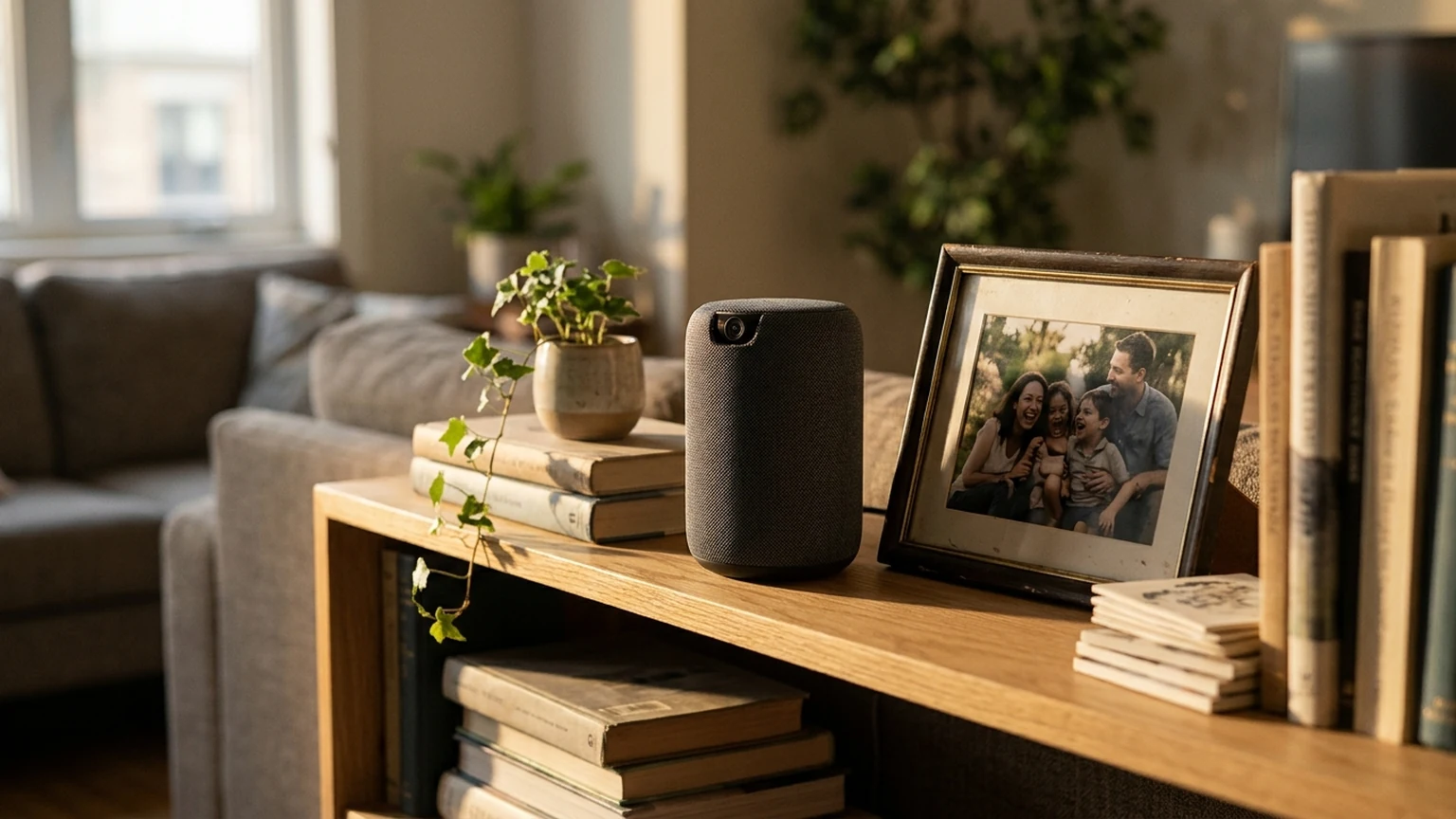
The headline upgrade is the Echo Studio with Home Camera, priced at $249.99, which gives Amazon's premium speaker a richer understanding of the room around it. It keeps the powerful audio architecture with a high-excursion woofer and Dolby Atmos, now continuously tuned with Advanced Room Adaptation.
The camera enables visual intelligence: Alexa can explain the rules on a board game box you hold up, recognize a cereal box to help reorder it, or let users check in on a room from the Alexa app while away. Amazon says it will soon pair with compatible Fire TVs for video calling. The camera-free Echo Studio stays on sale at $219.99.
Echo Dot and Echo Time
The next-generation Echo Dot, shipping today at $99.99, includes for the first time a built-in smart home hub so Alexa connects to lights, locks and thermostats out of the box, plus a built-in eero Wi-Fi extender that adds up to 1,000 square feet of coverage. It runs on Amazon's custom AZ3 silicon with a new AI Accelerator for on-device AI that sharpens conversational detection and filters background noise, with 50% more bass than its predecessor.
Echo Time is a camera-free bedside clock priced at $199.99 with hundreds of clock faces and a sleep sensing technology powered by Omnisense that can wake users within 10 to 60 minutes of a scheduled alarm without a wearable. It has earned the National Sleep Foundation's SleepMark for meeting evidence-based sleep standards, and includes a sunrise-style display brightening and gentle alarm tone.
Alexa Photo Frame
The Alexa Photo Frame is the first photo frame with Alexa built in, connecting to Amazon Photos so pictures sync automatically. Alexa intelligently surfaces shots worth seeing — where people are smiling or in the right season — and skips screenshots and clutter, with a 10-inch anti-glare touchscreen. Users can ask to see photos of a favorite person, pet or trip.
The frame continues Amazon's push to put Alexa into more passive, ambient devices around the home, following the same logic as Echo Time: Alexa becomes useful in places where a screen or speaker was not previously interactive.
What it means
The lineup is Amazon's clearest statement that the next phase of Alexa is about cameras and on-device AI in the home. The Echo Studio camera is a meaningful product decision: Amazon is putting a camera into its highest-end speaker, which raises both usefulness and privacy questions that the company will need to answer in the market.
The hardware also leans on efficiencies of scale: the Echo Dot doubles as a smart home hub and Wi-Fi extender, which increases the value of each unit while pushing Amazon's ecosystem deeper into homes. With Echo Time's sleep sensing and the Photo Frame, Amazon is competing directly in the bedside and photo-display niches against devices like the Google Nest Hub and dedicated picture frames.
All the new devices are powered by the latest Alexa, and Amazon says customers are already talking to Alexa two to three times more and asking for more complex things — the usage story behind pushing Alexa+ into more form factors.
What to watch
Watch how the Echo Studio camera is received on privacy: a camera in a premium speaker in the middle of the home is a materially different proposition than a camera in a doorbell or a display.
Watch whether the Echo Dot's smart home hub and eero extender bring new customers into Amazon's home ecosystem, especially people who would not buy a separate hub or mesh Wi-Fi system.
Watch sales of Echo Time and the Photo Frame as indicators of whether ambient, specialized Alexa devices have a market beyond the core speaker and display lines.
Visual intelligence on a speaker
The decision to put a camera on the Echo Studio is Amazon's biggest product bet in this lineup. Amazon says the camera lets the speaker recognize objects: hold up a board game box and Alexa explains the rules, hold up a cereal box and Alexa helps reorder it, or check in on a room from the Alexa app while away.
This is visual intelligence on a device that previously only heard. It extends the pattern of Amazon's other camera products, like the Echo Show displays and Ring doorbells, into the core speaker line, which is where most Alexa usage happens. The privacy implications are significant, and Amazon's success will depend on how clearly it communicates what the camera sees and when.
The smart home angle
The Echo Dot adding a built-in smart home hub and eero Wi-Fi extender makes the $99.99 speaker a more complete entry point into the smart home. Instead of needing a separate hub or mesh node, a customer gets lighting, locks and thermostat control plus Wi-Fi extension from the device they already wanted.
That is a deliberate ecosystem play: Amazon wants the Echo to be the device that makes the smart home easy, and the AI Accelerator in the AZ3 silicon for on-device conversational detection and noise filtering shows how much of the assistant experience is moving to the edge.
Echo Time and the sleep category
Echo Time is positioned as a wellness device, not just a clock: its Omnisense sleep sensing wakes users within 10 to 60 minutes of a scheduled alarm based on light-sleep detection, without a wearable, and it carries the National Sleep Foundation's SleepMark. The camera-free design is a deliberate contrast with the Studio.
The sleep-tracking market is crowded, but Amazon's advantage is that Echo Time also works as a full Alexa device. The question is whether users trust a device next to the bed with sensing capability, and whether the sleep claims hold up in practice.
What it means for the assistant market
Amazon's refresh comes at a moment when the assistant race is intensifying: Google is embedding Gemini into Android Auto, Apple is expanding Siri, and AI-native assistants are emerging in phones and browsers. Amazon's answer is to double down on the home with hardware that embeds Alexa into more rooms and form factors.
The lineup also shows Amazon's willingness to experiment with price points and niches: a $249.99 speaker with a camera, a $199.99 sleep clock, and a photo frame that costs more than a basic display. Whether those segments grow depends on whether the visual and sleep features deliver real value.
Common questions
What are the five new Alexa devices?
Echo Show 16, Echo Dot, Echo Studio with Home Camera, Echo Time, and Alexa Photo Frame, announced 28 October 2026.
How much does the Echo Studio with Home Camera cost?
$249.99, shipping today; the camera-free Echo Studio stays at $219.99.
What is new about the Echo Dot?
For the first time it includes a built-in smart home hub and an eero Wi-Fi extender, powered by Amazon's AZ3 silicon with an AI Accelerator, at $99.99.
Sources & further reading
How this story was made
Written by Kristian Kostov with AI assistance and checked against the linked sources. Company performance claims are attributed to the company. Analysis reflects AiLookout’s interpretation; we have not independently tested the products discussed. The cover is an AI-generated editorial illustration, not a photograph or evidence of an actual event.
Our editorial standards