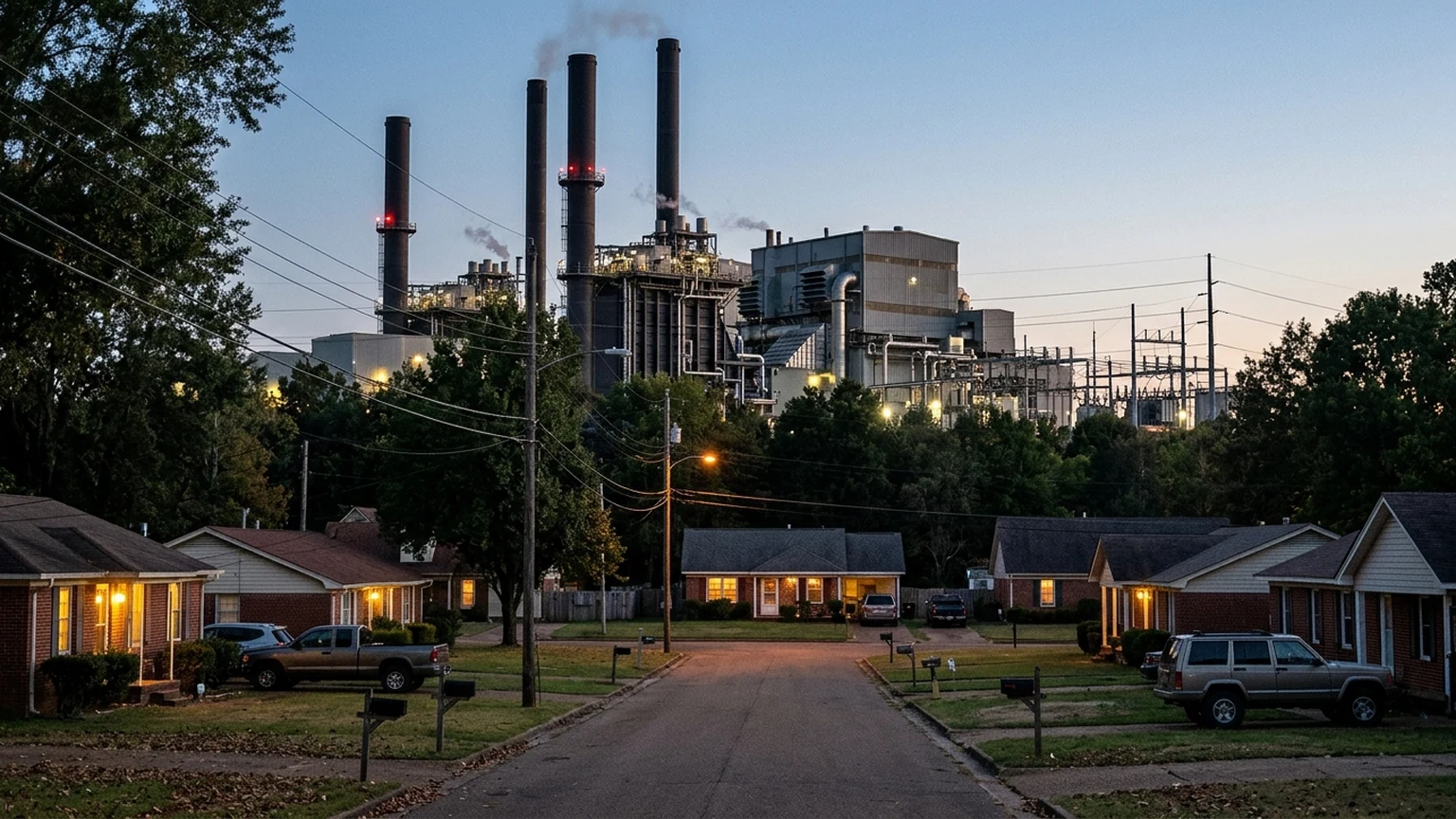
Announced 28 Oct 2026 · Sources checked
The buyout offer
The Guardian reported on 28 October 2026 that real estate agents acting on behalf of xAI have been going door to door in the Colonial Hills neighborhood of Southaven, Mississippi, offering to purchase houses as long as the owners agree not to join a lawsuit against the company over the power plant's noise.The plan could swallow up almost the entire neighborhood. A realtor told one resident the target is 418 homes, with 18 homeowners already agreeing to sell, according to a recording of a conversation heard by the Guardian. xAI did not respond to questions about these numbers and its plans, and has previously said it intends to be a good neighbor; it denies all claims in the noise lawsuit.
The lawsuit
Three locals filed a lawsuit in June complaining of 'near-constant noise, vibrations and other nuisance-level harms' from the nearby xAI power plant, a former Duke Energy site housing 69 temporary gas turbines to feed new data centers. Jason Haley, one of the three plaintiffs, told the Guardian he never considered himself an activist but had been driven to distraction by the noise of the gas turbines that sit about half a mile from his home, which he has owned for 20 years.
The turbines were reportedly installed without permits. xAI denies all claims and has said it wants to be a good neighbor; the company did not respond to the Guardian's questions about the buyout.
The data center boom
Since July 2024, xAI has constructed three vast data centers — called Colossus I, Colossus II and Macrohardrr — in the Memphis and Southaven conurbation across the Tennessee-Mississippi border. The buyout is part of xAI's continued expansion in the area, with three data centers springing up in just two years.
The homes, the realtor and the local mayor say, will house xAI staff as the company continues its explosive expansion. The market-value offers for homes in an area where the average house price is about $180,000 are a comparatively small outlay in creating what Musk envisions as the world's largest cluster of AI supercomputers.
'Elonville'
Resident Elizabeth Rose, who said she was shocked when the power plant began its low-level growl in August last year, told the Guardian: 'All of a sudden there was a plant there. And now I get the feeling they are trying to expand the buyout to the entire neighborhood. It will become Elon Musk's little playground, basically. Elonville.'
The buyout is part of a broader grassroots backlash against data centers, which The Guardian has documented across both parties as communities wrestle with the noise, power and water demands of the AI build-out.
What it means
The Southaven buyout is a direct illustration of how the AI infrastructure build-out collides with existing communities. Rather than redesign the power plant, negotiate noise limits or litigate, xAI is buying the neighborhood out from under the noise — at market value, in an area where average prices are modest compared with the company's data center investment.
The arrangement has an obvious tension: residents who accept the offer get a way out, but they surrender their claim against the company, and the immediate neighbors who stay gain no relief. The deal also raises questions about what happens to the neighborhood as xAI staff move in and the company's footprint in the area expands further.
What to watch
Watch whether the lawsuit proceeds and whether other residents join now that the buyout is public.
Watch whether the 418-home target materializes and what xAI does with the properties it acquires.
Watch whether similar buyout patterns appear near other AI data center build-outs facing noise or pollution complaints.
The power and permitting picture
The Southaven plant is a former Duke Energy site that now houses 69 temporary gas turbines to power xAI's data center cluster. The Guardian previously reported the turbines were installed without permits, and residents described all-hours noise and air-quality concerns since the plant began operating in August of the prior year.
For the AI industry, the episode illustrates a structural problem: the electrical load required for large training clusters outstrips normal grid timelines, so operators turn to temporary gas generation and other stopgap power sources that impose real burdens on neighboring communities. Buyouts are one way to address those burdens without changing the power arrangement.
The buyout mechanics
The reported deal structure is a private arrangement: homeowners sell at market value and sign agreements not to participate in the nuisance lawsuit. The 418-home figure and the 18 signed deals come from a recording of a realtor's conversation heard by the Guardian, so they are secondhand rather than company-confirmed numbers.
Buyouts of this kind have a familiar legal shape from other industrial disputes — settling the class by buying out the class — but they are unusually aggressive here because the target is nearly an entire neighborhood. The implication is that xAI expects the noise issue to persist and finds it cheaper to relocate residents than to quiet the turbines or relocate the plant.
Caveats
The Guardian's reporting is based on interviews with residents, a lawyer and local officials, plus a recording of a realtor's conversation; xAI denied the lawsuit claims and did not confirm the buyout details. Treat the 418-home target and 18-deal figure as reported but unconfirmed by the company.
The company has said it intends to be a good neighbor, and the noise lawsuit allegations are unproven in court. This story documents the reported buyout campaign and its context, not a legal determination about the noise claims.
Common questions
What is xAI offering Southaven residents?
To buy their homes on the condition that owners agree not to join a lawsuit over noise from xAI's data center power plant.
How many homes are targeted?
A realtor told a resident the target is 418 homes, with 18 owners already agreeing to sell, per The Guardian.
What does xAI say?
It denies all claims in the noise lawsuit, says it intends to be a good neighbor, and did not comment on the buyout numbers.
Sources & further reading
How this story was made
Written by Kristian Kostov with AI assistance and checked against the linked sources. Company performance claims are attributed to the company. Analysis reflects AiLookout’s interpretation; we have not independently tested the products discussed. The cover is an AI-generated editorial illustration, not a photograph or evidence of an actual event.
Our editorial standards