Announced 28 Oct 2026 · Sources checked
The proclamation
The White House published a fact sheet on 28 October for Trump's Section 232 proclamation. The Commerce Secretary investigated and found foreign imports of robotics, industrial machinery and components 'threaten to impair the national security.' The proclamation directs negotiations within 180 days, with potential tariffs, quotas and domestic-incentive programs if no agreement is reached.
Scope
Covers autonomous robots, humanoid and quadruped robots, autonomous ground vehicles for combat support, recon and casualty extraction, plus industrial machinery across all 16 critical infrastructure sectors including automotive, electronics, medical devices and defense.
The Commerce Secretary found the US relies on foreign imports for most types of robotics gear.
Caveats
No tariffs imposed yet — 180-day negotiation period means any action would not take effect before late April 2027. Final scope depends on implementing regulations.
The 180-day timeline
Under the proclamation, the Commerce Secretary and the US Trade Representative have 180 days to pursue negotiations with trading partners. If at the end of that period no satisfactory agreements are in place, or if existing agreements are not being carried out, the President retains authority to take additional actions including imposing tariffs, duties, quotas and fees.
The proclamation also opens the door to domestic incentive programs for robotics and industrial machinery manufacturing in the United States. This could include tax credits, grants or other measures to encourage factories to build robotics and automated equipment domestically rather than importing it. The Commerce Secretary is directed to continue monitoring imports and to report any circumstances that might indicate the need for further action.
Impact on AI and robotics companies
For companies building AI-powered robotics — including humanoid robots, autonomous vehicles, drone systems and industrial automation — the proclamation introduces near-term uncertainty. Component costs, supply chain routes and import timelines could all be affected if tariffs are eventually imposed. Hardware-intensive AI startups that rely on imported robotic components may need to source domestically or restructure supply chains.
Conversely, US-based manufacturers of robotics components and automated equipment could benefit from reduced foreign competition if tariffs are imposed. The proclamation's focus on 'cybersecurity vulnerabilities from foreign-sourced robotics' also adds a security dimension to purchasing decisions, potentially making domestically-sourced hardware more attractive to government and defense customers regardless of price.
The Section 232 framework
Section 232 of the Trade Expansion Act of 1962 gives the President broad authority to adjust imports of goods that threaten national security. It has previously been used for steel and aluminum tariffs during Trump's first term. The legal standard requires the Commerce Secretary to investigate and report on whether a product's import volume and circumstances threaten national security, after which the President may take action including tariffs, quotas or other measures.
The proclamation cites the Commerce Secretary's finding that the US relies on foreign imports for most types of robotics and industrial machinery, that domestic production cannot meet national security needs, and that foreign-sourced equipment poses cybersecurity risks. These findings mirror the arguments used in the steel and aluminum Section 232 cases, suggesting the administration may seek similar remedies — tariffs or quotas combined with domestic production incentives.
Broader implications
The proclamation classifies robotics and industrial automation as strategic national security sectors for the first time. This classification has implications beyond trade: it could affect foreign investment reviews by CFIUS (the Committee on Foreign Investment in the United States), export controls on robotics technology, and federal procurement preferences for domestically-made equipment.
It also creates a policy framework that could outlast the current administration. Once a product category is designated under Section 232, the finding remains in effect until the President determines the threat has been addressed. Future administrations could maintain, modify or expand the import restrictions, giving the classification lasting impact on the robotics supply chain regardless of election outcomes.
The role of AI in the finding
The Commerce Secretary's investigation found that robotics and industrial machinery imported from certain foreign entities pose unique security and safety risks because they integrate into manufacturing and defense systems and routinely process and store sensitive data. This finding explicitly connects robotics hardware to AI data security, a framing that has grown more prominent as AI systems are deployed in physical infrastructure.
The proclamation specifically mentions that foreign-sourced robotics can 'pose significant cybersecurity vulnerabilities that can result in severe consequences to the United States.' This language directly ties the hardware supply chain to AI system security — an argument that has been made by AI safety researchers but rarely appears in presidential trade proclamations.
Timeline and next steps
The proclamation sets a 180-day negotiation period. During this time, the Commerce Secretary and USTR will engage trading partners, likely focusing on countries that are major robotics and industrial machinery exporters. Key trading partners in this space include Japan, Germany, South Korea, China and several EU member states.
If negotiations succeed, agreements could involve voluntary export restraints, import quotas or commitments to invest in US manufacturing. If they fail, tariffs would be the likely next step, with potential rates modeled on the steel and aluminum Section 232 tariffs which ranged from 10% to 25%. The proclamation also leaves open the possibility of a domestic incentive program to encourage robotics manufacturing in the US.
Common questions
What is Section 232?
A 1962 law allowing the President to adjust imports threatening national security via tariffs or quotas.
Do tariffs apply now?
No — negotiations first. Tariffs may follow if no deal within 180 days.
What products are specifically named?
Advanced robots including autonomous, humanoid and quadruped robots, autonomous ground vehicles, industrial machinery for manufacturing, and their parts and components.
Could this affect AI startups?
Yes — companies building AI-powered robots or importing robotics components may face higher costs if tariffs are imposed, or benefit if they manufacture domestically.
Sources & further reading
How this story was made
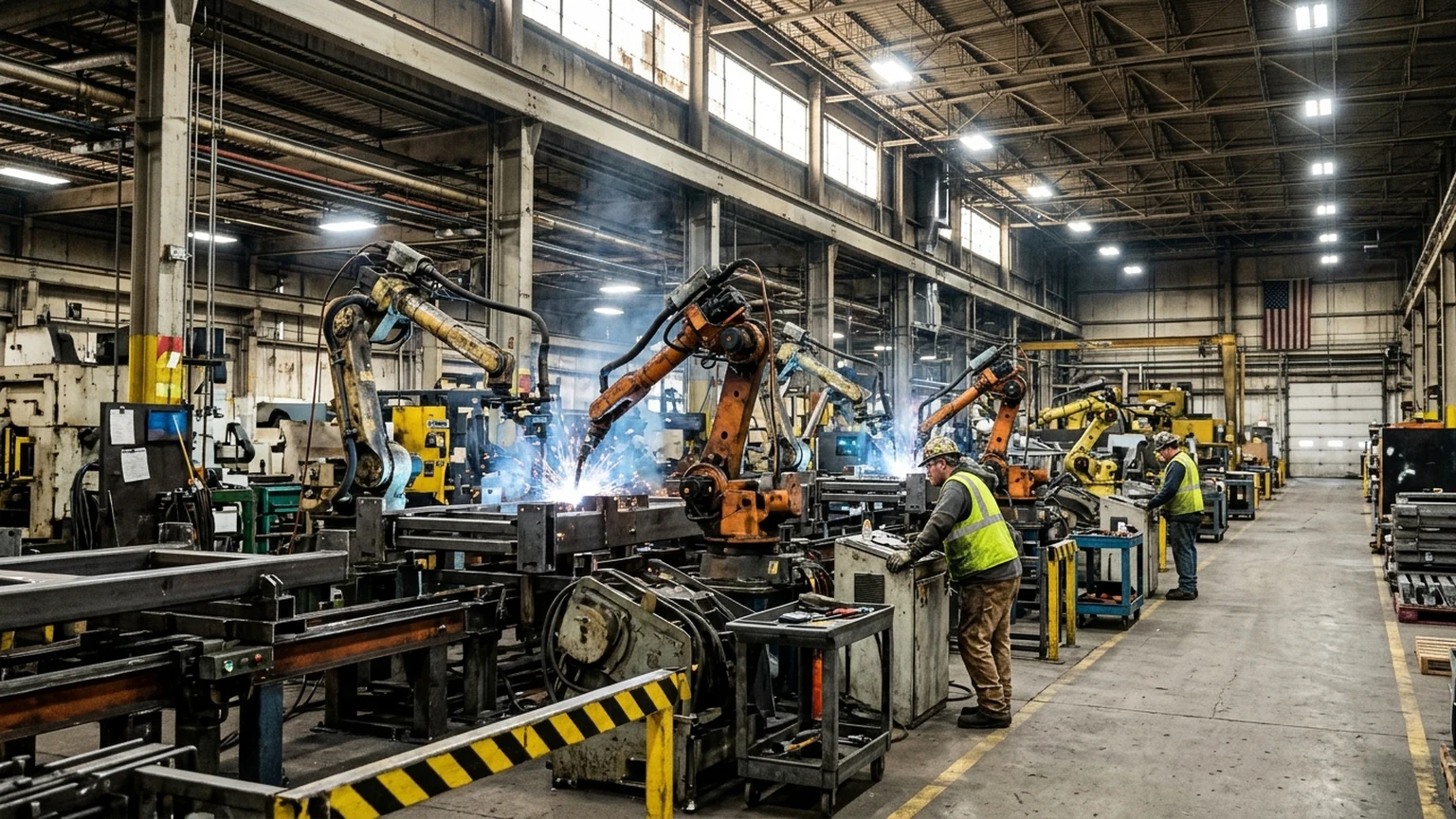
Written by Kristian Kostov with AI assistance and checked against the linked sources. Company performance claims are attributed to the company. Analysis reflects AiLookout’s interpretation; we have not independently tested the products discussed. The cover is an AI-generated editorial illustration, not a photograph or evidence of an actual event.
Our editorial standards