


Announced 10 Oct 2026 · Sources checked
What happened on 10 October?
China AI Wire published a 10 October 2026 report that Tencent Cloud had open-sourced TeamAI under MIT as a Git-based collaboration tool for AI agent skills and configurations. The same day, GitHub recorded a push on Tencent/teamai-cli, and the repository’s LICENSE file states that teamai-cli is licensed under MIT without additional restrictions beyond the MIT terms.
The repository itself is older than the news cycle: GitHub lists a created_at of 27 April 2026. Readers should treat 10 October as the public announcement and distribution spike, not as the day the first line of code appeared. Secondary outlets amplified Tencent’s framing that TeamAI had reached GitHub Trending; star counts move quickly and are not a quality metric.
For adjacent team workflows already covered here, see our notes on Anthropic’s Claude Code Projects waitlist and the broader AI skills for teams explainer.
What does TeamAI actually store in Git?
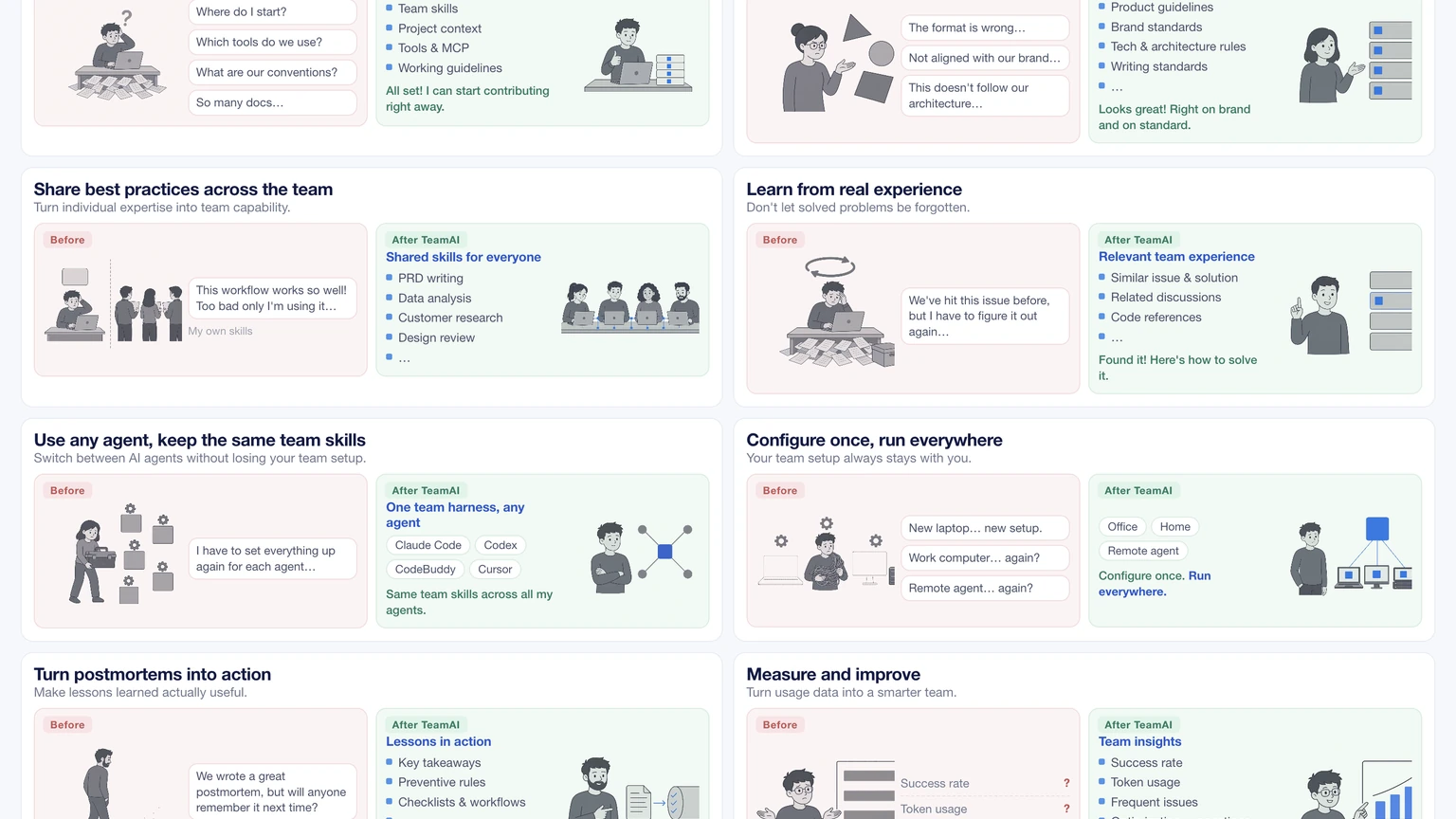
The English README describes three layers. Team Execution is the shipping path: skills, rules, docs, environment notes, sub-agents, hooks, MCP server configs, and model settings live in a shared “experience” repository that the team controls on GitHub, GitLab, GitCode, CNB, TGit, or a private Git host. Team Context and Team Improvement are marked beta and cover learnings, a codebase graph, teamwiki material, usage, sessions, and a dashboard.
Installation is deliberately ordinary. Admins run teamai init against the shared repo URL after granting teammates write access. Members can init at project scope or user scope. The README’s quick-start also offers a one-line prompt that installs a teamai skill into an AI tool, then walks setup through /teamai commands for sharing skills and opening a dashboard.
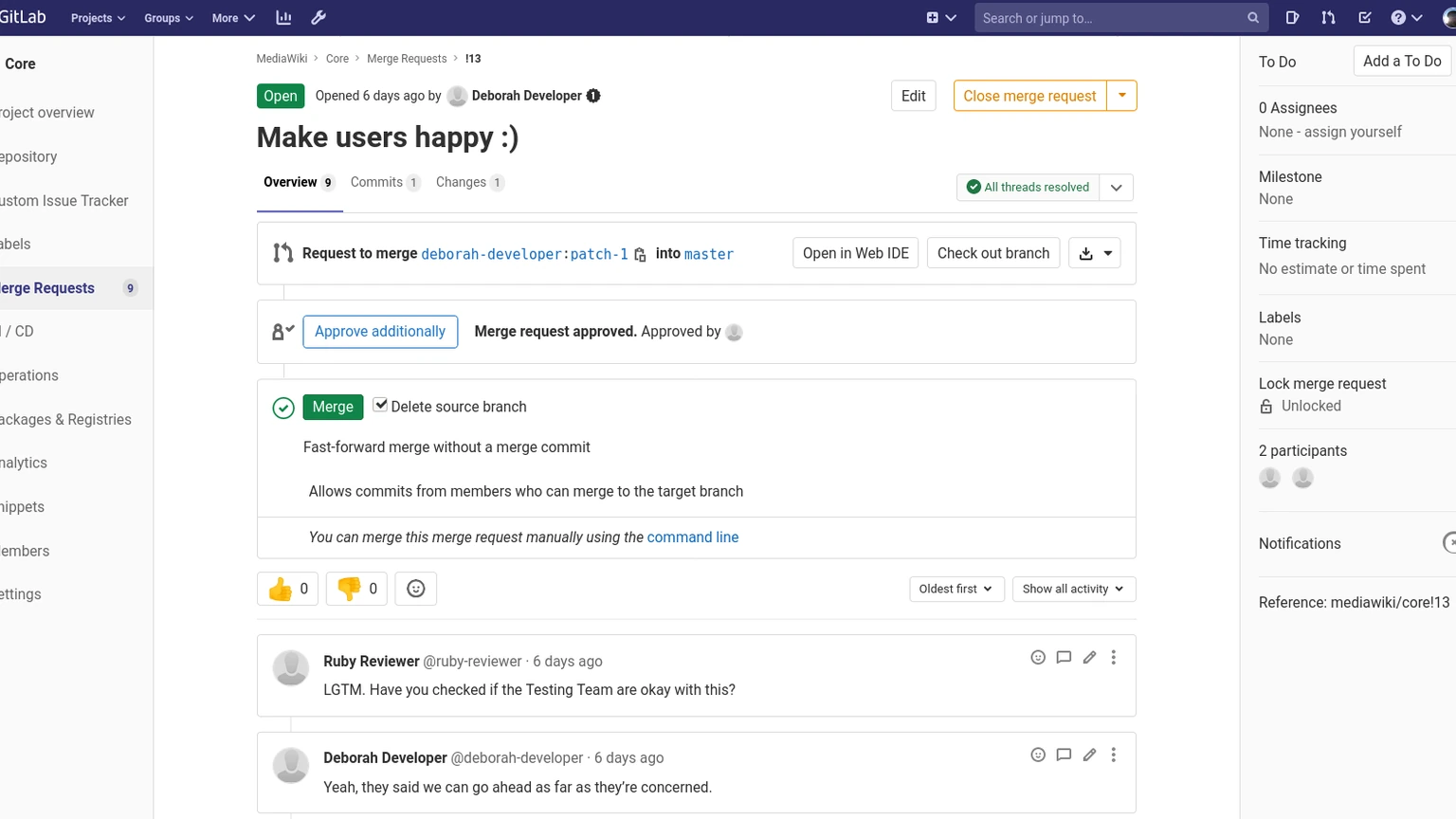
Once initialized, the pitch is automatic sync: agents that support session-start hooks pull the latest merged harness updates without a manual copy step. Sharing a new skill is described as creating a branch and merge request for review—ordinary Git collaboration applied to agent assets rather than a new proprietary store.
Which agents appear in the compatibility table?
As hashed on 11 October, the README table lists nineteen agent rows: Claude Code, Codex, Cursor, GitHub Copilot CLI, CodeBuddy, WorkBuddy, OpenCode, Pi Coding Agent, OpenClaw, Hermes, DeepSeek Harness, Qoder, Qoder CN, Kiro, Trae, Trae CN, ZCode, Oh My Pi, and JoyCode. Cells mark which of skills, rules, docs, env, agents, hooks, MCP, and models each row supports; some cells are dashes or starred caveats rather than full checkmarks.
China AI Wire’s same-day summary said TeamAI “supports 16 AI coding agents,” naming WorkBuddy, CodeBuddy, Claude Code, Cursor, and Codex among them. Prefer the live table in the commit you install over any round number in a news brief. Capability gaps matter: Cursor and GitHub Copilot CLI show dashes in some columns where Claude Code shows checks.
npm install -g teamai-cli is the documented CLI path, with badges pointing at the teamai-cli package on npm. Template repos under the teamai-hub organization are offered for teams that do not yet have a shared experience repository.
| Claim | Where it appears | How to treat it |
|---|---|---|
| MIT license | LICENSE in Tencent/teamai-cli | Confirmed in inspected file |
| Git-managed skills/rules/MCP | English README product overview | Confirmed product description |
| 19-agent compatibility table | English README HTML table | Count as of 11 October hash |
| 76% lower model cost / 6.1% quality | China AI Wire citing Tencent Cloud | Vendor-reported; not in LICENSE |
How should readers treat the cost and quality percentages?
China AI Wire reports that Tencent Cloud’s internal test across 13 development tasks found a 6.1% comprehensive quality lift and a 76% reduction in model invocation cost when shared team knowledge was integrated into lower-cost models. The wire labels its own article AI-assisted and attributes the figures to Tencent.
Those percentages do not appear in the MIT LICENSE text we hashed, and they are not presented as a reproducible public benchmark suite inside the README excerpt we reviewed. Until Tencent publishes prompts, model IDs, task definitions, and raw scores, treat the numbers as marketing evidence of intent, not as a transferable ROI forecast for your stack.
The product claim that still stands without the percentages is narrower and more useful: put agent skills under the same review path you already trust for code, then sync them into heterogeneous harnesses so a Cursor user and a Claude Code user are not maintaining divergent private prompt piles.

What are the practical limits and next checks?
TeamAI assumes your organization will host a writable Git repository and that teammates will accept merge-request review for skills. Teams that cannot put prompts in Git—for regulatory or secrecy reasons—will need a different pattern. Beta layers (context graph, improvement dashboard) should be evaluated separately from the execution sync path.
Hook support varies by agent. If an agent cannot pull on session start, “automatic” sync becomes a manual teamai update habit. Likewise, MCP and model-distribution cells differ across rows; verify the columns for your exact harness before promising leadership a universal rollout.
Sandbox and containment choices remain separate from skill sync. Pair TeamAI with platform controls such as GitHub Copilot local sandboxing or Windows MXC coverage rather than assuming Git review equals runtime isolation.
- Clone Tencent/teamai-cli and read LICENSE plus the compatibility table at the commit you will pin.
- Stand up a throwaway experience repo and run teamai init for one real project before inviting the whole team.
- If leadership cites the 76% figure, ask for the 13-task protocol or mark it vendor-reported in your write-up.
Common questions
Was the GitHub repository created on 10 October?
No. GitHub’s API lists Tencent/teamai-cli as created on 27 April 2026. The 10 October event is the open-source announcement and a same-day push that coincided with trending and press coverage, not the first commit.
How many agents does TeamAI support?
As of the 11 October README hash, the compatibility table names nineteen agents including Claude Code, Codex, Cursor, GitHub Copilot CLI, WorkBuddy, and CodeBuddy. Secondary reports that said “16” may reflect an earlier marketing count; prefer the table in the repo you install.
Is the 76% cost reduction independently verified?
No. China AI Wire attributes a 13-task internal test—6.1% higher quality and 76% lower model invocation cost when cheaper models used shared team knowledge—to Tencent Cloud. Ai Lookout did not receive the raw runs.
What to remember
If your team already reviews prompts and skills in chat threads, TeamAI’s useful move is to put that review on Git with automatic sync into supported agents—while keeping Tencent’s savings claims labeled as vendor-reported.
Sources & further reading
How this story was made
Written by Kristian Kostov with AI assistance and checked against the linked sources. Company performance claims are attributed to the company. Analysis reflects AiLookout’s interpretation; we have not independently tested the products discussed. Cover photography is illustrative and does not depict the specific announcement or product.
Our editorial standards