Announced 13 Oct 2026 · Sources checked
What did South Korea approve on 13 October?
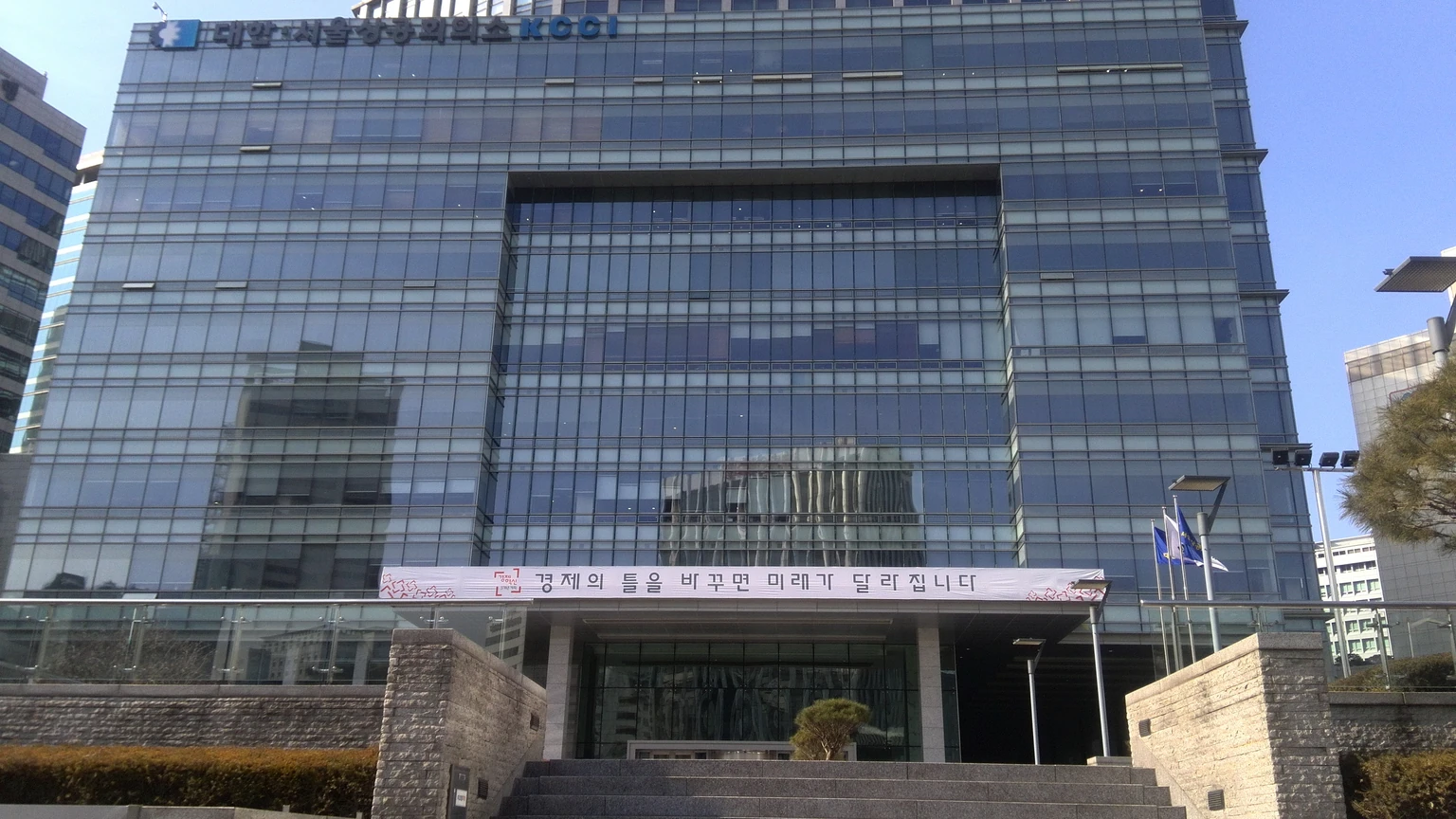
South Korea’s Ministry of Trade and Industry (MOTIE) held the sixth 2026 meeting of its industrial convergence regulatory special-cases committee on 13 October at the Korea Chamber of Commerce and Industry in Seoul. According to the ministry’s press release, the committee reviewed 16 agenda items in AI, robotics, energy and other fields, chaired by Trade Minister Kim Jung-kwan.
Korea’s “regulatory sandbox” lets companies test new technology under temporary exemptions, called demonstration special cases, or sell it under temporary permits, even where existing rules would forbid it. The most notable approval was for a project filed by Robros and four partner companies to put humanoid robots into working production lines.
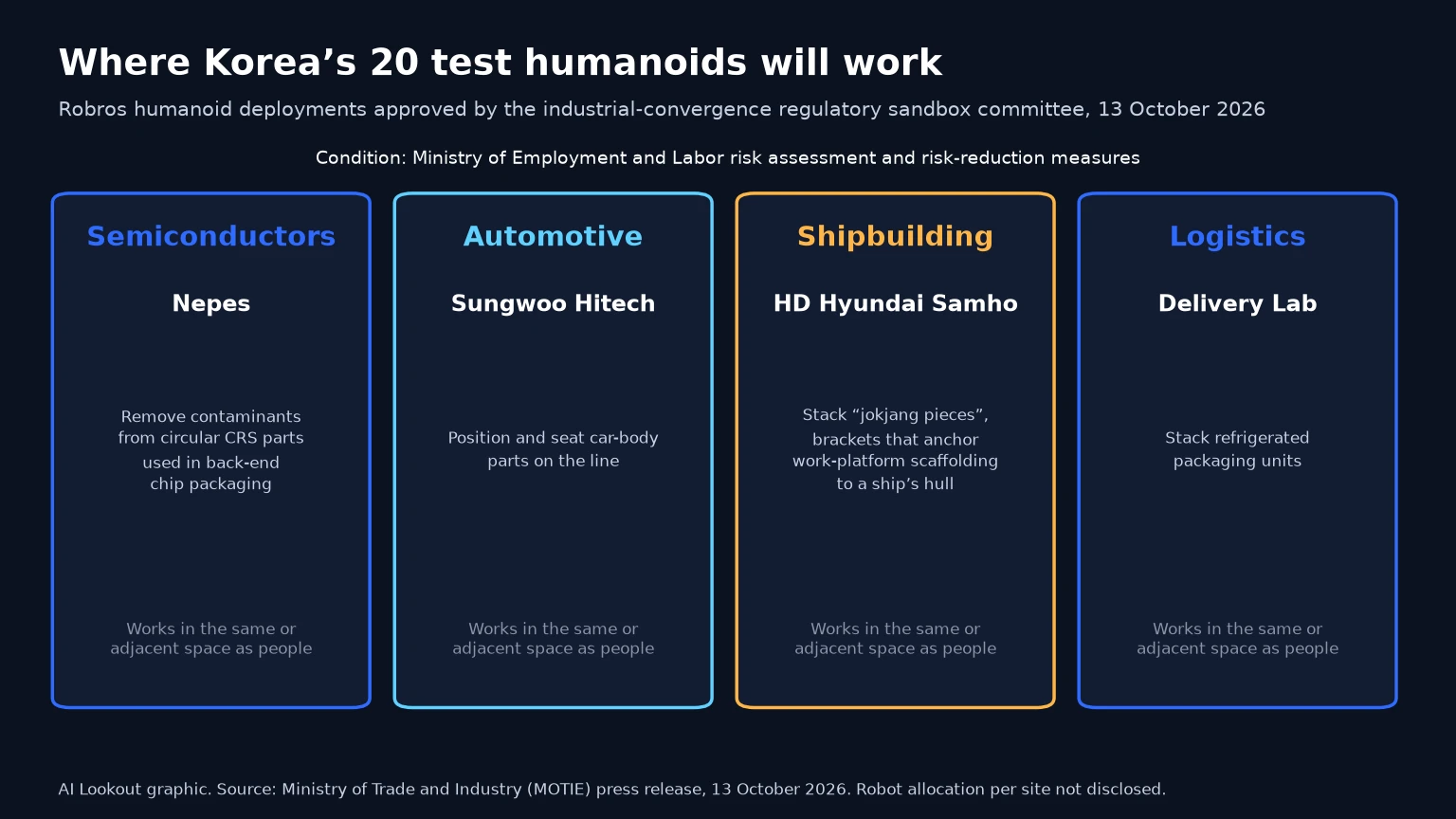
Under the exemption Robros will deploy 20 AI-equipped bipedal humanoid robots across four industrial sites. The ministry describes it as a test of the robots’ work performance and their adaptability to real sites, with the robots moving, recognising, gripping, carrying and stacking objects in spaces identical or adjacent to those used by human workers.
Yonhap’s report on the meeting frames it as a pilot deployment of mobile humanoids into the production lines of the country’s main manufacturing industries. The ministry stresses breadth: the trial spans semiconductors, cars, shipbuilding and logistics, and goes beyond simple transport into precision cleaning and cold-chain handling.
What will the humanoids do at each site?
The ministry lists one task per site. They are deliberately ordinary jobs, which is the point of a trial meant to test whether a general-purpose robot can do routine physical work without a dedicated cell.
- Semiconductors, at Nepes: removing contaminants from circular CRS components used in back-end packaging.
- Automotive, at Sungwoo Hitech: positioning and seating car-body parts.
- Shipbuilding, at HD Hyundai Samho: stacking “jokjang pieces”, structural brackets welded to a hull so workers’ elevated scaffolding platforms can be fixed to it during construction.
- Logistics, at Delivery Lab: stacking refrigerated packaging units.
Why couldn’t humanoids work on Korean factory floors before?
The obstacle is a safety rule written for a different kind of machine. Korea’s Rules on Occupational Safety and Health Standards treat industrial robots as fixed installations and require safety fences that separate them from people. A humanoid that walks between workstations and shares aisles with staff cannot meet that requirement, so deployment had been blocked in principle, the ministry says.
The committee did not scrap the rule. It granted a time-limited exemption on condition that the Ministry of Employment and Labor’s risk assessment is carried out and that risk-reduction measures are put in place. The stated aim is to learn what hazards appear when workers and humanoids share a space, whether the safety measures work, and what that implies for future safety standards and regulation.
That makes the trial as much a data-gathering exercise for regulators as a product test. Fences are a blunt but well-understood control; replacing them means relying on a robot’s own sensing, speed and force limits, and on site procedures. The results from four very different environments, from a clean chip-packaging line to a shipyard, will show regulators where those controls are enough and where they are not.
Who is Robros, and which robot will it use?
Robros is a Seoul-based robotics startup whose current product is IGRIS-C, which it describes as an AI humanoid for indoor collaboration and a platform for research, testing and education. The ministry does not name the model to be used in the trial. On Robros’s IGRIS-C product page the robot is 154 cm tall and weighs 56 kg, with a 48V 17,000mAh battery that charges in 2.5 hours.
Robros lists 43 degrees of freedom: two six-axis hands, two seven-axis arms, a two-axis neck, a three-axis waist and two six-axis legs. It cites force limiting, collision detection, an emergency stop and a collaborative mode, uses RGB stereo and depth cameras, and supports reinforcement and imitation learning through C++ and Python interfaces, with a teleoperation “master arm” for collecting demonstration data.
Those are the company’s own specifications, not measured performance in a factory. They also show how much of the trial rests on learned behaviour rather than fixed programming. For a sense of how quickly humanoid perception and control research is moving, see our coverage of a Unitree G1 humanoid catching thrown boxes with onboard vision and of RoboParty’s open-source RP1 humanoid.
What else did the committee clear?
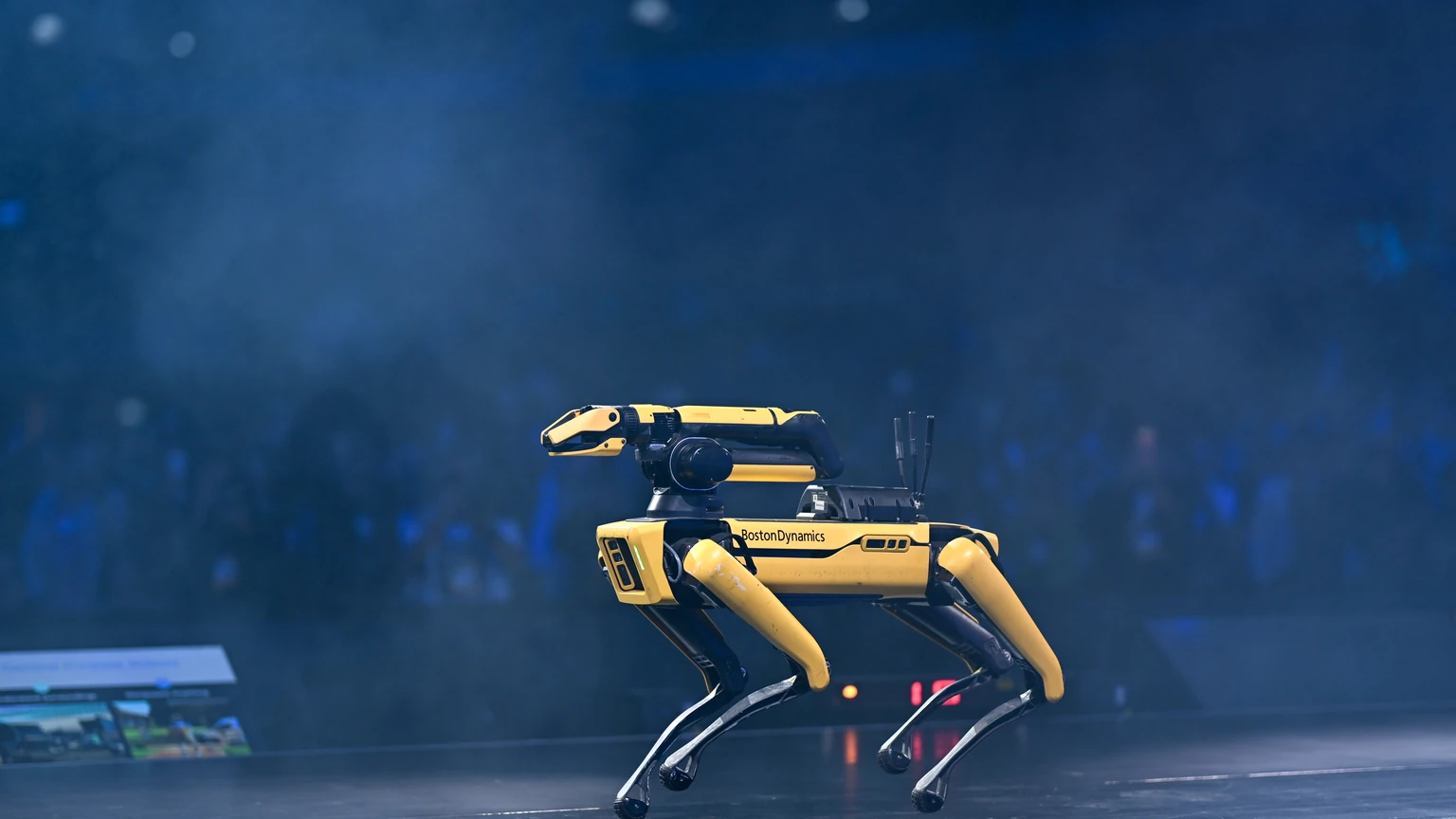
Robots were not the only AI items. The committee granted the first exemption for a self-driving four-legged robot to patrol pedestrian paths. Maum AI will run quadruped patrol robots at night along riverside walking trails and in parks around Cheonan.
According to the release, the robot uses on-device AI to analyse its surroundings, broadcasts evacuation guidance when it detects danger, and sends live video and location data to a control centre. The ministry says its legs extend patrols to stairs, slopes and CCTV blind spots that wheeled patrol robots struggle to reach. The barrier here was the Intelligent Robots Development and Distribution Promotion Act: outdoor mobile robots need an operating safety certification to use sidewalks, and that certification was written for wheeled robots, so a legged robot could not obtain it.
The ministry’s examples are modest: warning walkers when a river rises after upstream rain, or finding a person collapsed under a tree in a CCTV blind spot late at night and alerting the control centre. The exemption carries extra conditions, including adjusted test goals.
Two further AI approvals stand out. SANDS Lab and CHA Bundang Medical Center will test an AI platform that learns from a hospital’s network traffic to detect and automatically respond to hacking and data-exfiltration attempts. Futuregate received a temporary permit for an unstaffed, refrigerator-style alcohol vending machine for convenience stores that opens only after checking a customer’s ID and matching their face in real time, then uses AI and IoT sensors to recognise and bill the items taken. Its conditions include biometric authentication, CCTV and shorter late-night hours, to stop sales to minors.
What new AI standards is the ministry planning?
The committee also endorsed a package of pre-emptive rule changes the ministry has been preparing since April to spread what it calls M.AX, or manufacturing AI transformation. Two items have dates.
First, the ministry will prepare cybersecurity standards tailored to factories that adopt AI by early 2028, after revising the relevant laws. It says small and mid-sized manufacturers in particular lack concrete guidance on how to protect against data tampering and hacking once AI is on the line.
Second, it will develop a draft technical-level standard for “AI home appliances” by the end of 2026 and begin the formal standard-setting process in 2027. The target is “AI washing”: products with no real AI function, or only basic automatic controls, marketed as AI appliances. A standard that defines what counts as an AI appliance, and at what level, is meant to help consumers compare products beyond the advertising copy.
“AI technology is advancing so fast that institutions can barely keep up,” Kim said, adding that if rules cannot keep pace, Korea will fall behind in what he called the great competition of the AI revolution. The approvals fit a broader national push into AI services and devices, visible this week in Kakao’s plans to turn KakaoTalk into an AI agent interface.
How does this fit the wider humanoid safety debate?
Korea is not alone in finding that robot safety rules lag behind legged machines. At the international level, ISO is still drafting ISO 25785-1, safety requirements for “dynamically stable” industrial mobile robots, a category that covers legged robots such as humanoids and quadrupeds as well as balancing wheeled ones. It is at committee-draft stage, with its comment period having closed on 8 July 2026, and is not yet a published standard.
The distinction matters because a dynamically stable robot can fall over if power or control fails, a hazard that a bolted-down arm behind a fence never posed. Until standards settle, regulators have mostly relied on case-by-case approvals and pilot projects, which is what Korea’s sandbox provides.
What remains unclear?
The ministry did not say when the trial starts, how long the exemption lasts, how the 20 robots are split across the four sites, or which robot model Robros will use. It also did not publish the specific risk-reduction measures required, or what success looks like.
Nor is there yet any public data on how the robots perform. Vendor specifications and staged demos say little about throughput, error rates or near misses over a working shift. The useful output will be whatever the ministry and the labour ministry publish from the trial, and whether it produces a humanoid-specific safety standard rather than more one-off exemptions.
Common questions
Are the humanoids replacing workers?
The ministry describes a test of performance and site adaptability, not a replacement programme. The robots will work in the same or adjacent spaces as people on four specific tasks, and the results are meant to inform safety rules.
Why do humanoids need an exemption at all?
Korea’s occupational safety rules assume industrial robots are fixed in place and require fences between them and workers. A walking humanoid that shares space with people cannot meet that rule, so it needs a special-case exemption with alternative safety measures.
Is the quadruped patrol robot allowed on any sidewalk?
No. The exemption covers a demonstration by Maum AI on riverside walking paths and in parks around Cheonan, under extra conditions. National certification for sidewalk robots still assumes wheels.
What to remember
Korea has given humanoid robots their first sanctioned test inside working factories alongside people, but as a regulated experiment: 20 robots, four tasks, a labour-ministry risk assessment and a promise to turn the data into safety standards. The results, not the approval, will decide whether fences give way to rules written for walking robots.
Sources & further reading
How this story was made
Written by Kristian Kostov with AI assistance and checked against the linked sources. Company performance claims are attributed to the company. Analysis reflects AiLookout’s interpretation; we have not independently tested the products discussed. Cover photography is illustrative and does not depict the specific announcement or product.
Our editorial standards