Announced 15 Oct 2026 · Sources checked
What the Simons Foundation announced
The Simons Foundation, a New York philanthropy that funds mathematics and basic science, announced the programme on 15 October 2026. Under a partnership with Anthropic and OpenAI, the three will commit $15 million in combined funding and resources to help the mathematics community “navigate the rapid rise of artificial intelligence in the field.”
The foundation says it will manage and award the money, including through an open call for proposals. The funding is for workshops and initiatives that help researchers do four things: evaluate recent AI-assisted results, learn and use new tools, share perspectives and shape collective standards for AI use. Anthropic and OpenAI will also provide AI tools and computing resources to researchers the foundation supports, and that part extends beyond mathematics into basic science.
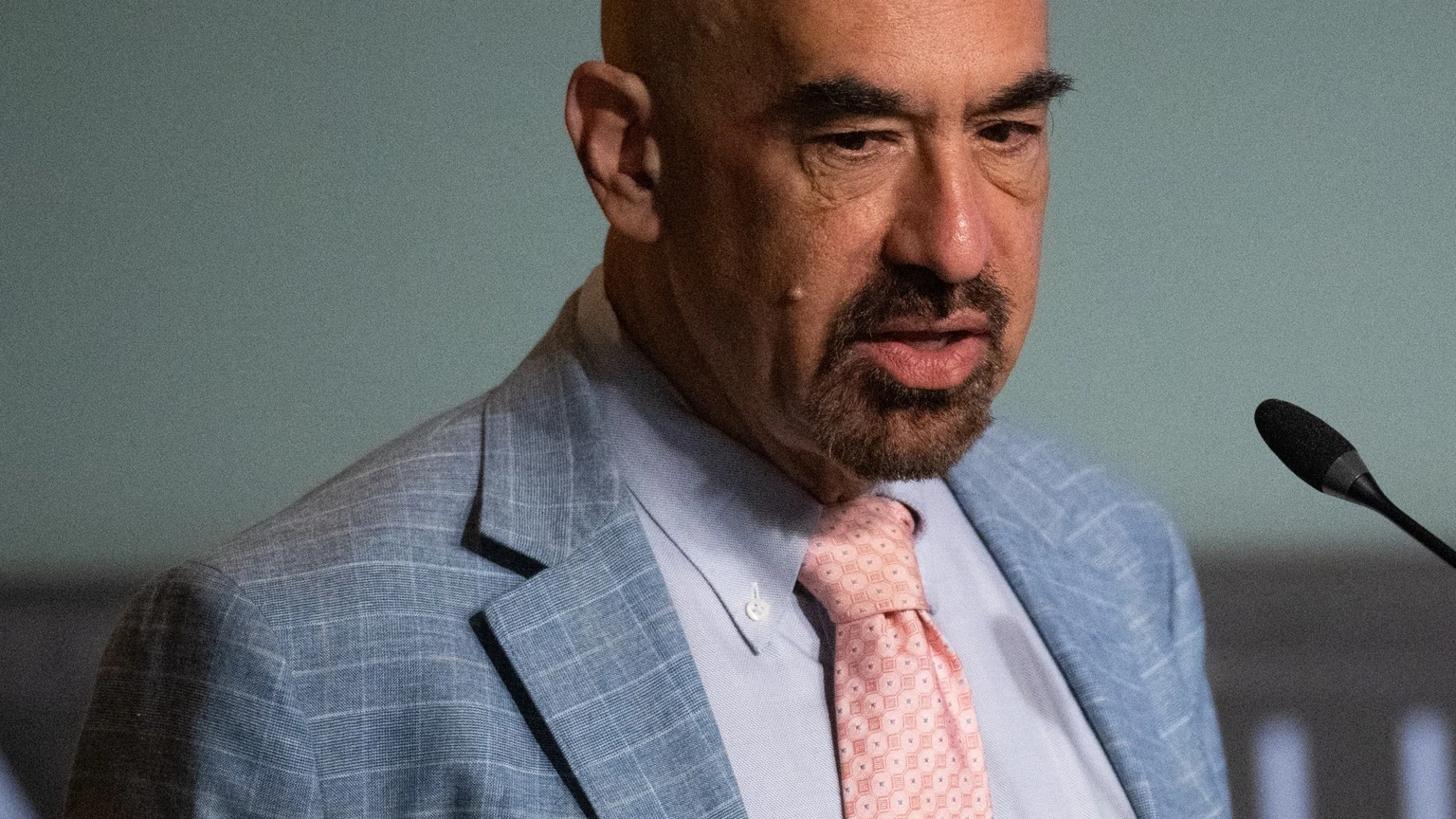
“Now is the time to look at mathematics as a whole — not as a collection of proofs and theorems, but as a collective understanding driven by human curiosity,” said David Spergel, the foundation's president.
Who is paying, and what is still undisclosed
OpenAI disclosed its own share in an update to its 6 October post on AI progress in mathematics: it is contributing $5 million to the initiative “to help mathematicians examine, understand, and build on results produced by AI, including those shared in this post.” It says the money will support workshops, conferences and special programmes, and that it will give Simons-supported researchers access to its models and computing resources.
Neither the foundation's release nor OpenAI's update says how much Anthropic is putting in, how much of the total comes from the Simons Foundation itself, or how the $15 million splits between cash and the value of compute and model access. That matters because “resources” can mean API credits priced at list rates, which cost a lab far less than their face value.
The news was reported the same afternoon by The Verge, which framed it around OpenAI's $5 million. When AI Lookout checked Anthropic's newsroom on 15 October it had not published a separate announcement.
Why mathematicians need help now
The timing follows a burst of machine-made mathematics. On 6 October OpenAI released 722 AI-produced manuscripts from an unreleased internal model, saying the average result used about three hours of ChatGPT Pro thinking-equivalent compute. Within a day the repository withdrew three manuscripts after a sign error invalidated a construction, and only about 300 of 719 top-line results had Lean formalisations at that point.
Other labs are producing results too. DeepMind's AlphaProof Nexus paper in Science reported solutions to nine open Erdős problems, and Hugging Face has turned OpenAI's proofs into reinforcement-learning environments for training more models. Google has even opened Deep Review, an AI tool for checking papers.
Checking a long, novel proof is slow, specialised work that mathematicians mostly do unpaid as referees. A few companies can now generate candidate results faster than the community can read them. OpenAI said on 6 October that it had consulted the independent Advisory Group on Mathematics and Artificial Intelligence at the Institute for Advanced Study on how to release its results, and promised then to fund workshops and conferences on understanding AI-produced work. The Simons programme is where that promise landed.
Lean, and the foundation's earlier bets
The foundation points to its record as a reason to trust it with the job. It describes itself as an early backer of machine learning for science, including funding the development of Lean, the proof assistant that checks mathematical proofs written as code. A July 2026 Simons Foundation feature on Lean says Simons Foundation International gave $5 million to the nonprofit Lean FRO when it was set up in 2023, and that the foundation hosted a 2025 Lean workshop for 57 early-career researchers.
Lean is central to verifying AI mathematics because a formalised proof can be checked line by line by software rather than by trusting the author, human or machine. Much of OpenAI's release and DeepMind's AlphaProof work leans on it.
But formal checking answers only part of the question. In the same feature, Rutgers mathematician Alex Kontorovich draws the line plainly: a journal asks whether mathematics is correct and whether it is interesting, and “Lean does not evaluate two at all.” Deciding which AI results matter, how to credit them and how to write them up for humans is the work this money is meant to support.
The independence question
There is an obvious tension: two of the three funders are AI companies whose results the money will help assess, and which benefit when mathematicians adopt their tools. OpenAI's update explicitly says the funding is meant to help researchers build on results “including those shared in this post.”
The foundation addresses this head-on. “The community should be driving discussions of how these tools are evaluated, adopted and used, not any single company or institution,” Spergel said. “The goal of the program is to support the mathematics community.” The structure backs that up on paper: the foundation, not the labs, manages and awards the funds, and the awards are described as community-driven.
What the release does not yet show is how the foundation will keep that distance in practice: who reviews proposals, whether the labs have any say, and whether grantees must use a particular company's models to receive compute. Those details will decide how independent the programme looks to sceptical mathematicians.
What researchers can expect from the open call
No application portal, deadline, award size or eligibility rules were published on 15 October. The foundation said only that awards will include an open call for proposals and will fund workshops and initiatives, and OpenAI listed workshops, conferences and special programmes.
Based on those descriptions, the likely uses are events where specialists jointly examine batches of AI-generated results, training for mathematicians on formalisation and AI assistants, and efforts to write shared norms on disclosure, credit and citation for AI-assisted work. The model access and compute on offer could also let academic groups run experiments they could not otherwise afford.
The press contact listed on the release is the foundation's communications team. Researchers who want to apply should watch the Simons Foundation's funding pages for the call itself rather than the announcement.
What to watch
Three things will show whether this is more than a goodwill gesture. The first is disclosure: Anthropic's contribution and the cash-versus-credits split. The second is the open call's terms, including who judges proposals. The third is output, meaning published evaluations of specific AI results, including negative ones such as withdrawals and errors.
OpenAI has also said it is working to release the model that produced its results. If that happens, the volume of AI-assisted mathematics will grow again, and the community capacity this programme funds will be tested quickly.
For now, $15 million is modest next to AI lab budgets but large for a field where most verification work is unpaid. Its value will depend on whether mathematicians, not companies, end up setting the standards for what counts as a checked AI result.
Common questions
How much is OpenAI giving to the Simons Foundation initiative?
OpenAI says it is contributing $5 million and will also give Simons-supported researchers access to its models and computing resources. The combined commitment with Anthropic and the foundation is $15 million in funding and resources.
Who decides which projects get funded?
The Simons Foundation says it will manage and award the funding, including through an open call for proposals. Review rules and deadlines have not been published yet.
Does the money only cover mathematics?
The grants are aimed at mathematics, but the foundation says Anthropic's and OpenAI's AI tools and computing resources will also be offered to Simons-supported researchers in basic science.
Sources & further reading
How this story was made
Written by Kristian Kostov with AI assistance and checked against the linked sources. Company performance claims are attributed to the company. Analysis reflects AiLookout’s interpretation; we have not independently tested the products discussed. The cover places the companies’ own logos, taken from public-domain or openly licensed files credited in the caption, on a plain background. It is not a product photograph, a screenshot, or an endorsement.
Our editorial standards