Announced 22 Oct 2026 · Sources checked
Miyamoto takes a measured line on generative AI
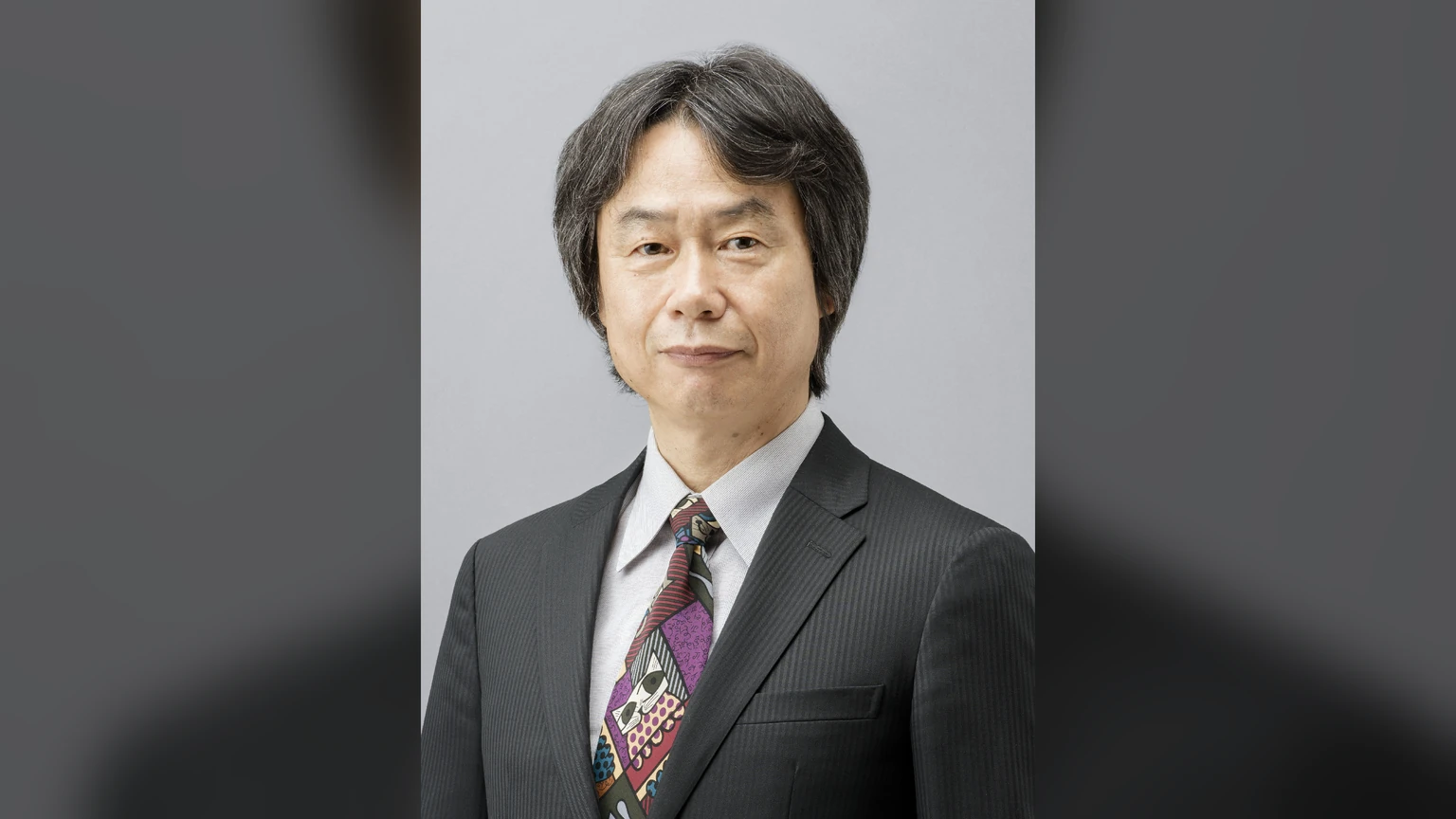
Shigeru Miyamoto, the Nintendo designer behind Super Mario and The Legend of Zelda, says generative AI could turn out to be a good thing for creative work, not because it makes things for people but because it forces them to think harder about what creating actually means. He made the comments at a press conference marking his selection for Japan's 2026 Order of Culture, which 4Gamer reported in detail and which English-language outlets including Kotaku, Polygon and Shacknews picked up over the following days.
His position is neither a blanket endorsement nor a rejection. Miyamoto compared generative AI to the shift from typewriters to word processors and computers, argued that copied work does not last, and said he does not know whether AI will one day handle everything, including the act of creating. For now, he said, there is still a lot left for people to do.
Coming from the most celebrated designer in the industry, at a moment when studios are arguing over how far to let AI into their pipelines, that balance is likely to be quoted on both sides of the debate.
The honour behind the press conference
The Order of Culture is one of Japan's highest honours for contributions to the arts and sciences. It is presented around Culture Day in early November, and the government announces recipients in the weeks before. Polygon notes that Japan's Ministry of Education, Culture, Sports, Science and Technology named Miyamoto among the 2026 recipients, recognition usually reserved for artists, athletes and Nobel laureates. Shacknews reports that he is the first person from the video game industry to receive it.
Kotaku, working from a transcript published by the Japanese site Denfaminico Gamer, says Miyamoto accepted the award as a representative of everyone he has worked with, pointing out that video games are made by groups of people rather than by one person. He reflected on joining Nintendo in 1977, when the company was best known for playing cards and board games, and on his recent work with Universal Studios Japan on Super Nintendo World.
He also talked about the thinking behind the Wii, describing worry that controllers had become too complex for newcomers, and about how he came around to film adaptations once fans grew attached to Nintendo characters beyond the games. The AI remarks came when reporters asked for his view of the technology.
Typewriters, word processors and a sense of layout
Miyamoto answered with a history lesson. In Kotaku's translation, he said computers arrived during his generation and tools evolved rapidly from typewriters to word processors. Design students used to learn lettering, the skill of drawing neat text for posters, and if you could do that you were already a designer. Even adapting overseas designs into Japanese and laying them out was enough.
Then computers took over the technical part. Text could be copied and pasted, images could be pulled in from anywhere, and lettering was rendered automatically. Only at that point, Miyamoto said, did individual design ability, such as a real understanding of layout, come to the front. He gave the example of a household where the husband was the professional designer but the wife turned out to have the better eye, once the tools no longer rewarded technical skill alone.
That, he said, is what it means for tools to evolve, and he thinks the same thing is happening with generative AI. In the Shacknews version, translated by VGC from Game Watch, he put it as a designer's true individual capabilities finally coming to the fore as technology advanced, and said he believes generative AI represents a similar shift.
Creating versus working
The most quoted part of the answer is about how Nintendo thinks about making things. Miyamoto said the company has always separated creating from working. Creating is coming up with the broad structure of an idea. Working is filling in the gaps and polishing it afterwards.
He said working is actually a lot of fun, because that is where you feel the satisfaction of having made something. The danger, in his words as quoted by Polygon, is that you become so satisfied with the work that you mistakenly think you have made something pretty good.
Applied to AI, the point is pointed. If a model generates the structure and a person spends their time polishing the output, the polishing can feel like authorship even when the core idea came from somewhere else. Miyamoto said the more AI takes over various tasks, the more it becomes an opportunity to think deeply about what it means to create, and that he sees this as a very good thing.
Where he draws the line
Miyamoto was clear about where he thinks the value sits. In the past, he said, there were designs made simply by copying and pasting, but those do not endure. A design is a person's individual intention to make something, while the computer assists with the labour of making it.
In the Shacknews translation he went further: because the process relies on an individual's intent, with the computer serving as an assistant, he believes that even as technology keeps evolving, and even if AI eventually handles everything, there will always be a role left for people to play.
He was careful not to predict the future. He said he does not know how far AI will go or whether a day will come when it handles creation itself. That uncertainty is worth noting, because some coverage has framed his remarks as a takedown of AI. Read in full, the quotes describe a tool that raises the bar for human intention rather than one he wants kept out of the studio.
A week of veteran designers weighing in
Miyamoto is not the only veteran speaking up. Shacknews notes that Masahiro Sakurai, the creator of Kirby and director of the Super Smash Bros. series, warned earlier the same week that overreliance on AI could lead to unoriginal and unplayable games. Together the two remarks show senior Japanese designers converging on the same worry: the risk is less the tool than people mistaking generated output for finished creative work.
The contrast with some Western studios is sharp. Epic Games, for example, has told staff on its Disney shooter that there will be no more hand-written code, as covered in our report on Epic's AI-first development and the delay to its Disney project, and has rebuilt its PC store client with AI coding tools, as in the vibe-coded Epic Games Launcher preview. Miyamoto did not say how Nintendo itself uses AI in development.
AI is also reaching Nintendo hardware from the outside. Earlier this week a security researcher said OpenAI's Codex helped him build a software-only exploit chain, covered in our report on the ns2jb Switch 2 jailbreak.
Why his framing matters to developers
For working developers, Miyamoto's creating-versus-working distinction is a practical test. If AI speeds up the polishing stage, teams can spend more time on the structure, which is where originality lives. If it is used to generate the structure and humans only tidy up, the result is closer to the copied designs he said do not last.
It also reframes the skills debate. His lettering example suggests that when a tool automates a technical craft, the people who stand out are the ones with judgement the tool cannot supply, and that some of them will not be the people who held the job titles before. That is a less comfortable message for incumbents than for newcomers, and it fits his long effort, mentioned throughout the press conference, to lower the barriers to playing and making games.
What to watch next
The award will be formally presented around Culture Day on 3 November. Nintendo has not announced any change to how it uses AI in development, and Miyamoto did not describe specific tools in use at the company. AI Lookout will follow whether his comments shift how Nintendo talks about the technology, and how other Japanese studios respond.
Quotes in this article come from translations by Kotaku, Polygon and VGC via Shacknews of the Japanese press conference transcripts. Wording differs slightly between translations; the meaning is consistent.
Common questions
What did Shigeru Miyamoto say about AI?
He said generative AI is a shift like typewriters to word processors, that copied designs do not endure, and that design depends on individual intention, so people will keep a role.
Is Miyamoto against using AI in games?
No. He called the moment a very good opportunity to rethink what creating means, while warning against overreliance and admitting he does not know how far AI will evolve.
Why was Miyamoto giving a press conference?
He was named a 2026 recipient of the Order of Culture, one of Japan's highest honours, and Shacknews reports he is the first video game creator to receive it.
Sources & further reading
- Nintendo's Shigeru Miyamoto receives the Order of Culture: press conference report (Japanese) ↗
- Shigeru Miyamoto Doesn't Know If AI Can Take Over Creativity, But Says It Could Be An Opportunity To Define What It Means To Create ↗
- Super Mario creator breaks down the problem with AI perfectly ↗
- Shigeru Miyamoto comments on AI, claiming humans will always have a role to play in game design ↗
How this story was made
Written by Kristian Kostov with AI assistance and checked against the linked sources. Company performance claims are attributed to the company. Analysis reflects AiLookout’s interpretation; we have not independently tested the products discussed. Cover photography is illustrative and does not depict the specific announcement or product.
Our editorial standards