Announced 18 Oct 2026 · Sources checked
What was published
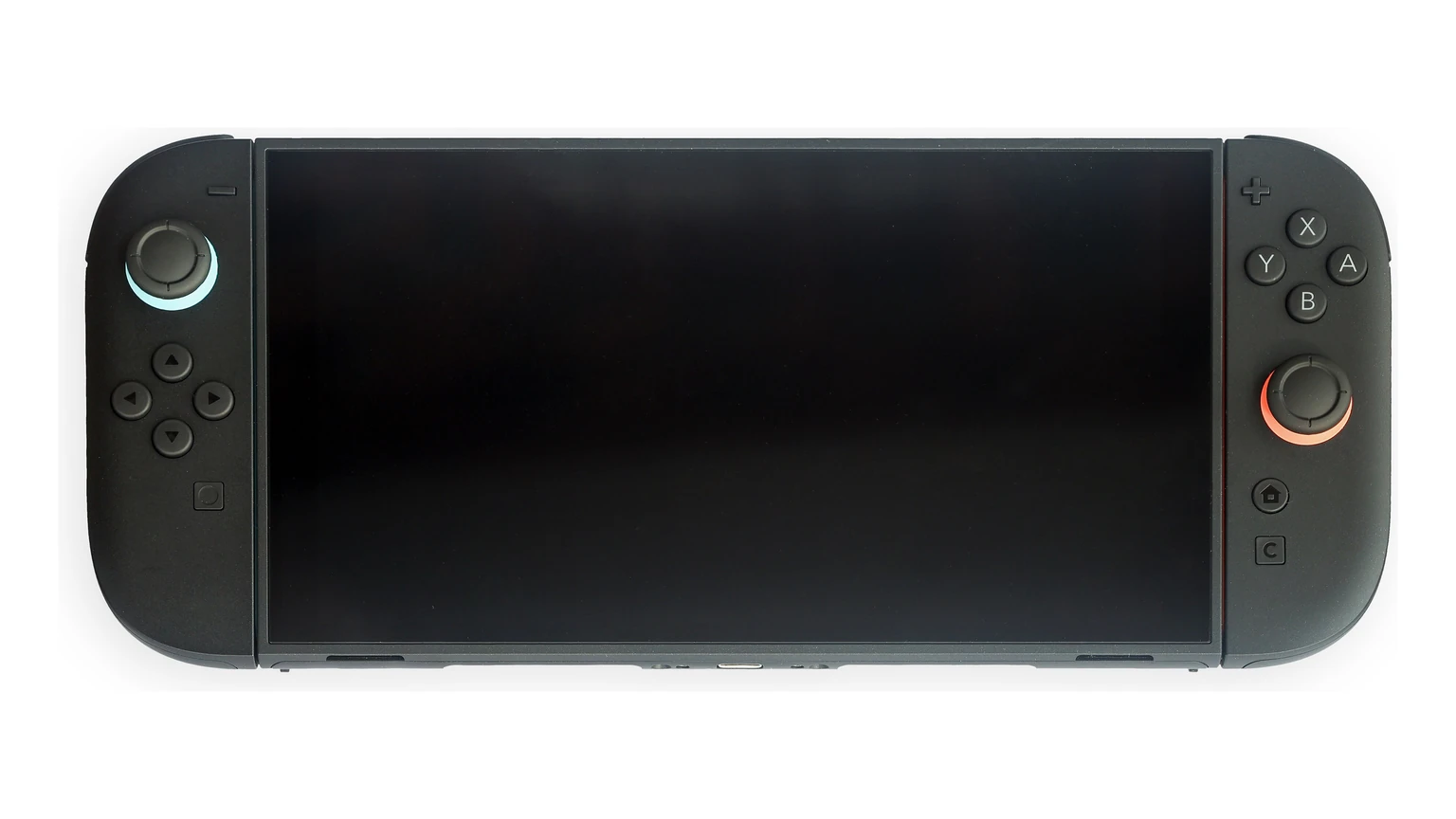
Security researcher Sammy Hajhamid, who posts as pepsipu, published a long technical account dated 18 October 2026 of ns2jb, a software-only tethered jailbreak for Nintendo Switch 2 firmware 23.0.1. He says it is, to his knowledge, the first exploit of that kind for the console. On 22 October, The Verge reported on the write-up and on a Mario Kart World mod shown running on the hacked system.
A public package lives on GitLab as pepsipu/ns2jb. The repository README, last active on 22 October 2026 in GitLab's API response we fetched the same day, describes a Switch 2 "FS demo" that runs two small native functions inside the fs sysmodule, checks their results and restores the original instructions. It is tethered: the console must be re-prepared after a reboot, and the demo does not install custom firmware.
Hajhamid frames the result as a research foothold for homebrew, game reverse engineering, save backup and peripheral access through memory-mapped I/O. He is careful to call out what it is not: a one-click consumer hack, a persistent custom firmware install, or a finished Switch 1 package, even though he says the same chain has been tested on Switch 1 hardware.
How Codex fit into the research
The story that traveled farthest is the role of OpenAI's Codex. Hajhamid built a hardware harness with JetKVMs so an agent could send controller input over USB, watch HDMI output, and toggle power through a Bluetooth light-switch flicker that presses the console's power button after crashes. A widely shared caption showed a prompt that read "set a goal to jailbreak the switch 2. make no mistakes."
In an edit on the same post, he says that caption was a joke. The real Codex /goal he set was for userland code execution through a WebKit path, and that attempt did not succeed. The jailbreak itself, he writes, took about two weeks of substantial effort. The Mario Kart World character mod, by contrast, "was entirely vibecoded in a day" for fun after the jailbreak worked.
That distinction matters for how the episode is read. Codex appears in the account as a parallel worker that hunted WebKit and later helped package and explore dumps, not as a button that jailbroke the console from a single prompt. The human researcher still chose targets, built the harness, and wrote the narrative of the chain.
What the write-up says was chained together
Hajhamid's post describes a multi-stage path from a Switch 1 game to privileged filesystem code. The entry point he highlights is SmileBASIC 4, a programming environment with a history of console exploits. He says Codex found a 32-bit integer overflow in the interpreter's REMOVE command that yielded out-of-bounds read and write and, after further work, return-oriented programming in userspace.
From there the write-up moves into the built-in fs sysmodule. It describes a buffer overflow in path normalization for paths that use a parent-directory component with a backslash, overflowing a 0x301-byte temporary buffer during GetEntryType handling, then corrupting a BufferedStorage cache entry to gain arbitrary read and write. Setting a saved process id to 1 is described as unlocking FullPermission, which let him dump internal storage and ordinary sysmodule code for offline study.
The final privilege step in the narrative is a logic bug: with read/write inside fs, he says he could swap the ExeFS object the loader sees so that arbitrary code runs under another sysmodule's NPDM metadata. Using ro's permissions and MapProcessMemory, he describes patching fs's own code. AI Lookout is summarizing the public post, not republishing a step-by-step guide.
What the demo shows today
The public proof people saw first was entertainment, not a CFW installer. Hajhamid posted Mario Kart World gameplay with added characters chosen with friends from Dabney House, including Cinnamoroll, the red Angry Bird and Tole Tole. The Verge's write-up also mentions Peter Griffin and Steve from Minecraft among characters shown in the wider discussion.
The GitLab README's FS demo is narrower and more technical: it needs SmileBASIC 4.4.9, system software 23.0.1, Node.js 22 or newer on macOS or Linux, more than 20 MiB free in the SmileBASIC save, and a computer on the same network as the console. It tells operators to restart the console when finished so the original ro process is restored. Hajhamid notes a physical test on 21 October 2026 in which both instruction challenges, restoration and cleanup passed on the third fresh boot.
The Verge also quotes another modder claiming SmileBASIC is "not strictly needed," and says users on the Switch 2 hacks subreddit are still arguing how large the practical impact is. Complexity remains high enough that the piece reads as a research break, not a mass-market unlock.
How this fits other AI-assisted security work
AI-assisted vulnerability work is no longer rare. AI Lookout has covered XBOW's GPT-5.6 Sol Chrome full chain that won a large Google bounty, PHP patches for flaws AI helped researchers find, and tooling such as Chainguard's Mythos-based Harness waitlist. ns2jb sits in that pattern: models speed search and packaging, while hardware access and taste still sit with the operator.
It also sits next to defensive warnings about agents in developer tools, including ProjectDiscovery's backdoored-model demo against Codex CLI. The same class of coding agent can help a researcher map an unfamiliar sysmodule dump or, in other hands, help automate abuse. The Switch 2 case is notable because the target is a sealed consumer console with a fresh exploit surface, not a browser bug bounty program.
Hajhamid himself sketches follow-on research rather than a finished platform: porting the fs bug to a WebKit data-only trigger so an eShop title is not required, looking for other built-in modules, and using fs-hosted native code to drive crypto hardware for NCA decryption studies. Those are roadmaps, not shipping features.
Limits, debate and Nintendo's position
Several limits are explicit in the primary sources. The jailbreak is tethered. Persistence and full custom firmware are future work. The packaged demo focuses on verifying code execution inside fs, then cleaning up. Hajhamid says the Switch 1 version worked in testing but is not packaged yet, and would still not match a modchip.
Nintendo's public posture toward console security and its bug bounty are part of the backdrop Hajhamid mentions when he discusses why WebKit draws attention, but neither The Verge piece we read nor the blog claims a Nintendo response specific to ns2jb as of our 22 October 2026 check. Until Nintendo ships a firmware that breaks the chain, the research value is access; after a patch, the write-up remains a case study in mixed human-and-agent reverse engineering.
Legal and terms-of-service risk for end users is unchanged by the existence of a research demo. Running unsigned code on a console can void warranties and violate platform rules regardless of how clever the chain is. This article does not provide instructions for doing that.
What we could not verify
We did not reproduce the exploit, run the GitLab demo, or verify code execution on hardware. Exploit details above are condensed from Hajhamid's public blog and the repository README. We also could not independently confirm the secondary modder's claim that SmileBASIC is unnecessary, beyond The Verge's report of that claim.
Star and fork counts on GitLab move quickly; the API snapshot we pulled on 22 October 2026 showed 53 stars and 24 forks at that moment and should not be treated as a lasting popularity metric. Video embeds and private footnotes in the blog were not re-hosted here.
What to watch next
Watch for a Nintendo system update that silently breaks the fs or SmileBASIC steps, for a WebKit-only entry that removes the retail-game requirement, and for whether the homebrew community turns the FS demo into save tools or game mods that ordinary owners can run. Also watch how often coding agents appear in the next wave of console write-ups, with clearer separation between joke prompts and actual labor.
Common questions
Did ChatGPT jailbreak the Switch 2 by itself?
No. Hajhamid writes that a joke caption was widely misunderstood. He set a Codex goal for userland code execution that failed, and he describes about two weeks of substantial human-led work for the jailbreak itself.
Does ns2jb install custom firmware?
Not according to the public materials. The GitLab demo verifies native code execution inside the fs sysmodule and restores original instructions; it does not install persistent custom firmware.
Is this article a how-to?
No. AI Lookout summarizes the public research narrative and news coverage. It does not provide steps for running unsigned code on a Nintendo console.
Sources & further reading
How this story was made
Written by Kristian Kostov with AI assistance and checked against the linked sources. Company performance claims are attributed to the company. Analysis reflects AiLookout’s interpretation; we have not independently tested the products discussed. Cover photography is illustrative and does not depict the specific announcement or product.
Our editorial standards