Announced 21 Oct 2026 · Sources checked
What OpenAI and its partners did
OpenAI, the biotech start-up PerturbAI and Scripps Research say they used thousands of AI agents to work through a huge brain-cell experiment in about half an hour. In a research post dated 21 October 2026, OpenAI says agents powered by GPT-Rosalind, its life-sciences model, analysed existing data from millions of mouse brain cells "in just 32 minutes" and connected the effects of gene disruptions with findings from the scientific literature.
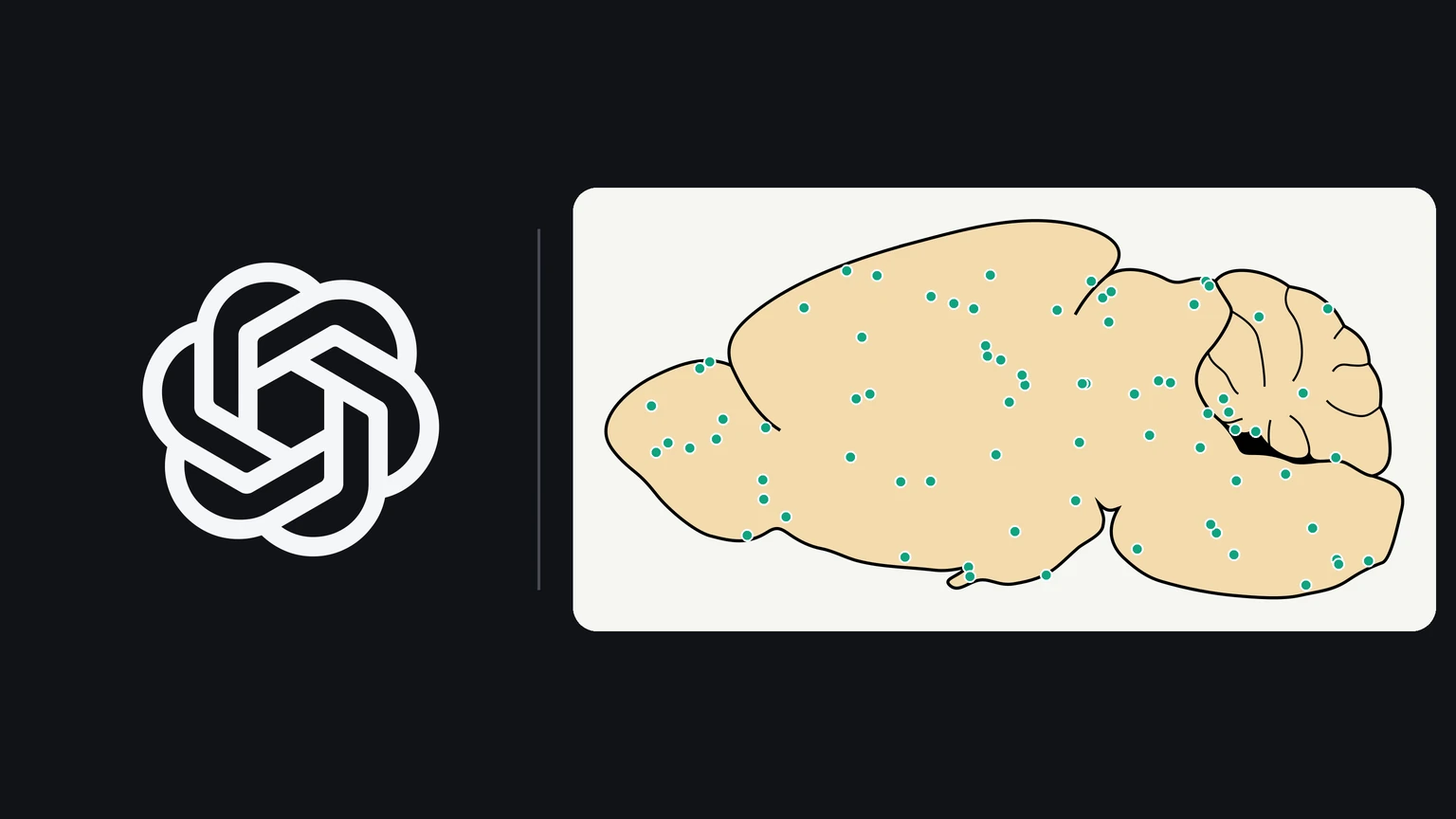
The data came from PerturbAI's whole-brain CRISPR atlas, which the company describes in its announcement as an 8-million-cell map built by disrupting genes directly in living mice and measuring how each type of brain cell responds. PerturbAI says the atlas has been downloaded more than 40,000 times. The team estimates that a comparable human analysis and literature review, done one gene disruption at a time, would take months to a year.
The work is written up in a bioRxiv preprint titled "Distributed AI agents enable comprehensive discovery of biological insights at scale", with authors from Scripps, OpenAI, PerturbAI, UC San Diego and the Howard Hughes Medical Institute. A preprint has not been peer reviewed, so the results should be read as the authors' claims for now.
How distributed biological reasoning works
OpenAI calls the method distributed biological reasoning. Instead of asking one model to read an entire dataset, the team split the experiment into pieces and gave each agent one gene disruption to investigate. Each agent analysed how cells responded, searched the literature and proposed explanations. Their reports were then combined into what the team calls a reasoning atlas, linking genes, cellular effects, publications and possible biological mechanisms.
PerturbAI says the system ran "nearly 2,000 agents in parallel", a figure attributed to Joy Jiao, OpenAI's head of life sciences. OpenAI also tested whether a single agent given the whole dataset could do as well, keeping the model and resources fixed. As the workload grew, the single agent searched less of the literature, citing only 11 references at the largest workload, while the distributed agents cited more than 700.
According to the preprint abstract, the agents worked without access to the source manuscript for the atlas and still recovered its conclusions, predicted held-out perturbation effects and identified gene disruptions with shared or opposite outcomes. OpenAI says their judgments of novelty and scientific value also lined up with those of blinded human experts.
The leads the agents found
The most concrete lead involves DCTN1, a gene involved in moving cargo inside neurons. Mutations in it cause Perry syndrome, a rare neurodegenerative disease with Parkinson-like symptoms. In the atlas, disrupting the mouse version, Dctn1, raised the activity of genes that make cholesterol. The agents linked this to research suggesting that when cholesterol transport goes wrong, cells make more of it.
That produced a testable question, in OpenAI's words: could DCTN1 disruption change how cholesterol is distributed within neurons, and could those changes contribute to neurodegeneration? If so, restoring normal cholesterol distribution might help protect neurons. Human experts considered the hypothesis novel and worth following up, OpenAI says, but nobody has yet run the experiment that would test it.
A second finding concerns Tsc1 and Tsc2, two genes that work together to control mTOR, a major regulator of cell growth. Disrupting either gene had similar effects in several groups of neurons, but in the cerebellum, Tsc2 disruption changed dozens of genes involved in neuronal communication while Tsc1 disruption did little. OpenAI notes that in people with tuberous sclerosis, cerebellum abnormalities are strongly linked to TSC2 mutations, so the result points to specific neurons worth studying.
How the results were judged
The evaluation leaned on human reviewers. PerturbAI says biology experts scored the agents' reports for novelty, evidential support, follow-up priority and confidence. In blinded comparisons against reports written by single AI agents, the experts preferred the distributed agents' interpretations 75 percent of the time.
That is a useful measure, but it compares two AI approaches with each other, not the agents with a team of human scientists working without AI. The strongest claim, that the work would otherwise take months to a year, is the team's estimate rather than a timed head-to-head comparison. And a well-reasoned hypothesis is still only a hypothesis until a lab confirms it.
The two outside scientists quoted by OpenAI frame it in those terms. Sarah Teichmann of the University of Cambridge, a founding co-chair of the Human Cell Atlas, says AI "could help more researchers explore these resources and turn unexpected observations into new questions to test." UCSF's Tomasz Nowakowski says the cholesterol link shows how scattered clues, once connected, can offer "a new way to think about disease biology."
Where this fits in OpenAI's life-sciences push
The study is the latest step in a fast-moving OpenAI biology effort. A day earlier, OpenAI said it was buying Orchestra Bio to add drug-programme agents to Rosalind, and it has been offering free GPT-Rosalind access to US university labs. OpenAI says the new reasoning atlas is available for scientists to explore, so researchers can compare related genes and look for leads of their own.
PerturbAI says the year-long collaboration is now expanding into joint drug-target discovery, applying the same agent framework to its proprietary data on metabolic diseases and ageing. Its chief executive, Grace Zheng, says drug-target discovery "is still largely serendipitous" and that combining causal data from living systems with frontier AI could make it more systematic. Other groups are pushing AI into biology from the design side, as with the open RFD4-Proteina protein-design model from NVIDIA and the Baker Lab.
Limitations and open questions
Several caveats apply. The work used mouse data, and findings in mice often do not carry over to people. The headline speed figure covers the agents' analysis run, not the years of work that went into building the atlas or the experiments still needed to confirm any lead. The preprint is not peer reviewed, and AI Lookout could only read its abstract, not the full methods.
There are practical questions too. OpenAI has not said how much computing the run used, how often the agents produced wrong or unsupported explanations, or how reviewers caught them. PerturbAI is a commercial partner with drug programmes of its own, and OpenAI sells GPT-Rosalind, so both have an interest in the method looking good. Independent groups using the public reasoning atlas will be the real test of how many of its leads hold up.
Common questions
What is distributed biological reasoning?
OpenAI's name for splitting a large experiment across many AI agents, each investigating one piece, such as a single gene disruption, and then combining their reports into a shared atlas.
What did the agents find about DCTN1?
Disrupting Dctn1 in mouse neurons raised cholesterol-making genes, which led the agents to ask whether faulty cholesterol distribution could contribute to neurodegeneration. It is an untested hypothesis.
Can other scientists use the results?
Yes. OpenAI says the reasoning atlas is available for researchers to explore, and the methods are described in a bioRxiv preprint that has not yet been peer reviewed.
Sources & further reading
How this story was made
Written by Kristian Kostov with AI assistance and checked against the linked sources. Company performance claims are attributed to the company. Analysis reflects AiLookout’s interpretation; we have not independently tested the products discussed. The cover places the companies’ own logos, taken from public-domain or openly licensed files credited in the caption, on a plain background. It is not a product photograph, a screenshot, or an endorsement.
Our editorial standards