Announced 16 Oct 2026 · Sources checked
What Mensch wrote
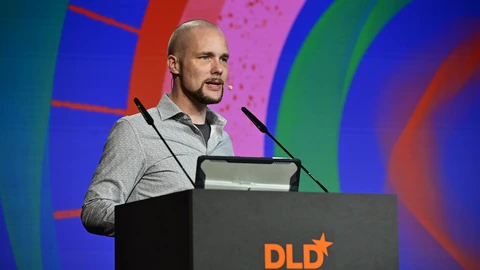
Arthur Mensch, the co-founder and chief executive of Mistral AI, has published an essay arguing that Europe must keep building frontier AI models of its own rather than leave them to the United States and China. He posted it on X as a long-form article titled Build or surrender on 16 October 2026, introducing it with the line that leaving frontier AI to the Americans and the Chinese "is a fundamental mistake." Cybernews reported that he first published it on LinkedIn on 15 October.
The essay runs to fewer than 900 words and is written as a rebuttal. Mensch starts by stating the opposing view fairly: a frontier model costs hundreds of millions of euros per generation, soon billions, so Europe could follow the internet playbook, compete at the application layer, lean on its industrial data and domain expertise, and use open models released by others for everything else.
His answer is blunt. Taking that route, he writes, "will end up costing Europe what remains of its place in the world and lock it into a regime of economic dependence unprecedented in the history of civilizations." He closes with the phrase that gives the piece its title: "Build or surrender: for now, the choice is still ours."
The argument about who owns the model
Mensch's first argument is historical. Europe built applications on the internet and left the platforms to others, he writes, and twenty years later European companies pay more than 260 billion euros a year to American cloud and software providers. Europe, in his phrase, "has become the continent that consumes what others build." The essay does not give a source for the 260 billion figure.
He then argues that AI is worse than the internet in this respect. The internet ran on open protocols that nobody owned; closed AI models have an owner, and "whoever controls the model sets the terms": the owner can change the price, restrict uses or withdraw a version, and every application and agent built on top inherits those decisions without a say.
To show the risk is real, he points to June, when, he writes, "an American lab suspended access to its most advanced models" before restoring it, a decision "not made in Europe, nor for European reasons." He does not name the lab. Cybernews, Trending Topics and MRKT3.0 all identify it as Anthropic, which they report cut off access to its top models in June after a US government order.
Why he says open weights are not enough
The most pointed part of the essay is aimed at people who think open-weight models settle the matter. Mensch, whose company releases many of its models openly, concedes the point is "partly true": an open model can be downloaded, self-hosted and audited. But without contributing to the ecosystem, he writes, you cannot choose what gets released, when, or under what licence the next version ships. "Dependence on others, even on their openness, is still dependence."
That is a direct response to the cheapest version of digital sovereignty, in which European companies run Chinese or American open weights on European servers. Some already do. Germany's Aleph Alpha built Kolibri, a German-English open-weight model, explicitly for sovereign deployment, while others simply host the strongest open models available, wherever they come from.
Mensch's line is that hosting a model is not the same as steering it. If the next release is withheld, relicensed or tuned for someone else's priorities, a company that only downloads weights has no recourse.
The security and research case
Mensch broadens the case beyond economics. Models are taking a central role in cyber defence and the protection of critical infrastructure, he writes, so a state needs to audit the systems it uses, adapt them and be sure it will still have access tomorrow. With a model designed and controlled elsewhere, "none of these three conditions is guaranteed over time."
Mistral has been leaning on exactly that argument in its products. Its Large 4 preview, nicknamed Le Chonk, launched on 6 October with company-reported cyber results and private work with security partners, and the company says the weights will follow.
He makes a similar case for science. Frontier models are becoming indispensable in research, he argues, and are increasingly used exclusively by the companies that build them, which have every interest in keeping the advantage. Because using AI to do AI research speeds up whoever has it, he warns of "very significant threshold effects." Mistral's own research deals point the same way, including a plan with CERN for a Large Physics Model trained on simulated collisions.
What Mistral says it will do
The essay also rejects the idea that Europe must choose between frontier research and industrial deployment. Part of Europe's growth will come from AI tailored to industry, Mensch writes, but that requires a European AI industry, "not accepting an AI industry in which we would be mere tenants." For the most demanding customers, he says, mastering the model is a prerequisite, and "you do not learn to modify and use a model effectively simply by importing it."
As evidence Europe can compete, he names Black Forest Labs and ElevenLabs, which he says make the best models in their categories, and Mistral's own teams in Paris, London, Munich, Barcelona, Warsaw and the United States. The one concrete commitment is about compute: Mistral is "about to increase our compute capacity sixfold over the coming year," he writes, adding that the company can move faster with more capital, "and we will raise it."
That follows a large round. Mistral announced a 3 billion euro Series D in September; Trending Topics and MRKT3.0 put the valuation at about 21 billion euros, and MRKT3.0 reports the round was led by Samsung Electronics. The essay does not say how the sixfold expansion will be financed or where the new capacity will sit.
The case against
Mensch is arguing against people with real influence. Trending Topics notes that European Commission president Ursula von der Leyen said in her September State of the Union speech that Europe could reap enormous benefits from AI without developing frontier technology itself. MRKT3.0 adds that the Commission's special envoy for industrial AI advised commissioners in September to prioritise adoption, while tech chief Henna Virkkunen has said the bloc has not given up on frontier AI.
The market has also handed critics an example. Both outlets report that the search engine Ecosia recently dropped Mistral as its AI supplier in favour of open models, some of them Chinese, running on EU servers, citing quality and roughly halved costs. Trending Topics also reports that Large 4 is the strongest open model outside China on Artificial Analysis but trails seven Chinese open-weight models.
And Mensch is not a neutral voice. As Trending Topics points out, the head of Europe's best-funded frontier lab stands to benefit directly if governments and companies decide to back European models.
What it means for European AI buyers
For companies weighing which models to build on, the essay is a reminder to price in control, not just benchmark scores and token costs. The questions Mensch raises are concrete: who can change the price or terms, whether a version can be withdrawn, and whether the next release will keep a usable licence. Those apply to closed APIs and open weights alike.
It is also a pitch, and its most quotable figures, the 260 billion euros and the trillions in future fees, come without sources. The sixfold compute plan is the claim to watch: if Mistral delivers it alongside the promised Large 4 weights, the argument that Europe can still build at the frontier will rest on more than an essay. The Commission's Apply AI summit on 17 November, reported by MRKT3.0, is the next public moment for the policy side of the debate.
Common questions
Where was Arthur Mensch's essay published?
He posted it as an X article titled Build or surrender on 16 October 2026. Cybernews reports it first appeared on LinkedIn on 15 October.
Which lab did Mensch mean when he said access was suspended in June?
He did not name it. Cybernews, Trending Topics and MRKT3.0 identify it as Anthropic, which they report suspended access to its top models in June after a US government order.
What did Mensch commit Mistral to?
He wrote that Mistral is about to increase its compute capacity sixfold over the coming year and will raise more capital to move faster. He gave no cost, location or timeline beyond that.
Sources & further reading
How this story was made
Written by Kristian Kostov with AI assistance and checked against the linked sources. Company performance claims are attributed to the company. Analysis reflects AiLookout’s interpretation; we have not independently tested the products discussed. Cover photography is illustrative and does not depict the specific announcement or product.
Our editorial standards