Announced 18 Oct 2026 · Sources checked
What Microsoft cancelled
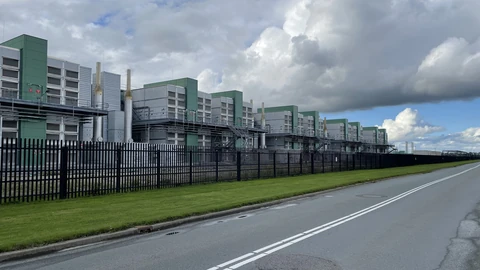
Microsoft has walked away from its agreement to be the anchor tenant at Nscale’s planned AI data centre in Loughton, Essex, the Telegraph reported on 18 October. According to the paper, Microsoft recently told the British company it was ending the deal, which was announced in 2025 as part of the £22 billion of UK investment Microsoft pledged during Donald Trump’s state visit. Microsoft was the site’s only announced customer and had agreed to rent about 23,000 Nvidia AI chips there.
Nscale did not dispute the report. A spokesperson told Reuters that “our relationship with Microsoft remains strong and long-term, and this unfortunate London-wide grid issue has no impact on our other contracts.” The company added that it remains committed to the Loughton project and the UK and is “exploring alternative power sources for the site, in addition to other expansion sites in the UK.” Microsoft did not immediately respond to Reuters, and as of 18 October we found no public Microsoft statement explaining the decision.
The cancellation matters beyond one building. Loughton was the project British ministers held up as a flagship for national AI capacity, and Microsoft is one of Nscale’s two largest customers at a moment when the company is trying to sell shares to public investors in New York.
Why the Loughton site stalled
The trouble at Loughton was power. In September the Guardian reported that UK Power Networks, the company that would connect the site to the local grid, had told Nscale the network would not be able to supply enough electricity until the early to mid-2030s. The site is seeking up to 90 megawatts, which the paper put at the energy use of about 315,000 homes. The delay was first reported by the AI industry newsletter Morning Intelligence.
The original plan was for the data centre to start operating in 2027. The Guardian had already reported in March that the chosen plot was still a working scaffolding yard; by September that yard had been cleared, and Nscale said it was looking at generating power on site and at ways to speed up its grid connection. The Telegraph’s 18 October report repeated that grid officials do not expect a power supply until the 2030s, and Nscale’s own statement to Reuters described the problem as a London-wide grid issue.
None of the reporting says Microsoft objected to Nscale’s engineering or its chips. The public record points to a simpler mismatch: an anchor tenant that wanted capacity soon, and a site that cannot be energised for years.
What the deal meant for Nscale and its IPO
Nscale filed an S-1 registration statement with the US Securities and Exchange Commission on 18 September 2026, planning to list on the New York Stock Exchange under the ticker NSCL. The filing reports $103.4 billion of active and contracted total contract value as of 31 August, mostly in long-term take-or-pay agreements that start paying once GPU clusters are delivered, with a weighted average contract life of about 5.7 years.
That backlog is highly concentrated. TechCrunch’s reading of the filing found that about 85 percent comes from two customers: a deal to supply Microsoft with $43.8 billion of compute through 2033 and a $44.6 billion agreement with Anthropic. The Anthropic contract is contingent on Nscale obtaining financing, and Anthropic can walk away if Nscale misses milestones the filing calls stringent. For the six months to 30 June, Nscale reported revenue of $140.6 million and a net loss of $1.02 billion.
The Telegraph says more than 40 percent of the contracted revenue comes from Microsoft but that the UK deal is believed to be a small part of it. Microsoft’s larger commitments elsewhere appear intact: the S-1 says a 200-megawatt campus Nscale bought at Sines in Portugal will support an expanded Microsoft deployment of more than 66,000 Nvidia Vera Rubin NVL72 GPUs from late 2027. So the direct revenue hit may be modest. The signal is less comfortable, because it shows that even a flagship contract with Nscale’s biggest customer can disappear when a site is late.
Why grid connections are now the bottleneck
Britain’s queue for grid connections helps explain how a project with a hyperscale tenant can stall. The Guardian cited Ofgem figures from June showing 315 data centres waiting to connect to the national grid, representing 73 gigawatts of demand, against a national peak demand of about 45 gigawatts. A UK Power Networks spokesperson told the paper that many data centres connecting to its distribution network are waiting for work on the wider transmission network before they can operate. We have written before about why AI data centre electricity projections are best read as scenarios, and Loughton is a concrete example of the constraint behind those scenarios.
For an operator, a delay of several years on a single site is not just a scheduling problem. Nscale’s S-1 says its contract terms begin when GPU clusters are delivered, so a site that cannot be powered produces no contracted revenue while capital is tied up in land, design and equipment orders. That is why Nscale is talking about alternative power sources, such as on-site generation, rather than simply waiting for the network.
Why the timing hurts
The news lands in a nervous week for specialised AI cloud providers, often called neoclouds. The Telegraph noted that rival developers’ shares have fallen sharply on worries about debt as interest rates rise, that Australia’s Firmus cancelled a planned $20 billion listing earlier this month citing market conditions, and that CoreWeave and Nebius shares and bonds have slumped. A few days earlier, Gartner warned that more than $3.5 trillion of AI infrastructure spending could be exposed to impairment by 2030, singling out neoclouds as the most exposed group.
Nscale has positioned itself as Britain’s sovereign data centre provider and counts Nvidia among its backers; TechCrunch reported that Nvidia agreed in September to provide $1 billion of convertible debt as part of a $3.1 billion financing. The Telegraph said Nscale has been privately valued at $15 billion and is seeking a listing that could value it at up to $35 billion. It also reported separate delays at a flagship Nscale data centre in Norway, reportedly leading to heavy penalties. Investors weighing the IPO will now ask how many other sites face similar power timelines.
What changes for Microsoft and the UK
For Microsoft, Loughton was one piece of a far larger build-out. The company is designing its own inference silicon, including the Maia 300 chip it plans to deploy at multi-gigawatt scale from 2027, and it rents capacity from several neoclouds. Walking away from a site that cannot be powered until the 2030s frees it to place that demand somewhere it can be served sooner. We found no indication that Microsoft has withdrawn its wider UK investment pledge.
For the UK government, the cancellation is more awkward. Ministers cited Loughton when they set out the country’s AI plans in 2025 and described it as the largest UK sovereign AI data centre. Losing its only announced customer turns a grid-connection delay into a test of whether Britain can deliver the power that its AI strategy assumes.
What we do not know yet
Several basic facts remain unconfirmed. Microsoft has not said why it cancelled or whether any penalty or compensation applies. Neither company has said how many of the roughly 23,000 Nvidia chips were already ordered or delivered, or whether they will be redeployed at another Nscale site. Nscale has not named the alternative power sources it is studying or a new opening date for Loughton, and the Telegraph account of the termination relies on unnamed sources that Nscale’s statement did not contradict.
Watch for an amended S-1, which would be expected to reflect any material change to contracted revenue or risk factors, any Microsoft comment on its UK capacity plans, and whether Nscale signs a replacement tenant for Loughton or shifts the capacity to its sites in Norway, Portugal or the United States.
Common questions
Why did Microsoft cancel the Nscale Loughton deal?
Microsoft has not explained its decision. Reporting points to power: grid officials told Nscale the site may not get enough electricity until the 2030s, years after its planned 2027 opening.
Does this end Nscale’s other contracts with Microsoft?
Nscale says no. It told Reuters the grid issue has no impact on its other contracts, and its S-1 describes a separate Microsoft deployment of more than 66,000 Vera Rubin GPUs in Portugal from late 2027.
Is Nscale still planning to go public?
Yes, as far as public filings show. Nscale filed an S-1 on 18 September 2026 to list on the NYSE as NSCL, and the Telegraph says it is seeking a valuation of up to $35 billion.
Sources & further reading
- Microsoft axes AI deal in setback for UK data centre pioneer ↗
- Microsoft pulls out of UK data center deal with Nscale, Telegraph reports ↗
- Launch of UK’s ‘largest AI supercomputer’ delayed by power supply problems ↗
- Nscale’s IPO will test Wall Street’s appetite for concentrated AI bets once again ↗
- Nscale Limited Form S-1 registration statement ↗
How this story was made
Written by Kristian Kostov with AI assistance and checked against the linked sources. Company performance claims are attributed to the company. Analysis reflects AiLookout’s interpretation; we have not independently tested the products discussed. The cover places the companies’ own logos, taken from public-domain or openly licensed files credited in the caption, on a plain background. It is not a product photograph, a screenshot, or an endorsement.
Our editorial standards