Announced 14 Oct 2026 · Sources checked
What Kyobo turned down
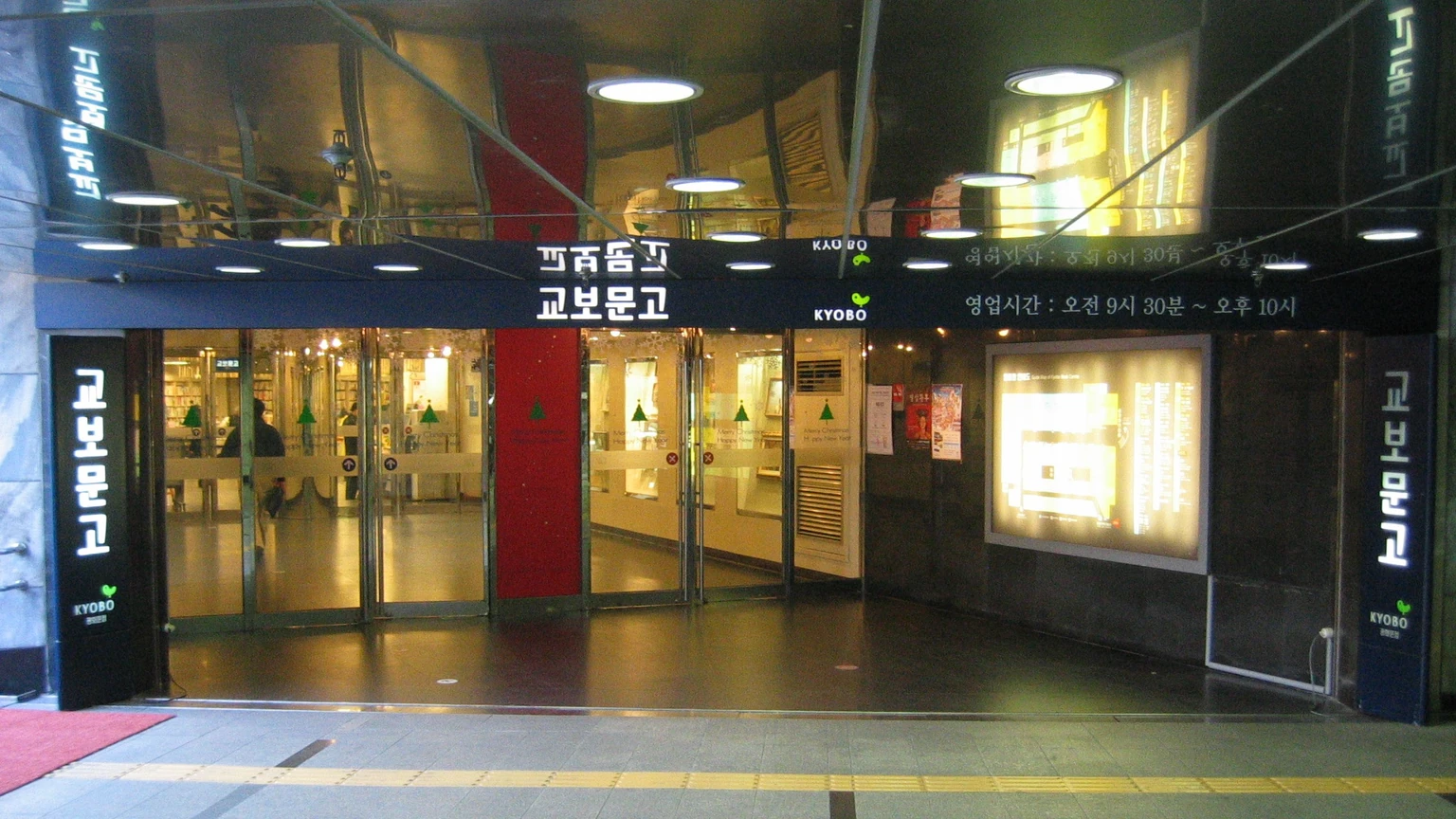
Kyobo Book Centre, South Korea's largest bookstore chain, has refused to fill bulk orders for about 100,000 Korean-language books from overseas companies because it could not rule out that the books were meant for training artificial intelligence. Kyobo disclosed the orders to the JoongAng Ilbo on 14 October, and confirmed its decision to The Korea Herald on 20 October.
According to the Korea JoongAng Daily, the English edition of the JoongAng Ilbo, Kyobo has received such inquiries since early this year from roughly 10 companies based abroad, most of them in the United States. A Kyobo official told The Hankyoreh the companies had addresses in three or four countries, including the US and Britain, and that their requests added up to about 100,000 books.
Kyobo also runs a wholesale business that supplies other retailers, so a large overseas order is not in itself unusual. What stood out was the shape of these orders and the buyers' refusal to say where the books would end up.
Why the order looked like AI training
The companies did not name particular books or even particular genres. They wanted as many different titles as possible, one copy of each. Kyobo said that made the requests different from ordinary trade: overseas bookstores in the United States, Europe and Vietnam that buy Korean books usually supply a list of titles and explain what the purchase is for.
That pattern fits how books are used to train language models. A model learns from the text, so a second copy of the same book adds nothing, while every new title adds fresh material. Large models are hungry for exactly this kind of long, edited writing.
Kyobo asked the buyers to identify the final recipients. The companies said that information was confidential. Some denied the books were for AI training, while others said the final recipient was a data-related company. Speaking to The Korea Herald, a Kyobo official said: “We had to reject the order because the company placing it was not the end recipient. We were told that, beyond identifying the end recipient as a data company, no further information could be provided under the terms of the contract.”
Kyobo told the JoongAng that it ended talks because “we could not rule out the possibility that the books would be used for AI training,” and that, given the risks to Korean publishers, bookstores and distributors, it would not proceed unless the recipient and intended use were confirmed. The official who spoke to The Korea Herald stressed that checking the purpose and recipient of bulk orders is Kyobo's standard practice, and that it will keep verifying orders and selling accordingly.
Other Korean booksellers got similar offers
Kyobo is not the only Korean bookseller to receive this kind of approach. In August, a company based in Arizona contacted the used-book business of online retailer Yes24 and Seoul Book Bogo, a secondhand bookstore, about buying used books in bulk. It told the JoongAng that it was buying one copy of each title, excluding children's books, and that the number of different titles mattered more than the total number of books. The same company also approached Kyobo.
The online bookstore Aladin told The Hankyoreh that a foreign company emailed it last month offering to buy about 10 million won worth of Korean used books, with no titles or bestseller list specified, as a first purchase in what it said would be an ongoing arrangement. Aladin refused straight away. The Hankyoreh says the buyer appeared to be a long-established Canadian used-book dealer, and that it is not known whether the books were meant for AI training.
An Aladin official said staff turned the offer down without needing to escalate it, because there was no precedent for a foreign company buying Korean-language used books in such volume, and that the company would refuse similar offers.
Publishers move to respond
The Korean Publishers Association discussed the issue at a board meeting on 13 October. It decided to send official letters to bookstores, used-book shops and distributors to survey how often such purchases are being attempted, and members proposed a working-level body with other publishing groups.
Kim Hyun-jong, a standing director of the association and head of the publisher Doublebook, told The Hankyoreh that results could be shared as early as next week. “We are not opposed to the use of legally collected data,” he said, but intellectual property should be paid for fairly. The association plans to use the survey to press the government and the National Assembly for stronger copyright protection, according to The Korea Herald and Hansbiz.
The association also said it would join other publishing groups in a joint statement supporting the Frankfurt Appeal, an open letter unveiled at the Frankfurt Book Fair on 6 October. The appeal criticises training AI on published works without authors' consent and calls on AI companies to disclose which works they used. Kyobo itself has called for publishers and distributors to share information and agree on rules for handling suspected AI-training purchases.
The global fight over books as training data
The Korean reports place the orders in a wider fight over books as training data. Anthropic has been at the centre of it. Korean outlets note that it bought millions of used books from 2024, cut them apart and scanned the pages, and that a US court ruled in June 2025 that training on lawfully acquired books could be fair use while treating pirated copies separately. Hansbiz reports that Anthropic's US$1.5 billion settlement with authors received final court approval in July 2026. Other publishers are still suing, as with Canada's largest newspapers taking Anthropic to court in Ontario.
In Japan, according to the Japan Book Publishers Association as cited by the JoongAng, the distributor Nippan sold new Japanese-language books to Anthropic for a year from December 2024. Hansbiz reports that the sale was made by a Nippan affiliate and that Nippan said it did not know at the time that the books would be used for AI training. Hansbiz also reports that the US distributor Ingram told publishers in January that they could exclude their titles from sales to AI companies.
The common thread is that buyers increasingly want proof of where training data came from, while sellers want to know what their goods are for. Websites face a similar question with crawlers, as seen in Meta's rewrite of its business crawling terms. Our explainer on why scaling laws push labs toward more text covers why fresh, high-quality writing is in such demand.
What remains unknown
No AI company has been named as the end buyer in any of these cases, and none of the reports identify the overseas companies that contacted Kyobo. Some of the buyers explicitly denied that the books were for AI training. Kyobo's decision rests on the pattern of the orders and the missing information, not on proof of what the books would have been used for.
It is also unclear how much Korean-language text has already been bought or scanned through other channels, and whether a refusal by one chain makes much difference when used-book markets and smaller sellers have fewer checks. The Hankyoreh describes the secondhand market as especially exposed, with sellers' own caution the main safeguard for now.
The next concrete step is the publishers' association survey, which could show how widespread these approaches are across Korean bookselling. Any push for new copyright rules in the National Assembly would follow from that.
Common questions
Who tried to buy the books from Kyobo?
About 10 overseas companies, mostly US-based, according to Kyobo. They have not been named, and they would not identify the final recipient beyond, in some cases, a data company.
Is there proof the books were for AI training?
No. Kyobo said it could not rule it out, based on the one-copy-per-title pattern and missing information. Some buyers denied an AI purpose.
What are Korean publishers doing about it?
The Korean Publishers Association is surveying bookstores and distributors, plans to back the Frankfurt Appeal, and wants stronger copyright protection from the government and parliament.
Sources & further reading
How this story was made
Written by Kristian Kostov with AI assistance and checked against the linked sources. Company performance claims are attributed to the company. Analysis reflects AiLookout’s interpretation; we have not independently tested the products discussed. Cover photography is illustrative and does not depict the specific announcement or product.
Our editorial standards