Announced 21 Oct 2026 · Sources checked
What Google reported
On 21 October 2026 Google Research published a blog post on a prospective, multi-site study of its AI for pregnancy ultrasound. The headline result: an AI model reading short, standardised scans taken by people with no sonography training estimated how far along a pregnancy was about as accurately as expert sonographers, at a medical institution in Chicago and one in Nairobi, Kenya.
The post, by Google Research engineer Angelica Willis and Google for Health clinical lead Nichole Young-Lin, summarises a peer-reviewed paper in JAMA Network Open, Generalization of AI-Based Gestational Age Assessment Using Blind Sweep Ultrasonography. Europe PMC lists the paper's publication date as 1 July 2026, so the 21 October post is Google's public write-up rather than a new result. It is still the clearest account so far of how the system behaves outside the setting it was built in.
This is research, not a product. Google does not say the system is approved as a medical device or sold to clinics, and the post describes it throughout as a research AI system.
How blind-sweep ultrasound works
Gestational age is the master timeline of a pregnancy. A clinician quoted in Google's post explains that screening, many treatments and decisions about when to deliver are all based on it. The standard way to measure it is with ultrasound: a trained sonographer finds specific cross-sections of the fetus and measures them, a skill that takes years to learn and varies from operator to operator.
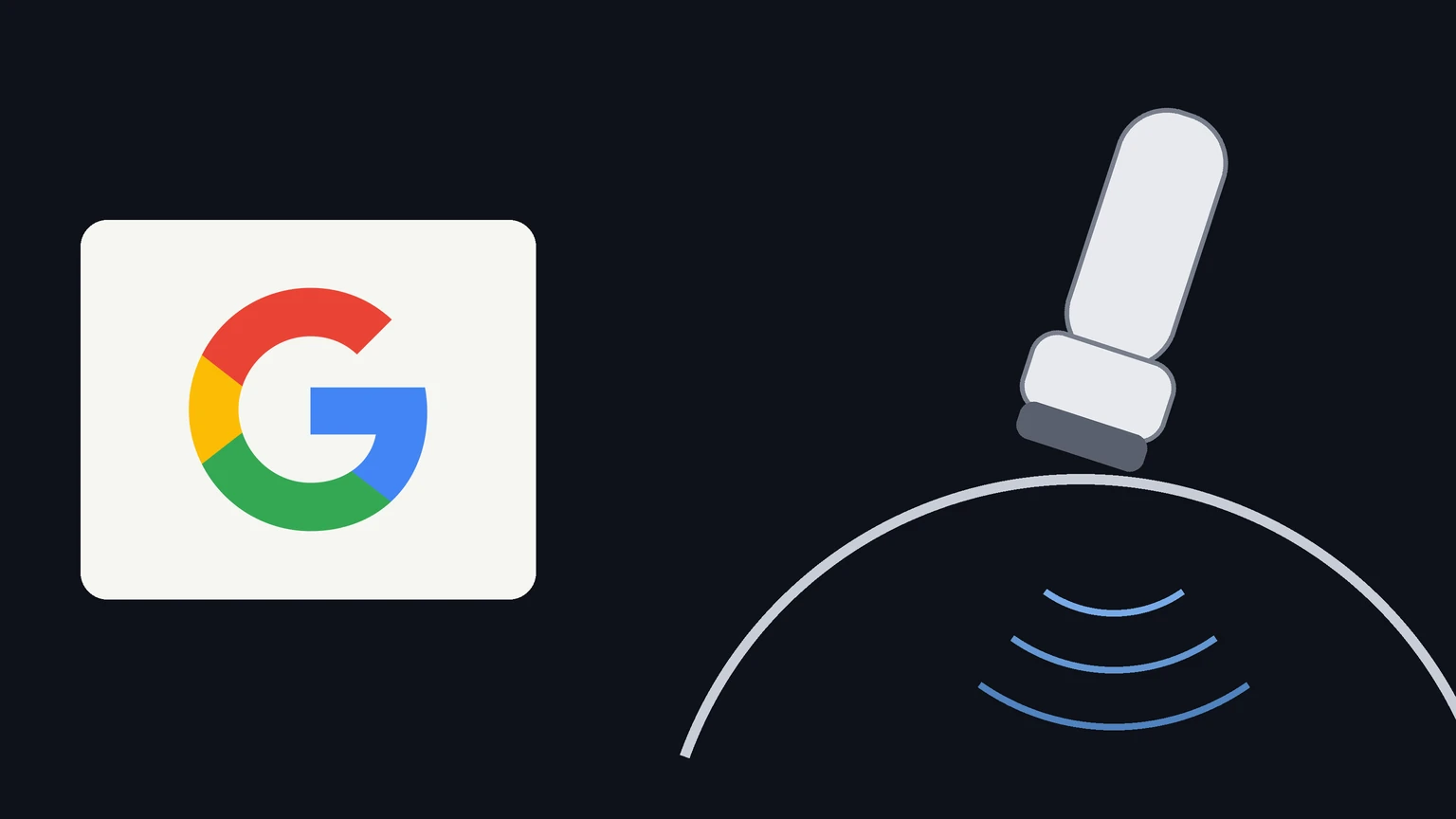
A blind sweep removes most of that skill. The operator glides a probe across the abdomen in a fixed pattern without looking for any particular view, and software interprets the video. Google's post says this lets frontline health workers scan with low-cost, portable probes after minimal training. The AI then turns the sweep into an estimate of gestational age.
Google has worked on this for several years. An earlier study, published in Communications Medicine in 2022, tested the model on unseen patients from the same retrospective cohort it learned from. The new study asks the harder question: does it still work live, on a phone, with new operators, new patients and a probe it was not trained on?
The study design
The original model was trained on 1,968 participants scanned in North Carolina and Zambia using commercial probes from Sonosite, GE and Butterfly Network. For this study the team paired it with a different device, the Clarius C3 handheld transabdominal probe, running the AI in a mobile app.
To adapt to the new probe and extend predictions past 36 weeks, the researchers fine-tuned the model on 120 participants from Chicago, which Google says is roughly 6 percent of the original training set. They used no data at all from Nairobi, keeping the Kenyan site as a strictly independent test.
According to the paper's abstract, the broader cohort had 2,043 participants, 1,008 in Chicago and 1,035 in Nairobi. The primary evaluation set was 385 people between 16 and 36 weeks of pregnancy: 192 at an urban medical institution in Chicago, scanned between March 2022 and May 2024, and 193 at an urban medical institution in Nairobi, scanned between January and September 2024. Novice operators collected the sweeps, and multiple pregnancies were included. The comparison was the clinical standard, an expert sonographer's estimate, with a pre-set non-inferiority margin of one day.
The results
Across both sites the AI's mean absolute error was 4.2 days, against 4.5 days for the expert standard, which met the study's non-inferiority test. Google's post gives the unrounded figures as 4.18 and 4.48 days. The paper reports 95 percent confidence intervals of 3.8 to 4.6 days for the AI and 4.1 to 4.9 days for the experts.
The site-by-site numbers are the more interesting part. In Chicago, where the model had been fine-tuned, the error was 4.1 days. In Nairobi, with no local tuning at all, it was 4.3 days. A medical model that holds its accuracy in a new country, with new operators and new hardware, is far less common than one that scores well on its own test set.
Google also reports exploratory results. For fetuses above the 90th percentile for weight, the model did better than the standard biometry formulas, which suggests it copes with size extremes that can trip up measurement-based estimates. Those are secondary analyses, not the study's main outcome, so they need confirming.
What the clinics taught the team
Running in real clinics surfaced practical lessons that a lab test would miss. One example from the post: swappable batteries worked better than plug-in docking stations for keeping devices charged between patients who arrive one after another.
Trust was the other theme. Google says deploying systems like this will require building trust with both clinicians and patients, and points to safeguards such as confidence estimates. The model produces a confidence score that can be used to reject poor-quality sweeps and to show the clinician how certain the estimate is, rather than presenting every number as equally reliable.
That approach mirrors Google's other screening work in Africa. The company has said its TB chest X-ray AI now screens patients in six African countries, another case of a model built to extend scarce specialist skills to frontline clinics.
Why it matters for maternal care
Google's post cites estimates that more than 250,000 preventable deaths occur worldwide each year from pregnancy-related complications, and says many people in low-resource settings never get a single ultrasound during pregnancy. Accurate dating matters because so many later decisions depend on it, from spotting growth problems to timing delivery.
Training a sonographer is expensive and takes years, and many regions face shortages. A probe that a community health worker can use after brief training, paired with a phone app, would change the economics of prenatal screening if it holds up at scale. That is the argument Google makes, and this study is a meaningful step: it shows the model generalising to a new site, a new probe and minimally trained operators.
It fits a wider push to move clinical AI from benchmarks into practice, alongside efforts such as Google's AMIE primary care feasibility study in The Lancet and Microsoft's MAI-DxO diagnostic agent. The difference here is that the task is narrow and measurable, which makes the evidence easier to judge.
Limits and open questions
The study covers two urban sites and 385 people in the primary evaluation. Both were cities with established clinics; rural settings, where the need is greatest, may bring different patients, workflows and connectivity. Gestational age was also limited to 16 to 36 weeks in the main analysis, so very early and very late pregnancies are outside what was tested.
Estimating gestational age is one task. Blind-sweep AI does not yet replace the full range of things a trained sonographer looks for, such as placental position or fetal anomalies, and Google's post does not claim it does. Any clinical rollout would also need regulatory clearance, local validation and a plan for what health workers do when the model flags a poor sweep or an unusual result.
AI Lookout has read the Google post and the paper's abstract but not the full paper, which was not accessible to us, and has not independently tested the system. The figures above are the researchers' own.
Common questions
What is a blind-sweep ultrasound?
The operator moves a probe across the abdomen in a fixed pattern without searching for specific fetal views. AI software then interprets the recorded sweep.
How accurate was Google's AI?
Across 385 pregnancies its mean absolute error was 4.2 days, compared with 4.5 days for expert sonographers: 4.1 days in Chicago and 4.3 days in Nairobi.
Can clinics use it now?
No. Google describes it as a research system, and the post does not mention regulatory approval or commercial availability.
Sources & further reading
How this story was made
Written by Kristian Kostov with AI assistance and checked against the linked sources. Company performance claims are attributed to the company. Analysis reflects AiLookout’s interpretation; we have not independently tested the products discussed. The cover places the companies’ own logos, taken from public-domain or openly licensed files credited in the caption, on a plain background. It is not a product photograph, a screenshot, or an endorsement.
Our editorial standards