Announced 23 Oct 2026 · Sources checked
What Google announced
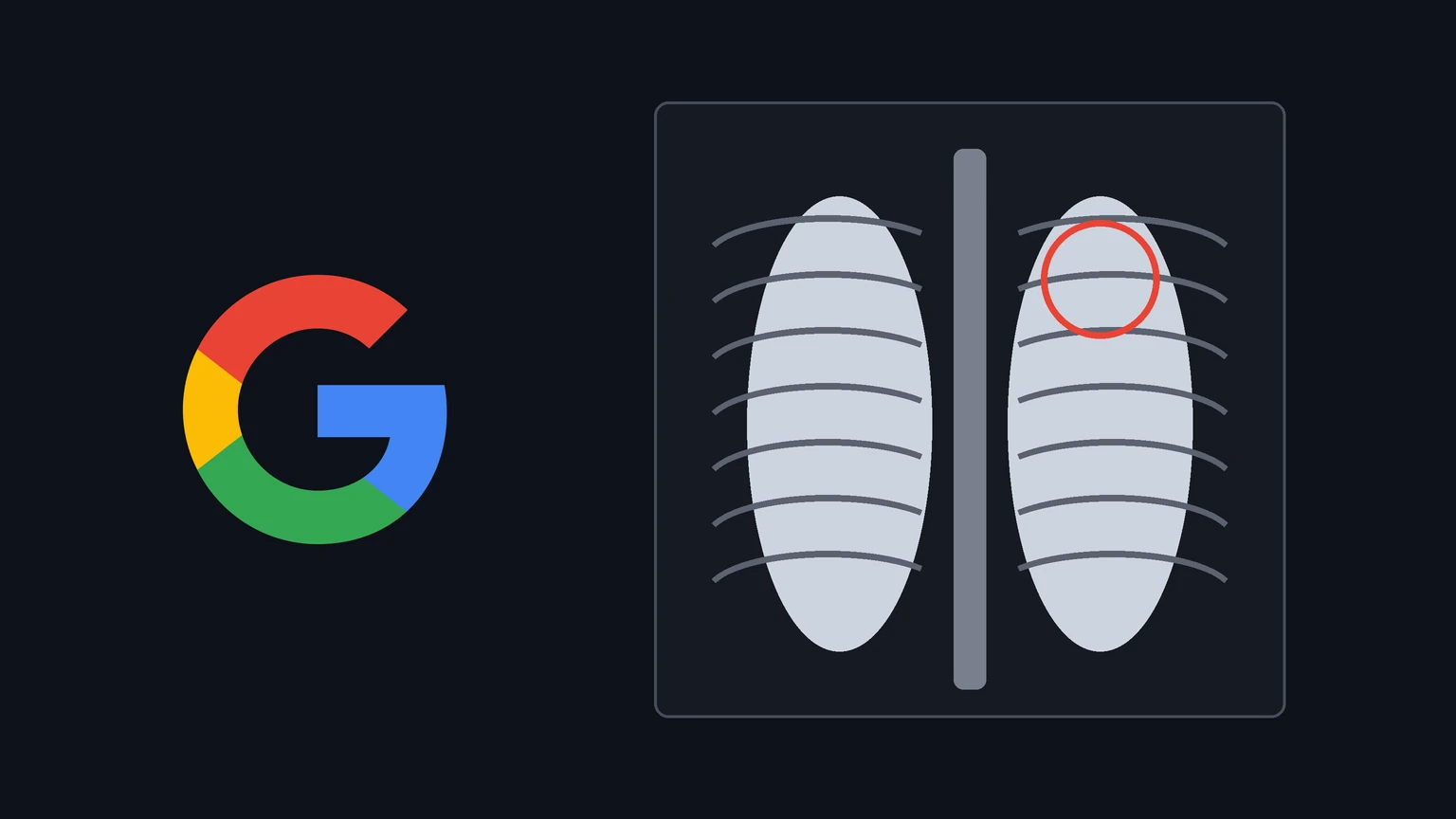
Google Research has published an update on its five-year effort to use AI for tuberculosis screening, timed for the IDWeek 2026 infectious disease conference in Washington, D.C. The 23 October post, by technical programme lead Preeti Singh and distinguished software engineer Shravya Shetty, says Google's chest X-ray model is now part of a certified medical device used in about 40 healthcare facilities across Africa.
The post also describes how Google is shifting from single partner projects to open models that health ministries and developers can adapt themselves. It names Indonesia's health ministry as fine-tuning Google's open medical models on national X-ray data, and says Google's MedGemma family has passed 10 million downloads.
Most of the figures come from Google and its partners, and the post is a progress report rather than a new clinical study. But it gives the clearest picture yet of how far the TB work has moved from research papers into clinics.
Why TB screening needs help
Tuberculosis is preventable and curable, yet Google cites an estimated 1.23 million deaths a year. The bottleneck it highlights is radiology. Chest X-rays are the frontline tool for spotting lung disease, but reading subtle signs of TB, such as apical infiltrates in the top of the lung or cavitary lesions, takes expertise that rural clinics rarely have.
In high-burden areas, from remote villages to deep mines, radiologists are scarce and imaging can be days away. As a result, Google says, millions of active cases go undetected and the disease keeps spreading. Software that flags likely TB on an X-ray can send people for confirmatory testing sooner, while leaving the diagnosis to clinicians.
From benchmark to clinical evidence
Google traces the work back to a 2019 paper in the journal Radiology showing that deep learning could detect active pulmonary TB at a level matching experienced radiologists. In August 2021 the Stop TB Partnership evaluated computer-aided detection software in The Lancet Digital Health and, according to Google, ranked its model among the top performers. That same year the World Health Organization recommended computer-aided detection for TB screening and triage.
In September 2024 Google published a prospective, multi-site validation in NEJM AI. It reported that AI-assisted screening kept high sensitivity, meaning few missed cases, across varied patient groups, and also picked up other incidental lung and heart abnormalities.
Google calls the next step the translation gap: getting a model to work reliably across different X-ray machines and offline settings, fitting it into clinic routines, and passing medical device rules.
The certified tool built by Nexus AI
To cross that gap Google partnered with Nexus AI, a medical technology company based in Pretoria, South Africa, which turned the chest X-ray algorithms into a clinical diagnostic tool. Google says Nexus AI achieved Class IIb certification under the European Union's Medical Device Regulation, based on prospective clinical evaluations, and certified compliance with the ISO 13485 quality standard for medical devices.
Nexus AI has also signed an agreement with FIND, the global diagnostics alliance, to pursue World Health Organization prequalification, which international agencies typically need before buying a product. Google says a pathway toward US Food and Drug Administration clearance is under way, but the post does not claim FDA clearance has been granted.
The device screens chest X-rays for lung diseases including TB in as little as 45 seconds. Its interface highlights findings that look abnormal, including those suggestive of TB, and flags when further investigation is required.
Where it is being used
According to the post, Nexus AI's tool runs in about 40 healthcare facilities in South Africa, Sierra Leone and Côte d'Ivoire, with expansions under way in the Democratic Republic of the Congo, Zambia and Cameroon, six countries in all. More than 90 clinicians have used it to evaluate over 25,000 chest radiographs, and Google says turnaround has fallen from weeks to under 45 seconds.
Clinicians still make the final decision. Google frames the tool as rapid triage that tells staff who needs follow-up testing. Nexus AI has also given more than 3,000 free screenings to under-resourced public clinics, and Google says the goal is 10,000 sponsored screenings a year.
Four kilometres underground
The most striking deployment is at the Mponeng Gold Mine in South Africa, one of the deepest mines in the world. Miners there face chronic silica dust exposure and a higher risk of lung disease.
Working with the Stop TB Partnership, Harmony Gold and the South African Department of Health, Nexus AI set up ultra-portable digital X-ray kits running the AI offline four kilometres underground. Miners are screened on site within seconds, and anyone flagged with presumptive TB can be referred straight away for molecular testing. Google says screening, triage and confirmatory testing can now happen in one visit, instead of a process that often takes weeks.
Open models: HAI-DEF, MedSigLIP and MedGemma
Google argues that one product with one partner cannot tackle TB worldwide, so it has moved toward open foundations. Through its Health AI Developer Foundations (HAI-DEF) programme it has open-sourced chest X-ray embeddings and MedSigLIP, a lightweight vision-language model that matches medical images with the clinical language used to describe them.
Because MedSigLIP understands both images and text, developers can classify or search X-rays with plain labels, or fine-tune it on a small set of local examples. That lets regional teams build specialised models without large compute budgets.
On top of that sits MedGemma, a family of open-weight multimodal models in 4B and 27B sizes. Google says MedGemma combines radiographic findings with clinical history, answers clinicians' questions in plain language and runs on a device without internet access. Medical AI is a crowded field this month: AI Lookout recently covered Microsoft's MAI-DxO diagnostic agent and Epic's agent connectors for hospital software.
Indonesia's 50 million screenings
Indonesia has the world's second-highest TB burden, and its health ministry has set a goal of screening 50 million people a year. Reviewing that many X-rays by hand is not possible, and proprietary cloud tools raise questions about where patient data is stored.
Google says the ministry is fine-tuning MedGemma and MedSigLIP on Indonesian chest radiographs and running them on local infrastructure, so patient data stays inside the country. Google presents this as an example of sovereign health AI built on open models, though it gives no figures yet on how many people have been screened this way.
Listening for TB with HeAR
Not every health post has an X-ray machine, so Google is also testing sound. Its Health Acoustic Representations model, HeAR, was trained on more than 300 million audio segments and can screen for signs of disease from coughs recorded on an ordinary smartphone microphone.
HeAR is being studied in sub-Saharan Africa with CIDRZ in Zambia, the Aurum Institute in Ghana, backed by a $250,000 Google.org grant, and a $1.5 million regional collaboration led by HELINA. Google's philanthropy has funded a range of science projects this year, including the $36 million AI for science round. Google describes HeAR, mobile X-ray screening and MedGemma together as a cascade of tools for communities with little access to specialists.
What is still missing
The post does not give new accuracy figures for the deployed tool, the share of flagged patients later confirmed to have TB, or how many cases were found that would otherwise have been missed. The 25,000 radiographs and 40 facilities are deployment counts, not outcome measures.
Regulatory status also varies by market. The device has EU certification, while WHO prequalification and FDA clearance are still being pursued. HeAR's cough-based triage is still at the stage of building clinical evidence, as Google itself notes.
Why it matters
TB screening is one of the clearest cases where AI can stand in for a scarce specialist, and Google's update shows the slow path that takes: years of published validation, a local partner, device certification and procurement approvals before a model reaches a mine shaft or a rural clinic.
The bigger shift is the move to open models. If health ministries like Indonesia's can fine-tune MedGemma and MedSigLIP on their own data and keep it at home, screening programmes need not depend on one vendor. That matches a broader pattern AI Lookout has tracked in health AI, including Meta's Muse health research work, where open or locally run models are pitched as a way to protect patient privacy.
Common questions
Is Google's TB screening tool approved for clinical use?
The Nexus AI device built on Google's model has EU MDR Class IIb certification. WHO prequalification and FDA clearance are still being pursued.
What is MedGemma?
A family of open-weight multimodal medical models from Google in 4B and 27B sizes that can run on a device without internet access. Google says it has over 10 million downloads.
Does the AI diagnose TB on its own?
No. It flags X-rays that look suggestive of TB for follow-up testing, and clinicians make the final decision.
Sources & further reading
How this story was made
Written by Kristian Kostov with AI assistance and checked against the linked sources. Company performance claims are attributed to the company. Analysis reflects AiLookout’s interpretation; we have not independently tested the products discussed. The cover places the companies’ own logos, taken from public-domain or openly licensed files credited in the caption, on a plain background. It is not a product photograph, a screenshot, or an endorsement.
Our editorial standards