Announced 14 Oct 2026 · Sources checked
What changed on 14 October for Earth AI?
Google Research’s post by Shravya Shetty and Luke Barrington frames three updates: a technical report that systematically evaluates the Geospatial Reasoning agent (GRA); insights from partner testing with organizations including WHO’s Regional Office for Africa, People in Need, GiveDirectly, the Milken Institute, and WPP; and expanded early access for multi-step geospatial analysis and planetary prediction.
The agent connects Gemini to Earth AI foundation models—WeatherNext, flood forecasting, the Population Dynamics Foundation Model, AlphaEarth Foundations, and Remote Sensing Foundations—plus Google Maps Platform signals, Earth Engine, Data Commons, and Dataset Search. Capabilities are packaged as modular skills loaded on demand, with large map layers processed in a workspace outside the model context.
Planetary-scale agents sit next to other Earth-observation AI efforts we have covered, including ESA’s Earth Virtual Expert open model. Google’s pitch here is orchestration across proprietary and catalog assets, not a single open checkpoint.
How does the Geospatial Reasoning agent work?
According to the blog and the arXiv abstract for “Google Earth AI Geospatial Reasoning Agent: Capabilities and a Systematic Evaluation,” GRA begins with an upfront planning stage that reasons over documented capabilities, then executes against that plan while allowing adaptive deviations. Skills stay on standby until needed; scratch datasets pass between tools by reference so petabyte catalogs do not flood the context window.
Users can bring their own data as CSV, GeoJSON boundaries, or cloud tables and ask the agent to join private locations with Earth AI’s global models. Beyond Q&A, the same stack powers a Planetary Prediction Engine that, given local outcome labels, selects signals, fuses Population Dynamics Insights and Custom Satellite Embeddings, and trains models for spatial prediction, downscaling, and forecasting. Google cites a public-health research result claiming a 12% improvement over demographic baselines and 8× finer spatial resolution when combining population and satellite signals—figures from Google’s research writing, not an AI Lookout replication.
Every response is described as showing the agent’s plan and data sources so experts can check assumptions. That transparency claim is part of the product narrative; independent auditors would still need logs from a real deployment.
What do Google’s benchmarks claim?
The report evaluates four configurations on the same Gemini backbone: a standalone LLM; the LLM with basic search, maps grounding, and offline code tools; the LLM with GRA’s skills and tools but without upfront planning; and full GRA. Runs use Gemini 3.1 Pro and Gemini 3.8 Flash.
On Google’s tables for Gemini 3.8 Flash, full GRA scores about 62.7 on GeoExpertQueries versus roughly 3 for the basic-tools baseline and about 52 for skills without planning. On GeoKTools, GRA reaches about 86 versus about 40 for baselines. On CBGB, GRA sits above 80 while baselines stay below 20. UnivEARTH is reported as saturated: even a standalone LLM scores in the high 80s to mid 90s, which Google interprets as questions recoverable from published NASA Earth Observatory source articles.
GeoExpertQueries contains open-ended practitioner-style problems scored by a tool-agnostic autorater against expert golden workflows. GeoKTools uses templated queries with deterministic solvers and varies the number of required tool types. Development splits are released at github.com/google-research/geospatial-reasoning-benchmarks; test splits are withheld. Scores are Google’s evaluation results under their harness limits (100 LLM calls, 30-minute wall clock).
Who has already tested it, on Google’s telling?
Partner anecdotes in the blog are vivid and should be read as Google-selected case studies. WHO AFRO’s Emergency Preparedness and Response Hub in Dakar is said to have used the agent during the 2026 Ebola outbreak in the DRC to map remote mining corridors by combining forest loss, mining sites, and population data, identifying 48 exposed settlements and more than 45,500 at-risk people in minutes rather than weeks. DRC’s INRB is described as using Planetary Prediction to estimate spread risk into uninfected zones.
People in Need reportedly analyzed 14 historical cyclone paths to identify high-exposure villages in minutes. GiveDirectly uploaded custom boundaries to calculate population exposure by wind-speed zones during Tropical Cyclone Maila and to benchmark tornado damage in Mississippi. WPP connected Population Dynamics Insights with proprietary marketing data. The Milken Institute screened 1,500+ candidate buildings for resilience hubs using Solar API and census data.
These stories illustrate intended workflows; they are not independent field evaluations published with reproducible code. Quote attribution on the page includes Dr Etien Koua (WHO AFRO) and Alonso Gonzales (People in Need).
How can developers or organizations apply?
Google is expanding limited early access rather than launching a generally available public API. Paths named in the post include an Ask Google Earth preview with expanded deep-analysis chat inside Earth projects, a headless Agent-to-Agent service for custom agent pipelines (including recipes for Gemini for business), and Planetary Prediction Engine previews via interactive UI or Agent API.
Interested teams are directed to an interest form and an Early Access Pool. That means today you cannot treat GRA as a drop-in Earth Engine replacement with published SLA pricing. Organizations already on Gemini for business may be better positioned for the A2A recipes, but acceptance remains gated.
If you are tracking Google’s broader model access story the same week, Gemini 4 Argon general availability is a separate product surface: paid API and consumer app access for a frontier text/agent model, not the Earth AI geospatial agent.
- Apply via Google’s interest form if you need experimental geospatial agent access.
- Expect limited seats, evolving tool catalogs, and research-grade reliability—not a GA SLA.
- Use the released GeoExpertQueries/GeoKTools development splits to stress-test your own geospatial agents.
What should readers not over-claim?
Google’s own report notes that GeoExpertQueries autorater scores measure process alignment to expert workflows, not final ground-truth correctness, and that GRA output is best treated as a first draft for experts. UnivEARTH saturation shows how quickly public geospatial Q&A benchmarks can stop discriminating once source articles enter training data or search indexes.
CBGB required Google to update four reference answers because Sentinel-2 reprocessing and a redrawn protected-area boundary drifted the ground truth—useful evidence that geospatial evals need periodic revalidation. AI Lookout has not run GRA, has not scored the held-out test splits, and has not verified partner outbreak or cyclone anecdotes.
Separately, Google DeepMind’s European researcher compute-access program is a different access track for science models; do not conflate it with Earth AI early access.
Common questions
Is the Geospatial Reasoning agent generally available?
No. Google describes expanded experimental early access through Ask Google Earth, an Agent-to-Agent API, and Planetary Prediction previews, with interest-form gating.
Where is the technical report?
Google points to arXiv:2610.15750, “Google Earth AI Geospatial Reasoning Agent: Capabilities and a Systematic Evaluation,” submitted 11 October 2026 and discussed in the 14 October blog.
Can I download the new benchmarks?
Development splits of GeoExpertQueries and GeoKTools are released on GitHub under the geospatial-reasoning-benchmarks repository (code Apache-2.0, content CC BY 4.0). Test splits are withheld.
Sources & further reading
How this story was made
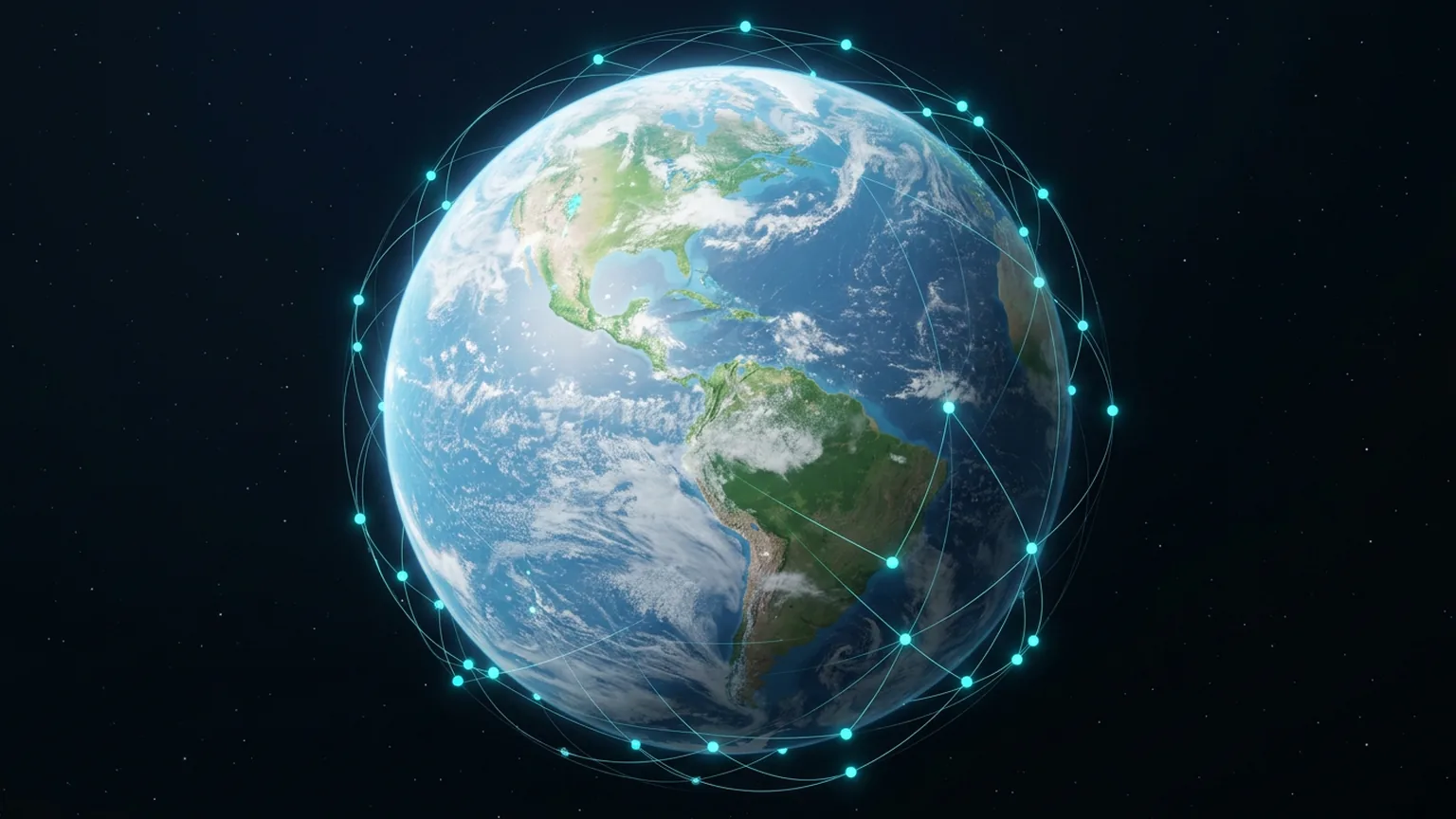
Written by Kristian Kostov with AI assistance and checked against the linked sources. Company performance claims are attributed to the company. Analysis reflects AiLookout’s interpretation; we have not independently tested the products discussed. The cover is an AI-generated editorial illustration, not a photograph or evidence of an actual event.
Our editorial standards