Announced 21 Oct 2026 · Sources checked
What GM announced
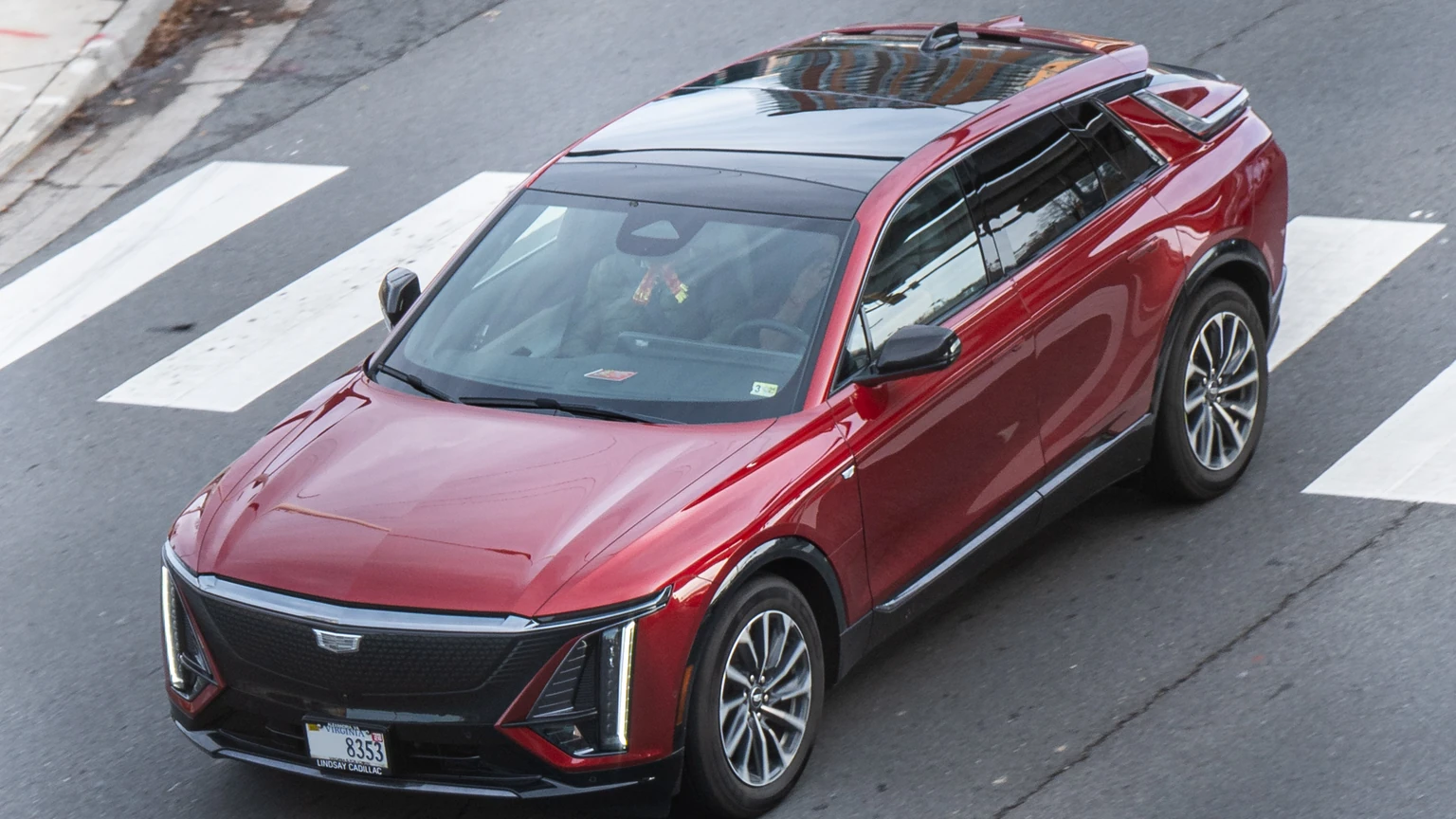
General Motors said on 21 October 2026 that it is turning OnStar, its 30-year-old emergency and connected-car service, into an AI platform. The first piece is the OnStar AI Assistant, a voice assistant woken with "Hey OnStar" that will reach the 2027 Cadillac Lyriq electric SUV "in the coming months through an over-the-air update, with additional GM vehicles to follow," according to GM's announcement.
The news came at GM Forward, the company's technology event in New York, alongside a broader set of announcements on centralised vehicle computers, AI in vehicle development and "eyes-off" highway driving. GM says OnStar has more than 12 million subscribers in 22 markets and that its advisors take more than 20 million calls a year in North America. The company did not say whether the assistant will cost extra.
What the OnStar AI Assistant does
GM's examples are deliberately ordinary. Say "It's getting warm in here" and the cabin temperature changes. Ask "Do I have enough charge to get there?" and the assistant checks range and can map charging stops. Ask what a warning light means and it explains what the car is doing. GM lists turning on dome lights, opening the glove box or charge port, and reading out tyre pressure, range and charging status as other jobs it can do.
The pitch is that the assistant knows the specific car. GM says it is "built around your vehicle, your context, and authoritative GM knowledge," and "trained on GM's extensive vehicle knowledge," so it can answer questions about features like one-pedal driving or lane keep assist for the exact model and complete "complex tasks that general-purpose assistants cannot." When a question needs a person, it can hand the driver to a human OnStar Advisor.
Business Insider, which spoke to GM executives at the event, reported that the assistant can also plan routes around bad weather and offer suggestions using information from a driver's digital calendar. GM also announced an OnStar Fleet AI Assistant that lets fleet managers ask questions about vehicle health, maintenance and fuel or energy use in plain language.
Why GM built it in-house
The most notable detail is who built it. TechCrunch reported that the OnStar AI Assistant is "an in-house effort." GM has used Google for voice features since 2022, starting with Google Cloud's Dialogflow, and said last year that Google Gemini would roll out in its vehicles in 2026. GM's announcement does not name a model provider, and it does not explain how the in-house assistant relates to that Gemini plan.
The move puts GM on a different path from automakers that plug in a big-tech assistant. Google itself is pushing the other way, bringing Gemini's personal context to Android Auto, which runs on drivers' phones rather than inside the car's own software. Owning the assistant gives GM direct access to vehicle data and the customer relationship, which matters for a company that has talked about building a large subscription business.
GM's chief product officer Sterling Anderson told TechCrunch that OnStar is "transitioning to be a connected intelligence platform, not just the call center that it's historically been known as." He described a service that interprets and predicts what owners need rather than waiting for a button press.
The new OnStar app and connected cameras
Starting in 2027, a new OnStar mobile app will replace the current OnStar Guardian app and the separate Buick, Cadillac, Chevrolet and GMC apps, GM says. It will carry the assistant to the phone and add features that go well beyond voice control.
The biggest is Connected Cameras. When the car detects a trigger, GM's example being an aggressive horn honk, its onboard cameras record the event, upload it to the app and alert the owner. The app will also offer live camera views. A feature called OnStar Family lets relatives share destinations, coordinate pickups and oversee other family vehicles, and GM promises safety alerts that combine vehicle signals, weather, road conditions and route information.
In an interview with WIRED, Anderson said the system might eventually coordinate children's pickups depending on which parent's car is closer. That is a long way from changing the cabin temperature, and GM did not give a date for it.
Humans stay on emergency calls
GM was quick to say that AI is not replacing the person who answers after a crash. Ed Nightingale, GM's vice president of digital products, told Business Insider that human OnStar staff will keep handling emergency calls and contacting first responders. "That's something that isn't changing," he said. "We feel that, when it comes to a crash or a problem being solved, they want to make sure that there's a human in the loop. The stakes are too high."
A GM spokesperson later told the publication that OnStar Advisors "aren't going away." Keeping people on high-stakes calls while software handles routine requests is a common pattern in customer-facing AI, and it echoes the safety framing other carmakers use for driving automation, from Tesla's robotaxi plans to Bolt's NVIDIA-based programme.
Privacy and data questions
Privacy is the obvious pressure point. GM says features are switched on only if customers choose them and can be turned off at any time, that owners can manage camera, microphone, location and AI permissions, and that "recordings have time limits and are encrypted." It also says "GM cannot access Connected Camera recordings."
TechCrunch noted the history behind those promises. It reported that the US Federal Trade Commission earlier this year finalised an order banning GM and OnStar from sharing certain consumer data with consumer reporting agencies and requiring explicit consent for some data collection. After publication, a GM spokesperson told TechCrunch that third-party sharing is "feature-specific and consent-based," and that customers who decline to share some data may lose access to related features while other OnStar services continue.
What is still unknown
GM has not said what the assistant costs, whether it needs an OnStar plan, which model powers it, or which vehicles get it after the Lyriq. It has not published accuracy figures or explained what happens when the assistant misreads a request to control the car. "The coming months" for the Lyriq update is also loose; GM's OnStar site says late 2026.
Nightingale told Business Insider that subscriptions only keep customers when drivers can see the benefit, which is the real test here. The first owners to get the update will show whether a car-specific assistant is better than a phone-based one, and whether the camera and family features land as convenience or as surveillance.
Common questions
When does the OnStar AI Assistant launch?
GM says it arrives on the 2027 Cadillac Lyriq through an over-the-air update in the coming months, and its OnStar site says late 2026. Other GM vehicles follow later.
Will OnStar AI replace human advisors?
No, according to GM. Executives told Business Insider that people will keep answering crash and emergency calls, and the assistant can hand drivers to an advisor.
Does the OnStar AI Assistant cost extra?
GM has not said. Its announcement gives no price or subscription requirement for the assistant or the new OnStar app.
Sources & further reading
- Say "Hey OnStar" for a more intelligent drive ↗
- GM Forward: Engineering the intelligence-defined vehicle for everyone ↗
- Connected Intelligence for Every Drive ↗
- GM is giving OnStar an AI makeover ↗
- GM's OnStar gets an AI makeover, but humans will still answer when airbags deploy ↗
- GM Wants Your Car to Do Your Chores ↗
- GM's OnStar AI Assistant Debuts In The Cadillac Lyriq ↗
How this story was made
Written by Kristian Kostov with AI assistance and checked against the linked sources. Company performance claims are attributed to the company. Analysis reflects AiLookout’s interpretation; we have not independently tested the products discussed. Cover photography is illustrative and does not depict the specific announcement or product.
Our editorial standards