Announced 16 Oct 2026 · Sources checked
What the report describes
Four AI agents running Google's Gemini 4 Argon model have finished Minecraft, defeating the Ender Dragon in a randomly generated survival world after 27 hours and 14 minutes, with no human help. The run is described in a technical report, A team of Gemini 4 Argon agents beats Minecraft, by Maxence Faldor, Satinder Singh and Roberta Raileanu, submitted to arXiv on 15 October 2026 and shared by Google DeepMind on X the next day.
Along the way the team wrote 2,783 programs, exchanged 229 chat messages and died 605 times. The authors say that, to their knowledge, it is the first end-to-end autonomous completion of Minecraft by AI agents using only the standard Mineflayer bot library, without a pre-scouted world or game-specific tools written by people.
The agents were not built for Minecraft. They were the same general-purpose coding agents, built on the model Google made generally available in the API and the Gemini app this week, that engineers use for software work. That is the point of the experiment: whether such agents can pursue one goal for more than a day, through thousands of steps and hundreds of failures, while coordinating with each other.
How the agents played
The agents never saw a pixel or pressed a key. Each controlled a player by writing a short JavaScript program for Mineflayer, an open-source library for Minecraft bots, such as walking to coordinates and mining every iron ore within 16 blocks. The bot ran it, and the agent read back text: position, health, inventory, what it found, or an error. The median program ran for 33.5 seconds, and each player had a program running about 40 percent of the time.
The game was Minecraft Java Edition 1.20.4 in survival mode on Easy difficulty, with cheat commands disabled. The only game instruction was a single paragraph: defeat the Ender Dragon, by any means within the rules of survival mode, with the players deciding how to share the work. The rest of their instructions were generic, the same as for any environment: verify each action, build reusable tools, keep lessons in shared memory and report outcomes honestly.
Each agent ran on its own cloud machine with its usual software tools, including a shell, web search and a memory with private and team-shared parts. Their in-game programs could not start processes or write files. A fifth agent, the Observer, watched the session as an independent witness for cheating or specification gaming, and reported none. Researchers watched a live dashboard and could pause the run, but say they had no cause to intervene.
Ten minutes to form a team
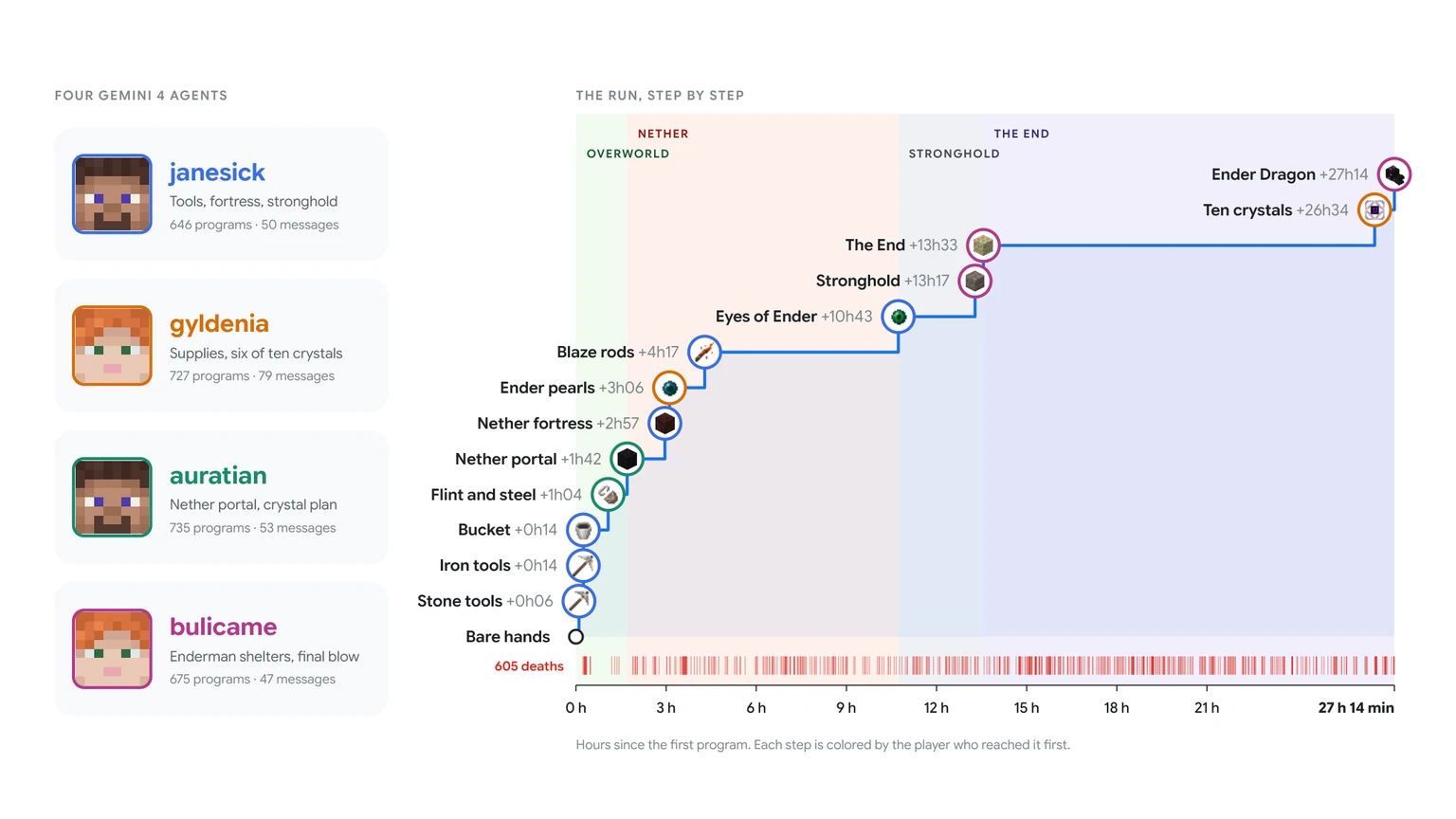
Ten minutes after the first program ran, the agent named janesick proposed a division of labour in chat. Another, auratian, replied within a minute with a different plan, and roles settled quickly: gyldenia gathered food, beds and flint, bulicame dug for diamonds, janesick smelted iron and made tools, and auratian prepared the portal to the Nether. Within two hours the team had iron tools, diamonds and a lit Nether portal, at 1 hour 42 minutes.
The Nether was slower. To catch Endermen for ender pearls, three agents built two-block-high shelters, using the fact that a nearly three-block-tall Enderman cannot fit under them. They had 15 pearls in a shared chest five and a half hours in. Bringing blaze powder home took more than six hours, after janesick burned to death carrying twelve and a Ghast fireball destroyed dropped items. The team turned losses into written rules.
Finding the stronghold with geometry
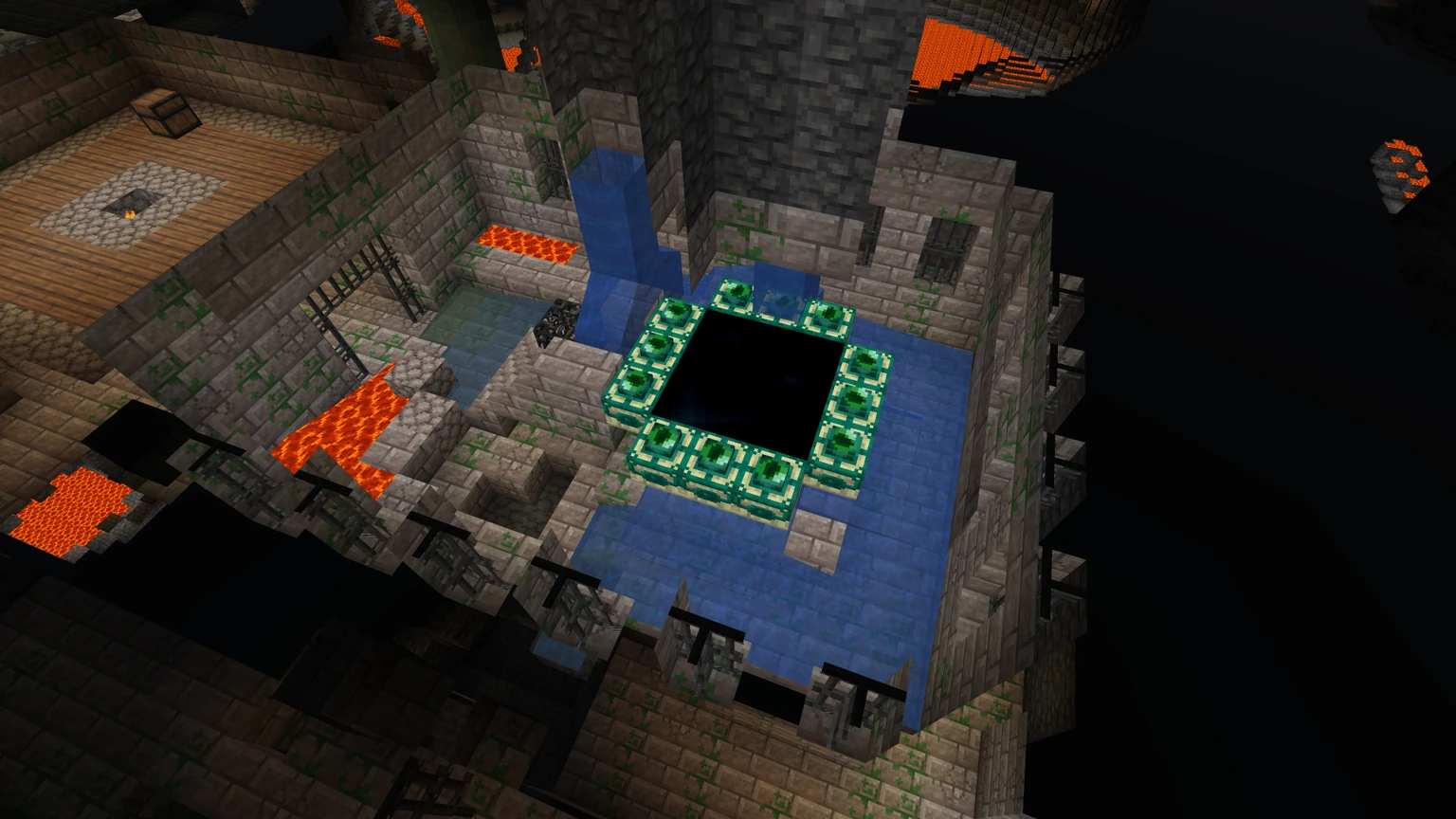
The report's most striking moment is a piece of geometry. A thrown Eye of Ender flies toward the nearest stronghold, the buried structure that holds the portal to the End. Nearly 11 hours in, janesick threw two from different spots, sampled each eye's flight every 50 milliseconds in code, and computed where the two lines crossed. The estimate, 1.3 kilometres from the village, landed 43 metres from the actual portal room.
Getting there tested teamwork. When auratian drowned carrying all twelve Eyes of Ender, janesick and auratian sent bulicame the exact spot and the minute the items would vanish, and bulicame recovered all twelve with two and a half minutes to spare. At 13 hours 17 minutes, the End portal was lit.
Fourteen hours against the dragon
The End took nearly as long as everything before it. The dragon killed the agents 69 times. Between attempts they read its internal state from the game and wrote rules: never wait on the arrival platform, approach only when it perches, and leave the End to reset it when it gets stuck. At 17 and a half hours, all four jumped into the void within six minutes so the empty End would unload and the stuck dragon reset.
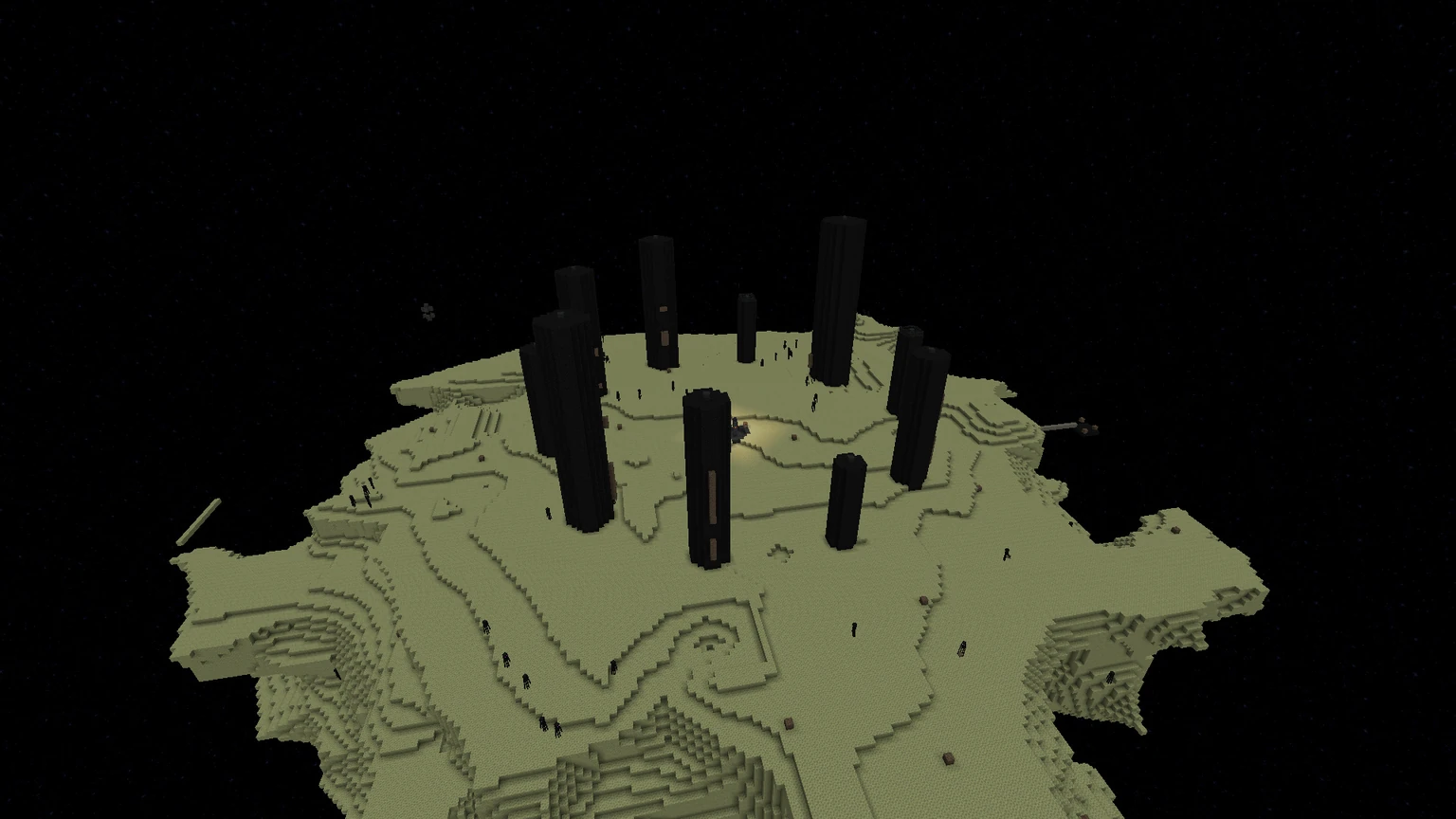
The breakthrough came about 21 hours in, when auratian noticed that the ten crystals on top of the obsidian pillars kept healing the dragon, and worked out how to reach them without a pickaxe: stack dirt to climb beside each pillar, punch the crystal, dig back down. The team destroyed all ten over four hours and forty minutes, six of them by gyldenia. Thirty-nine minutes after the last fell, the dragon died, with bulicame on 2.5 of 20 health points. The server log records the Free the End advancement at 27 hours 14 minutes.
Over the run the agents kept 146 pieces of state and code alive between programs, including 42 helper functions. After gyldenia warned the team about a Mineflayer crafting quirk 19 minutes in, a helper with the fix ended up in 655 programs written by all four agents. When one agent's program announced a success that had not happened, its author posted a correction two minutes later.
What the run cost
The report puts a price on the run. Up to the win, the four players processed about 1.35 billion input tokens, 91 percent served from the context cache, and generated about 16 million output tokens over roughly 24,000 model calls. At Gemini 4 Argon's introductory list price that comes to about $520, or $1,040 at the standard price. The whole session, including the Observer and a day of activity after the win, came to about $810, or $1,620 at standard rates. The authors stress these are estimates from list prices, not Google's serving cost.
For comparison, the report notes that HowLongToBeat's median for Minecraft's main story is 45 hours for human players, while the random-seed speedrun record is under seven minutes.
Why the result matters
Minecraft has been an AI testbed for years. MineDojo named defeating the Ender Dragon from bare hands one of its moonshot goals, and earlier systems learned from gameplay or added planners and skill libraries to reach diamonds. The report cites two recent community runs that reached the dragon: one Claude Opus 5 agent calling 37 high-level Minecraft tools on Normal difficulty, and a planner paired with an action model on a fixed speedrun seed in Peaceful mode. This run's difference is what the agents were not given: no game tools, no route, no roles and a random world.
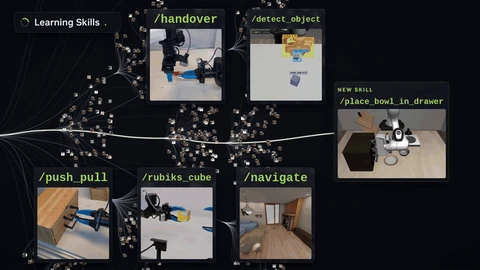
The authors argue that keeping a plan coherent across thousands of dependent steps is what long software and research projects demand, and plan to use the same harness for coding, science and robotics. It fits a wider push to test agents on long tasks, from NVIDIA's ASPIRE robot coding agents solving a Rubik's Cube to Google Research's Harness² recursive agent harness.
Limits of a single run
The authors list the limits plainly. Mineflayer tells agents exactly which blocks and creatures are around them, including blocks behind solid rock and the dragon's internal state, which a human player cannot see, and a pathfinding plugin plans routes. Easy difficulty means monsters deal less damage and hunger cannot kill. Gemini 4 Argon has read a great deal about Minecraft and Mineflayer, so the run tests turning that knowledge into working code and teamwork, not learning an unseen game.
Failure was constant: 22 percent of programs ended in an error, and the world server restarted six times. Most important, this is a single run, the first launch the team tried, which cannot show how reliably the setup succeeds. All figures come from the authors' own logs and have not been independently reproduced. Playing from pixels with a keyboard and mouse remains much harder.
Common questions
Did the Gemini agents play Minecraft from the screen?
No. They acted by writing JavaScript programs for the Mineflayer bot library and read text back, including exact block and creature positions. The authors say playing from pixels with a keyboard and mouse remains much harder.
Did humans help the agents?
According to the report, no. Nobody assigned roles or wrote game logic, cheat commands were disabled, and researchers watched a live dashboard but did not intervene. An Observer agent and a manual log review found no cheating.
How much did the Minecraft run cost?
The authors estimate about $520 in API usage up to the win at Gemini 4 Argon's introductory list price, or $1,040 at the standard price, based on about 1.35 billion input and 16 million output tokens.
Sources & further reading
How this story was made
Written by Kristian Kostov with AI assistance and checked against the linked sources. Company performance claims are attributed to the company. Analysis reflects AiLookout’s interpretation; we have not independently tested the products discussed. Cover photography is illustrative and does not depict the specific announcement or product.
Our editorial standards