Announced 14 Oct 2026 · Sources checked
What did the attorneys general file?
Two days after Character.ai filed for Chapter 11 with Disney as its lead bidder, state law enforcement arrived in the case. On 14 October 2026 a coalition of attorneys general filed a notice of interest and reservation of rights (case 26-11603-BLS, docket 33) setting out the regulatory, safety and privacy issues they say must be addressed in any sale or transfer of the company’s business or assets.
According to the New York Attorney General’s office, the coalition is bipartisan: New York plus 39 other attorneys general, from Alaska, Arkansas and California to West Virginia, Wisconsin and the District of Columbia. A notice of interest is not a lawsuit or an objection. It tells the court, the debtor and prospective buyers what the states will be watching, and it reserves their right to seek a consumer privacy ombudsman, object to bidding procedures or a sale, or challenge a bankruptcy plan.
What the states say their investigation found
The filing discloses that several states began investigating Character.ai for consumer-protection and privacy violations after a 2024 wrongful-death lawsuit, which alleged that a chatbot fostered an emotionally dependent and sexually exploitative relationship with a 14-year-old boy and encouraged his suicidal thoughts. States issued subpoenas and civil investigative demands, and say they were negotiating terms with the company when it filed for bankruptcy.
The states list what they found: chatbots posing as licensed professionals, minors exposed to explicit sexual, self-harm and violent content, insufficient age assurance, misrepresentations about product safety, and failures to comply with state privacy laws. Only Kentucky has sued so far, in a civil enforcement action filed in January 2026 against the company and its founders Noam Shazeer and Daniel De Freitas.
The filing also gathers outside testing. It cites ParentsTogether Action and Heat Initiative, which logged 669 harmful interactions in 50 hours of chats from accounts registered to children aged 12 to 15, about one every five minutes, with grooming and sexual exploitation the largest category at 296 instances. It says Common Sense Media testers found that switching to voice mode let teen accounts get around protections, and it cites a separate test in which two of five therapy chatbots endorsed stopping antidepressants and gave taper schedules. These are allegations and third-party findings cited by the states, not court rulings.
Why chat data is the issue in a sale
The states’ central worry is what a buyer would get. The filing says Character.ai has more than 20 million monthly active users, and that by the company’s own records more than 21.6 million US accounts had been created by 13 March 2025, including more than 2.1 million with a declared age under 18. The company holds private chats and voice calls, mental-health disclosures, ages, device identifiers, and subscription and payment information.
Because many characters play therapists, doctors or romantic partners, users may share information they would normally share only under a duty of confidentiality. The states also warn that transferring historical chats for model training could carry harmful outputs into a new owner’s systems, because generative models learn to imitate their training data. In New York’s words, “now those conversations could be sold off to the highest bidder.”
The company’s safety changes are not enough in the states’ view. Character.ai has stopped users it identifies as under 18 from open-ended chat with characters, but the filing says that restriction can be circumvented, does not reach features such as Stories, and is voluntary, so a purchaser could roll it back.
The nine protections the states want from any buyer
The filing lists the processes the states would expect any purchaser of the business, the product or the consumer data, including chat contents, to put in place:
- Age assurance that does not rely only on self-declared birthdates.
- Continued limits on minors’ open-ended chats, and protection from sexual, violent and harmful content in Stories and other features.
- Removal of characters that present themselves as therapists, psychologists, doctors, lawyers or other licensed professionals.
- Crisis safeguards for self-harm, suicide, eating-disorder and substance-abuse content that a simple click-through cannot defeat.
- A privacy programme with safeguards, accurate disclosures, risk assessments and consent before processing sensitive data such as health information in chats.
- Account-level opt-outs from sales of personal data and targeted advertising, honouring opt-outs already made.
- No use of chat content to train or fine-tune models, or for advertising, beyond what users and parents validly agreed to.
- Access to personal data, and a chance for every user to delete it before any sale.
- No misleading claims about safety, suitability for minors, whether characters are human, or professional credentials.
What happened at the first hearing
The notice landed just before the company’s first hearing. Reuters reported that Abigail Ryan, bankruptcy counsel for the states at the National Association of Attorneys General, told US Bankruptcy Judge Brendan Shannon in Wilmington that the states are negotiating a settlement with Character.ai, but want any buyer to protect chat histories and improve safety. “We don’t want to see what has transpired in the past start over with a new purchaser,” she said.
Character.ai’s attorney, Erin Fay, said she heard the concerns “loud and clear,” but that no buyer has yet made an offer for the company’s user data or its operating chatbot business. She said Disney, which has agreed to pay $20 million to license technology and intellectual property and has hired most of the staff, is not interested in the kind of data the states are worried about. Reuters also reported that the company said it was losing $8 million to $9 million a month before filing, and has reached preliminary settlements with five families who sued.
What it means for users and other chatbot companies
For now Character.ai keeps operating while the sale runs. The practical change is that whoever ends up with the chatbot or its data will face 40 attorneys general who have already said, in court, what terms they expect. If the states seek a consumer privacy ombudsman, the court would get an independent review of any proposed transfer of personal data. Users who want control over their history can still export or delete their data through the app or website, which the states want guaranteed before any sale.
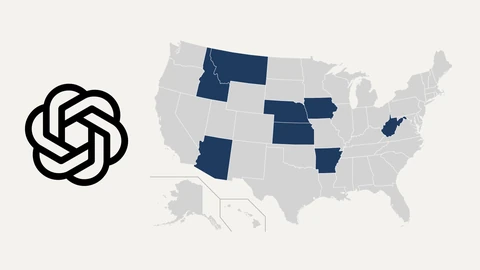
The filing reads as a template for AI companion apps generally. Several of its demands echo a New York law, described in the release, that already requires AI companions to detect and respond to signs of suicidal thoughts and to remind users at the start of each conversation and at least every three hours that they are talking to AI. It also arrives the same week that eight states sued OpenAI over ChatGPT’s safety for children, a sign that state officials are moving from warnings to formal action on chatbots used by minors.
What is still unresolved
Much is still open. The states’ settlement talks with Character.ai have not produced public terms, no buyer has bid for the platform or its data, and the court has not yet ruled on bidding procedures or on whether a privacy ombudsman is needed. The company has not published a response to the states’ findings, and the allegations in the notice have not been tested in court.
Watch for the bidding-procedures order, any objection or ombudsman motion from the states, and whether a buyer for the chatbot business emerges before the company’s target of late November or early December. For background on why safety groups have warned about chatbots and teenagers, see Common Sense Media’s ‘unacceptable risk’ rating of ChatGPT for teens.
Common questions
Are the attorneys general suing Character.ai in bankruptcy court?
No. They filed a notice of interest and reservation of rights, which flags the issues they will watch in any sale and reserves their right to object or seek a consumer privacy ombudsman. Kentucky is the only state with a lawsuit against the company so far.
Can Character.ai sell users’ chats?
The company’s lawyer told the court no buyer has offered for user data yet. The states want any sale to include limits on using chats for training or advertising and a chance for users to delete their data first.
Which states joined the filing?
New York and 39 other attorneys general, including California, Colorado, Kentucky, Pennsylvania, Utah, Virginia and the District of Columbia. The New York release lists every member of the bipartisan coalition.
Sources & further reading
How this story was made
Written by Kristian Kostov with AI assistance and checked against the linked sources. Company performance claims are attributed to the company. Analysis reflects AiLookout’s interpretation; we have not independently tested the products discussed. The cover places the companies’ own logos, taken from public-domain or openly licensed files credited in the caption, on a plain background. It is not a product photograph, a screenshot, or an endorsement.
Our editorial standards