Announced 13 Oct 2026 · Sources checked
What did Adani and Jabil sign?
Adani Enterprises Limited (AEL) and Jabil Inc. announced on 13 October 2026 that they had signed a non-binding memorandum of understanding “setting out the framework for a proposed 50:50 joint venture to manufacture and assemble artificial intelligence (AI) and data centre equipment in India.” The statement was issued from New Delhi and from St. Petersburg, Florida, where Jabil is based, and was filed with India’s stock exchanges the same day.
Both companies stress that the deal is not final. The proposed joint venture “remains subject to execution of definitive agreements, receipt of applicable approvals and satisfaction of customary conditions.” The release also carries Jabil’s forward-looking statements, warning that work on the alliance could stop if the parties cannot agree a binding contract.
Markets still took notice. The Economic Times reported that Adani Enterprises shares closed at ₹2,694 on BSE on 13 October, up ₹63 on the day. The companies did not say how much money either side will put in, where a factory would be built, or when production would start.
What would the joint venture make?
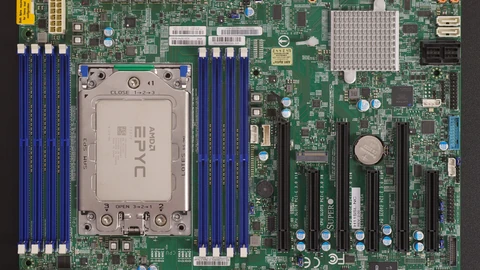
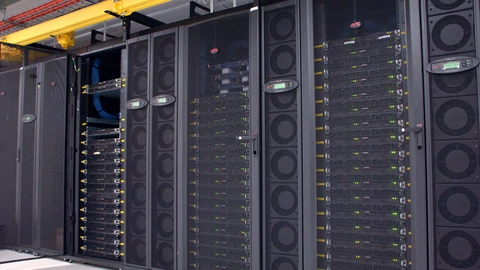
The product list is broad. According to the release, the joint venture “would manufacture and assemble AI racks, servers, storage and networking equipment used in data centres,” with the racks housing high-performance computing systems for AI applications and other digital services. It would also make the gear that keeps those racks running: power distribution units, liquid-cooling systems and transformers.
Capacity is described in power terms rather than units. The venture “is expected to have multi-gigawatt AI rack manufacturing capacity, supporting computing systems with a combined power capacity of several gigawatts.” In other words, the plan is sized by how much data centre load its output could serve each year, the same way the industry now talks about AI campuses. It would also offer installation and commissioning, so customers could buy racks delivered and switched on rather than as loose parts.
The target customers are “hyperscalers and neoclouds to data centre operators and enterprises,” in India and for export, under the line “Made-in-India for India and for the world.” Rack-scale systems are where much of the AI hardware race now happens; NVIDIA recently opened its Vera Rubin rack designs at the Open Compute Project, and AMD has published its own Helion open rack blueprint. The release does not say whose chips or rack designs the venture would build around.
How the deal moved on from June’s alliance
The memorandum follows a 15 June 2026 announcement in which Adani Group and Jabil said they intended to form a strategic alliance for a “vertically integrated AI and data center infrastructure manufacturing platform in India.” That earlier statement already described multi-gigawatt rack capacity, liquid-cooled racks and servers built with surface-mount and box-build processes, and a wider list of power gear including coolant distribution units, switchgear and bus bars.
In June the companies said they were “working on the definitive operational frameworks and formal documentation.” The October memorandum is the next step: it fixes the structure as a 50:50 joint venture between Adani Enterprises and Jabil. Jabil chief executive Mike Dastoor called it “the next step forward in our shared efforts” and said, “We look forward to building on the work we started together in June.”
What has not changed is the lack of numbers. Neither announcement gives a capital commitment, an equity split beyond 50:50, a factory location, a headcount or a production start. The June release promised “thousands of highly skilled engineering jobs,” but did not quantify them.
Why India, and why now?
The companies point to Indian demand. Their release cites industry forecasts that India’s data centre capacity will reach 5–8 GW by 2030, driven by AI adoption, cloud expansion and data localisation, and more than $50 billion in planned hyperscaler spending on data centres, cloud and AI. They put the global opportunity at more than $3 trillion over the next seven years. Forecasts like these vary widely, as AI Lookout has noted in its guide to reading data centre power projections, so they are best read as the companies’ case rather than settled figures.
Policy is the other part of the pitch. The release names India’s Digital Personal Data Protection Act of 2023 and the Union Budget 2026 tax holiday for data centres until 2047 as reasons to expect more domestic data infrastructure. In June the companies went further, arguing that data sovereignty is “reshaping technology supply chains” and driving demand for hardware made in India.
Gautam Adani framed the deal as a move up the value chain. “The AI revolution will demand far more than just breakthroughs in algorithms,” he said. “At Adani, our vision is to expand up the AI value chain evolving from powering and hosting AI infrastructure to engineering and manufacturing the critical systems that will define the next generation of computing.”
What each company brings
Adani brings energy, land and its own demand. The group says it has committed $100 billion to develop 5 GW of green-energy-powered, hyperscale AI-ready data centres by 2035, so a joint venture making racks and cooling gear could supply its own campuses as well as outside customers. The group’s existing infrastructure, energy and logistics businesses are also relevant for heavy equipment such as transformers.
Jabil brings the factory know-how. It is a contract manufacturer with more than 120 sites worldwide and, according to the release, reported $36 billion in revenue in fiscal 2026, up from the $29.8 billion it cited for fiscal 2025 in June. Jabil has added power and cooling skills through the acquisitions of Hanley Energy Group, which makes critical power and energy management systems, and Mikros Technologies, which specialises in liquid cooling for high-performance computing. CNBC-TV18 noted that the venture would expand Jabil’s footprint in India’s data centre market. Dastoor said it would let Jabil “bring our rack-level data centre solutions to more hyperscalers in India and around the world.”
What is still undecided
The 13 October announcement leaves the main commercial details open:
- How much each company will invest, and whether outside partners or government incentives are involved.
- Where the first factory will be, when it will open and how many people it will employ.
- Which chip and rack platforms the venture will build for, and whether it has any named customers beyond Adani’s own data centres.
- When definitive agreements will be signed and which regulatory approvals are needed.
- How the venture’s “multi-gigawatt” capacity translates into racks or servers produced per year.
Common questions
What did Adani Enterprises and Jabil agree on 13 October 2026?
They signed a non-binding memorandum of understanding setting out a proposed 50:50 joint venture to manufacture and assemble AI and data centre equipment in India, including racks, servers, networking, power and liquid-cooling systems.
Is the Adani–Jabil joint venture final?
No. It still needs definitive agreements, applicable approvals and customary conditions. No investment amount, factory site or start date has been announced.
Who would buy the equipment?
The companies say the venture would serve hyperscalers, neoclouds, data centre operators and enterprises in India and in export markets.
Sources & further reading
- Adani Enterprises, Jabil Sign MoU for 50:50 Data Centre Hardware Joint Venture ↗
- Submission of Media Release (BSE/NSE filing) ↗
- Adani Enterprises, Jabil Sign MoU for 50:50 Data Center Hardware Joint Venture ↗
- Adani Enterprises and Jabil Target a Strategic Alliance to Build AI Data Center Infrastructure Platform in India ↗
- Adani Enterprises, Jabil sign MoU for 50:50 JV to manufacture AI, data centre hardware ↗
- Adani Enterprises, Jabil sign pact for AI, data centre hardware joint venture ↗
How this story was made
Written by Kristian Kostov with AI assistance and checked against the linked sources. Company performance claims are attributed to the company. Analysis reflects AiLookout’s interpretation; we have not independently tested the products discussed. The cover places the companies’ own logos, taken from public-domain or openly licensed files credited in the caption, on a plain background. It is not a product photograph, a screenshot, or an endorsement.
Our editorial standards