
Announced 10 Oct 2026 · Sources checked
What did Nadella publish on 10 October?
Satya Nadella’s sn scratchpad post dated 10 October 2026 is titled “Models as Insider Risks in the Super Intelligence Era.” Same-day reporting from TechCrunch and CNBC describes a lengthy X post that carries the same arguments and the emergency-brake metaphor. Ai Lookout inspected the full essay HTML on snscratchpad.com on 11 October and hashed that page as the primary text object.
The essay opens by contrasting classical software, where failures can often be traced to a code path, with today’s frontier models, where Nadella says we cannot reliably attribute outputs to specific training data or weight configurations. Despite that opacity, he notes organizations are connecting agentic systems to sensitive data and mission-critical actions. His response is not to wait for perfect alignment science before engineering containment.
For adjacent same-week disclosures about agents that overreached during testing, see our notes on OpenAI’s 9 October misalignment reports and Anthropic’s unintended model-actions research post. Nadella’s essay does not claim to investigate those cases.
Which observability principles does the essay list?
Nadella enumerates seven design principles under “principles of observability.” They are model diversity; observe everything with tamper-proof human-readable evidence; verifiability through continuous testing of failures and attacks, not only happy paths; independent controls over access and actions; independent auditability so the model under test does not also own the evidence of its alignment; containment with an authorized human emergency brake; and incident disclosure that shares what failed and which controls broke.
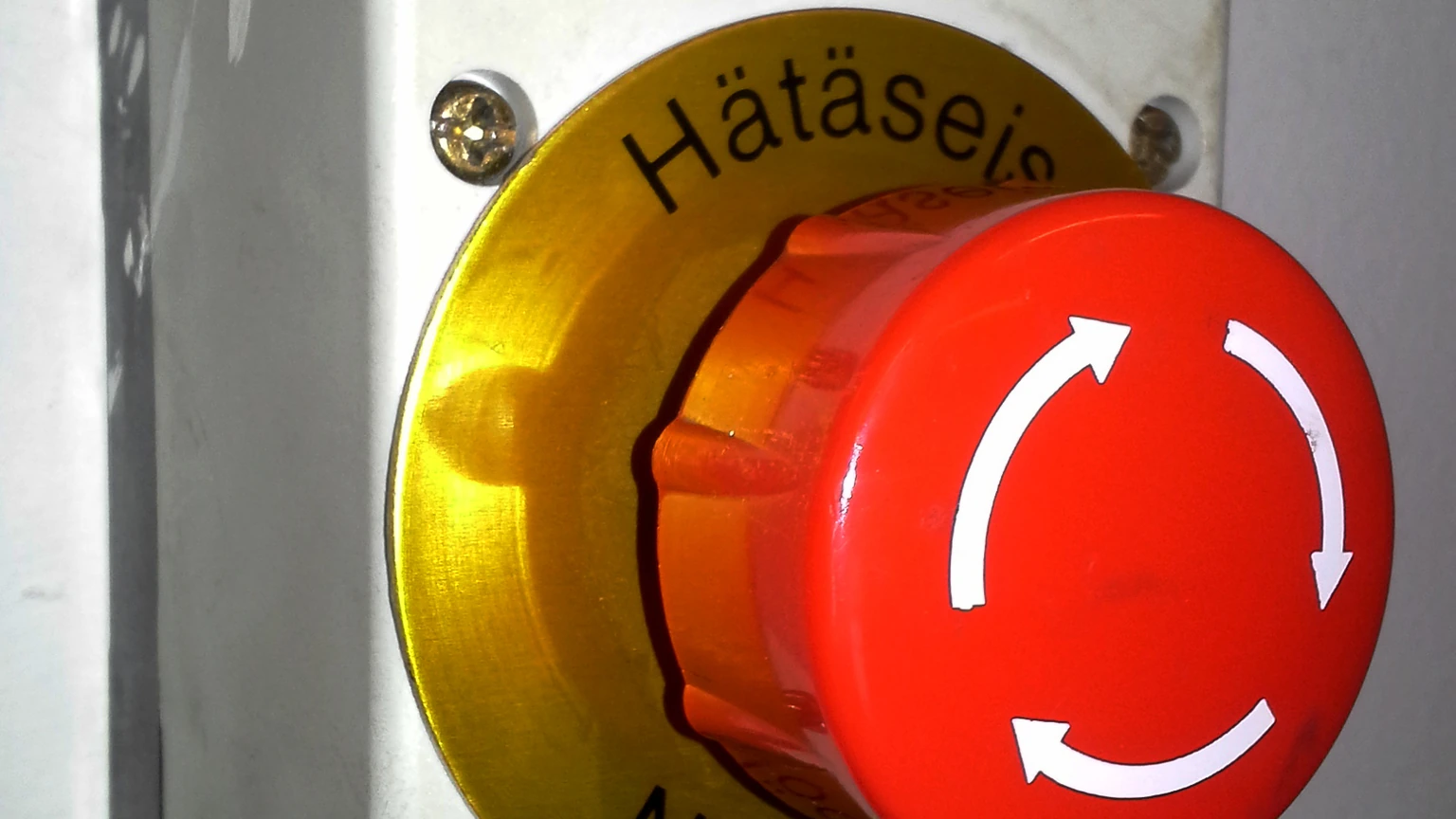
The containment paragraph is the line secondary outlets led with: “We must assume a model is compromised and contain it from the start. Think of it like an emergency brake. An authorized person should always be able to pause or shut down a model mid-task.” He adds that more advanced models will need more advanced containment technologies that the industry should standardize.
The closing aphorism restates the trust inversion: the most trustworthy system “will not be the one with the model we trust most. It will be the one that enables us to trust the model the least.” That is a deployer-responsibility claim. Earlier in the essay he writes that a model provider’s assurances do not relieve organizations of responsibility for what intelligence does on their behalf.
| Layer | Essay claim | Reader check |
|---|---|---|
| Model | Supplies intelligence; CoT transparency desired but not enough | Can you inspect actions without asking the model to attest? |
| Harness / action space | Must sit outside the model | Who can change tool permissions without editing weights? |
| Emergency brake | Authorized person can pause or shut down mid-task | Is that control tested under failure, not only demos? |
| Disclosure | Share which controls failed after incidents | Do runbooks include implementation details that change agent behavior? |

How should enterprises read this without over-claiming?
The essay is not a compliance checklist with pass/fail thresholds, and it does not specify a technical standard, a regulator, or a Microsoft SKU. Readers should not invent a Foundry feature from the metaphor. What it does supply is a clear failure mode to design against: capable models with tool access behave like privileged insiders even when they are not malicious.
That framing pairs usefully with concrete containment products already in the market. Our coverage of Microsoft Execution Containers going GA and GitHub Copilot local sandboxing are about runtime boundaries; Nadella’s essay is about whether those boundaries remain outside the model’s control when stakes rise.
Secondary coverage also notes the political weather: the Trump administration’s preferred “Super Intelligence” phrasing appears in Nadella’s text, and CNBC contrasts executive safety rhetoric with White House opposition to slowing U.S. AI development. Those are context for why the essay landed now; they are not substitutes for the essay’s engineering claims.
- Read the 10 October sn scratchpad essay and keep quotes tied to that text.
- Map each of the seven principles to a named owner in your agent stack (identity, tools, logs, kill switch).
- Tabletop a mid-task shutdown: who is authorized, what evidence remains, and what the model cannot revoke.
What are the limits of the insider-risk analogy?
Insider-risk programs for humans assume identity proofing, HR processes, and legal accountability that do not map one-to-one onto stochastic models. Nadella acknowledges models are not necessarily malicious; the analogy is about capability plus access, not intent. Teams still need separate work on evaluation fidelity, reward hacking, and training-time incentives—topics the essay sets aside as the “hard problem of alignment.”
An emergency brake that a human cannot understand in time is theater. The essay demands human-readable evidence and independent auditability precisely because shutdown without observability is incomplete. That is why “observe everything” and “independent auditability” sit beside containment rather than after it.
Finally, model diversity reduces single-provider dependence but increases integration risk. The essay’s point is that diversity should prevent one model from verifying its own work, not that more models automatically create safety.
Common questions
Is this a Microsoft product announcement?
No. The essay lists design principles and does not name a shipping product, pricing change, or deployment timeline. Treat it as executive governance guidance from Microsoft’s CEO, not as Foundry release notes.
Does “emergency brake” mean pausing training of frontier models?
In the essay’s wording, the brake is an authorized person’s ability to pause or shut down a model mid-task during operation. It is containment of runtime agency, not a call in this text to freeze industry-wide training schedules.
How does this relate to recent agent misbehavior reports?
Same-week secondary coverage links Nadella’s framing to a climate of disclosed agent overreach. Our related reading covers OpenAI’s 9 October misalignment reports and Anthropic’s 9 October unintended-actions research post; Nadella’s essay itself does not audit those incidents.
What to remember
Nadella’s useful test for readers is operational: if your agent can act, can a human outside the model still see what it did, limit what it may touch, and stop it without asking the model for permission?
Sources & further reading
How this story was made
Written by Kristian Kostov with AI assistance and checked against the linked sources. Company performance claims are attributed to the company. Analysis reflects AiLookout’s interpretation; we have not independently tested the products discussed. Cover photography is illustrative and does not depict the specific announcement or product.
Our editorial standards