Announced 25 Oct 2026 · Sources checked
What the AP report found
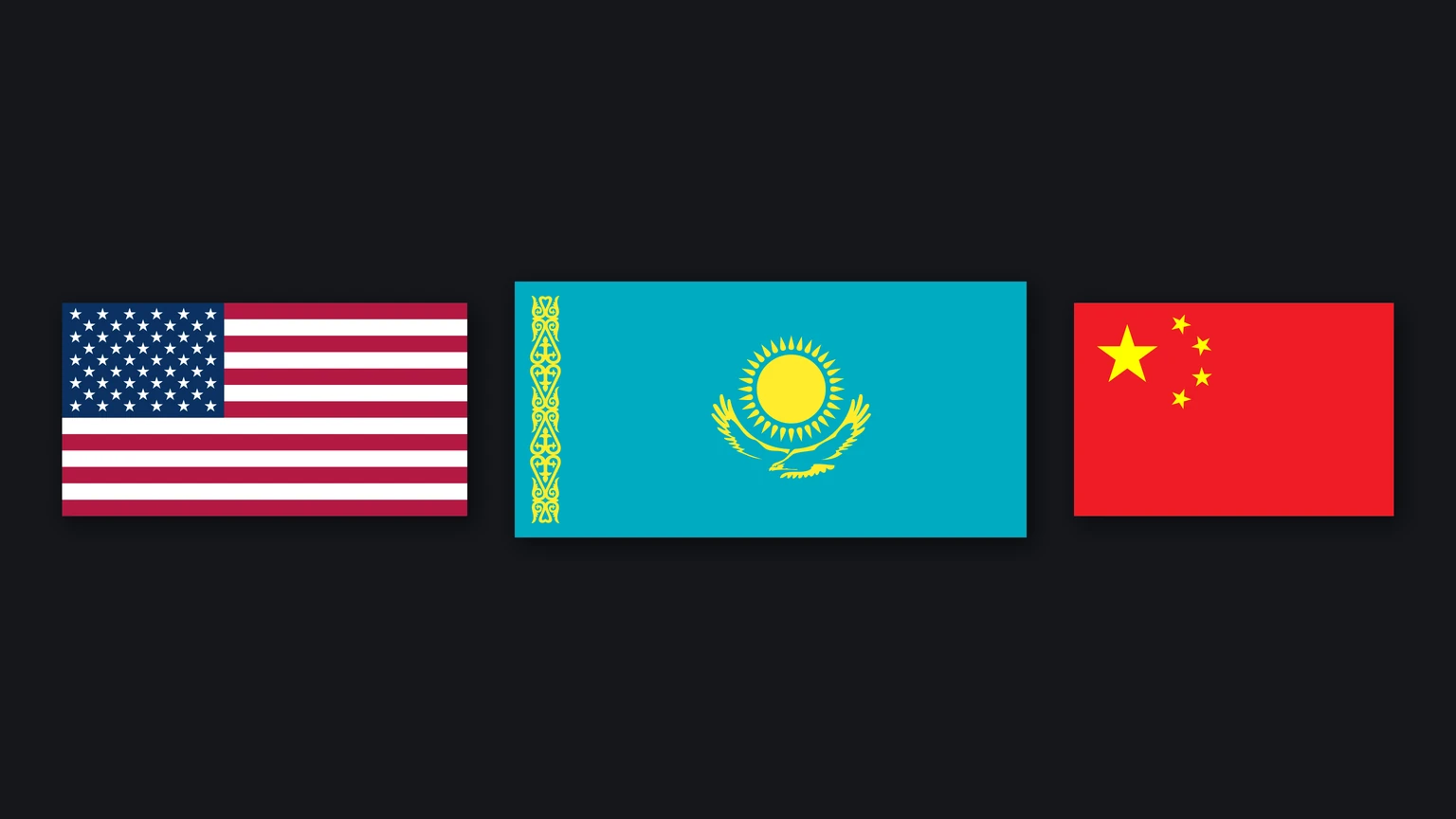
An Associated Press report published on 25 October 2026, carried by ABC News and Fortune, describes a world in which the United States and China are each building a formal coalition around artificial intelligence, and in which a growing group of countries is trying to stay on good terms with both. The American group is Pax Silica, run by the State Department. The Chinese group is the World AI Cooperation Organization, an intergovernmental body headquartered in Shanghai.
The report's central example is Kazakhstan, which signed up to both within a few weeks this summer. Its warning is that the room for that kind of hedging may be closing. The State Department told the AP that countries cannot be trusted partners in Pax Silica while substantively engaging in initiatives that advance a competing vision for super intelligence, the administration's preferred term for AI. China's embassy in Washington answered that AI should not be owned by major countries.
Former Kazakh diplomat Dana Masalimova, now a centre associate at Harvard's Davis Center, summed up the mood for the AP in three words: everyone is hedging. She added that her country does not want a binary choice, but described its position as precarious.
Two blocs, two pitches
The State Department's own Pax Silica page calls the initiative its flagship effort on AI and supply chain security. Its declaration commits signatories to cooperate across what it calls the strategic stacks of the technology supply chain, from frontier foundation models and compute to minerals refining, energy and logistics, and to reduce excessive dependencies while protecting sensitive technologies from undue access or control. The page lists 25 signatories, including the European Union, Japan, South Korea, India, the United Kingdom, Germany, Singapore, the United Arab Emirates, Qatar and, as of 3 September, Paraguay, with Taiwan endorsing the principles separately.
China's Ministry of Foreign Affairs describes its World AI Cooperation Organization very differently: an independent intergovernmental organisation that follows the purposes of the UN Charter and aims to promote international cooperation and global governance on AI for the benefit of all humanity. Representatives of 29 countries signed its founding agreement in Shanghai on 16 July 2026, with Foreign Minister Wang Yi signing for China. The ministry names signatories from Kazakhstan, Laos, Pakistan, Russia and Indonesia among them, and says UN Secretary-General António Guterres attended.
So one bloc is pitched as a club of trusted partners organised around supply chains and security, and the other as an open, UN-style forum organised around governance. Brookings fellow Kyle Chan told the AP the difference in tone is strategic: Beijing needs to court third countries to build an alternative coalition, while Washington already has a large network of allies. That gap, he said, gives power to swing countries.
How Kazakhstan ended up in both
Kazakhstan's double membership is on the public record. The State Department published remarks by Under Secretary for Economic Affairs Jacob Helberg on 26 June welcoming Kazakhstan to Pax Silica, in which he pointed to the country's reserves of minerals used in semiconductor manufacturing, including rare earth elements, and its role on the Trans-Caspian trade route. Three weeks later, the Chinese ministry's account of the Shanghai ceremony lists Kazakhstan's Deputy Prime Minister and Minister of Artificial Intelligence and Digital Development, Zhaslan Madiyev, first among the signatories.
The AP report sets out what each side offers. Pax Silica brings technology partnerships, high-tech manufacturing jobs and a place in AI supply chains; Kazakhstan has also signed an investment deal worth up to $10 billion involving NVIDIA to build what officials call a data centre valley. That fits with the US export licence we reported this week for 45,000 NVIDIA GPUs at Firebird's Kazakh site. On the Chinese side, local officials say Chinese direct investment in Kazakhstan reached a record $2.8 billion in 2025, and WAICO membership gives Astana a voice in regional and global AI standards.
The other swing countries
Kazakhstan is the clearest case, but the AP names others. Indonesia, rich in nickel and copper, joined the Chinese organisation; Mari Pangestu, vice chair of Indonesia's National Economic Council, said the country should be able to be part of both and choose the best system. Singapore appears on the Pax Silica signatory list, yet the AP reports that it is also considering joining WAICO, even as Anthropic sets up its latest Asia office there.
Saudi Arabia shows the same pattern in products rather than treaties: the AP notes that the startup Humain unveiled a platform in September built on an open model from a Chinese AI company, while the kingdom also has a deal with NVIDIA for advanced chips. Japan stays closely aligned with Washington on semiconductors and standards, but Kyoto University of Foreign Studies professor Takahiro Tsuchiya told the AP it will not reject cheaper Chinese models for lower-risk uses. France is trying to go its own way with Mistral. Anthropic's arrival in Singapore, which came with a safety agreement with the government, is one example of how US companies follow the diplomacy.
For mid-sized powers such as the UK and Germany, Carnegie Endowment researchers Anton Leicht and Sam Winter-Levy argue that alignment with the US may be vital for access to data centres and chip deals, and that their access to advanced AI depends on the whims of policymakers in Washington and Beijing.
Why chips and open models pull in different directions
Underneath the diplomacy is a simple trade-off that the AP frames as a dilemma: the most advanced American chips and AI systems on one side, more affordable Chinese open-source models on the other. Each government uses access to its strengths as leverage. US officials and AI companies have accused China of large-scale distillation, meaning copying capabilities out of American frontier models, which Beijing rejects, saying the US is pursuing an AI monopoly while restricting its access to chips and chipmaking machinery.
Both capitals have been tightening the rules this month. Washington is moving to ban US investment in Chinese super intelligence work, and Beijing has proposed export controls on 23 AI technologies, from large models to agents. Those measures make a two-bloc world more concrete for companies that sell chips, cloud capacity or models across borders.
China is also using money. Alberto Lemma of ODI Global told the AP that Beijing's open-source approach lets countries depend less on the US, and the AidData lab at William & Mary counts Chinese official grants and loans for AI-related projects in at least 77 low- and middle-income countries, with Nigeria, Zambia, Ghana, Bangladesh, Senegal, Cameroon and Kenya among the top recipients. The AP adds that Pew Research Center surveys show people in middle-income countries becoming more positive about China on AI.
What it means for AI companies and builders
For AI companies, the split matters in practical ways. A data centre built in a Pax Silica country with American chips may come with expectations about which models run on it and who can access it. A government that standardises on a Chinese open-weight model to save money may find itself treated as less trusted for the next export licence. And for developers in swing countries, the choice of model provider, cloud and chip supplier is starting to carry geopolitical weight, not just technical and price differences.
Aalok Mehta, director of the Wadhwani AI Center at CSIS, told the AP that many countries do not want to pick a side because there are advantages and disadvantages to each technology stack. He also said every country is thinking about AI sovereignty, even though perhaps only the US and China can build the very largest models.
Limits and open questions
The AP piece is reporting and analysis, not a policy announcement. The State Department line about trusted partners is a warning, not a published rule, and neither government has said that any member will be removed or penalised for belonging to both groups. AI Lookout could not find a public document that sets out what WAICO membership requires in practice, and the Pax Silica declaration itself is a statement of intent rather than a treaty.
Most of the commentary in the report comes from experts interviewed by the AP, and the figures on Chinese investment in Kazakhstan come from local officials as reported by the AP. The membership details in this article are taken from the State Department and the Chinese foreign ministry's own pages, read on 25 October 2026.
Why it matters
AI is becoming a matter of alliances as much as of products. Kazakhstan's decision to join both the US and Chinese blocs shows that many countries still want the best of each, but Washington's warning suggests that choice may soon carry a cost. For anyone building or buying AI outside the two superpowers, where the chips, clouds and models come from is turning into a diplomatic question.
Common questions
What is Pax Silica?
The State Department's flagship initiative on AI and supply chain security, a declaration signed by 25 partners including the EU, Japan, South Korea, India, the UK and Kazakhstan.
What is the World AI Cooperation Organization?
A Shanghai-based intergovernmental body for AI cooperation and governance whose founding agreement 29 countries signed on 16 July 2026, according to China's foreign ministry.
Has the US punished countries that joined both?
Not publicly. The State Department has warned that trusted partners cannot back a competing vision, but no rule or penalty has been announced.
Sources & further reading
- As the US and China form AI blocs, countries are increasingly torn between them ↗
- 'Everyone is hedging.' As the U.S. and China divide the world into rival AI blocs, that lends power to 'swing countries' in between ↗
- Pax Silica ↗
- Under Secretary Helberg's Remarks on the Joining of Kazakhstan to the Pax Silica Initiative ↗
- Signing Ceremony of the Agreement on the Establishment of the World Artificial Intelligence Cooperation Organization Held in Shanghai ↗
How this story was made
Written by Kristian Kostov with AI assistance and checked against the linked sources. Company performance claims are attributed to the company. Analysis reflects AiLookout’s interpretation; we have not independently tested the products discussed. The cover places the companies’ own logos, taken from public-domain or openly licensed files credited in the caption, on a plain background. It is not a product photograph, a screenshot, or an endorsement.
Our editorial standards