Announced 21 Oct 2026 · Sources checked
What the paper reports
Three Google DeepMind researchers, Yuri Chervonyi, Sergei Gukov and Thang Luong, posted a paper on arXiv on 21 October 2026 describing how they used Gemini, working inside Google's Antigravity agent environment, to push a 93-year-old search problem in number theory far past where it had stalled. Gukov is also a professor at the California Institute of Technology; the paper says the work was done at Google DeepMind.
The problem is Lehmer's: how small the Mahler measure of an integer polynomial can be. Systematic searches had only reached polynomials of degree 180. The team says it now has polynomials with very small Mahler measure for every even degree up to 2,000, a five-parameter recipe that builds them, and improvements on six previously published records. It is releasing the full verified dataset.
The authors are careful about what this is. It is not a proof of Lehmer's conjecture, and they say key questions remain open. It is a large, verified map of where the smallest values seem to live, plus a construction that explains a pattern earlier searches had hinted at.
Lehmer's problem in plain terms
Take a polynomial with whole-number coefficients and look at its roots in the complex plane. The Mahler measure multiplies together the sizes of all roots that lie outside the unit circle, the circle of radius one around zero. If every root sits on or inside the circle, the Mahler measure is exactly 1. The paper's abstract puts it simply: it measures how far a polynomial's roots stray from the unit circle.
In 1933 Derrick Henry Lehmer asked whether the value can be made arbitrarily close to 1 without being exactly 1. The best candidate is still the polynomial he found himself, x^10 + x^9 - x^7 - x^6 - x^5 - x^4 - x^3 + x + 1, whose Mahler measure is about 1.1762808. The conjecture that nothing smaller exists is widely listed among the unsolved problems of mathematics. The paper notes that it has been proved optimal for degrees up to 54, and that Dobrowolski's 1979 lower bound, which shrinks toward 1 as the degree grows, is still the best general bound.
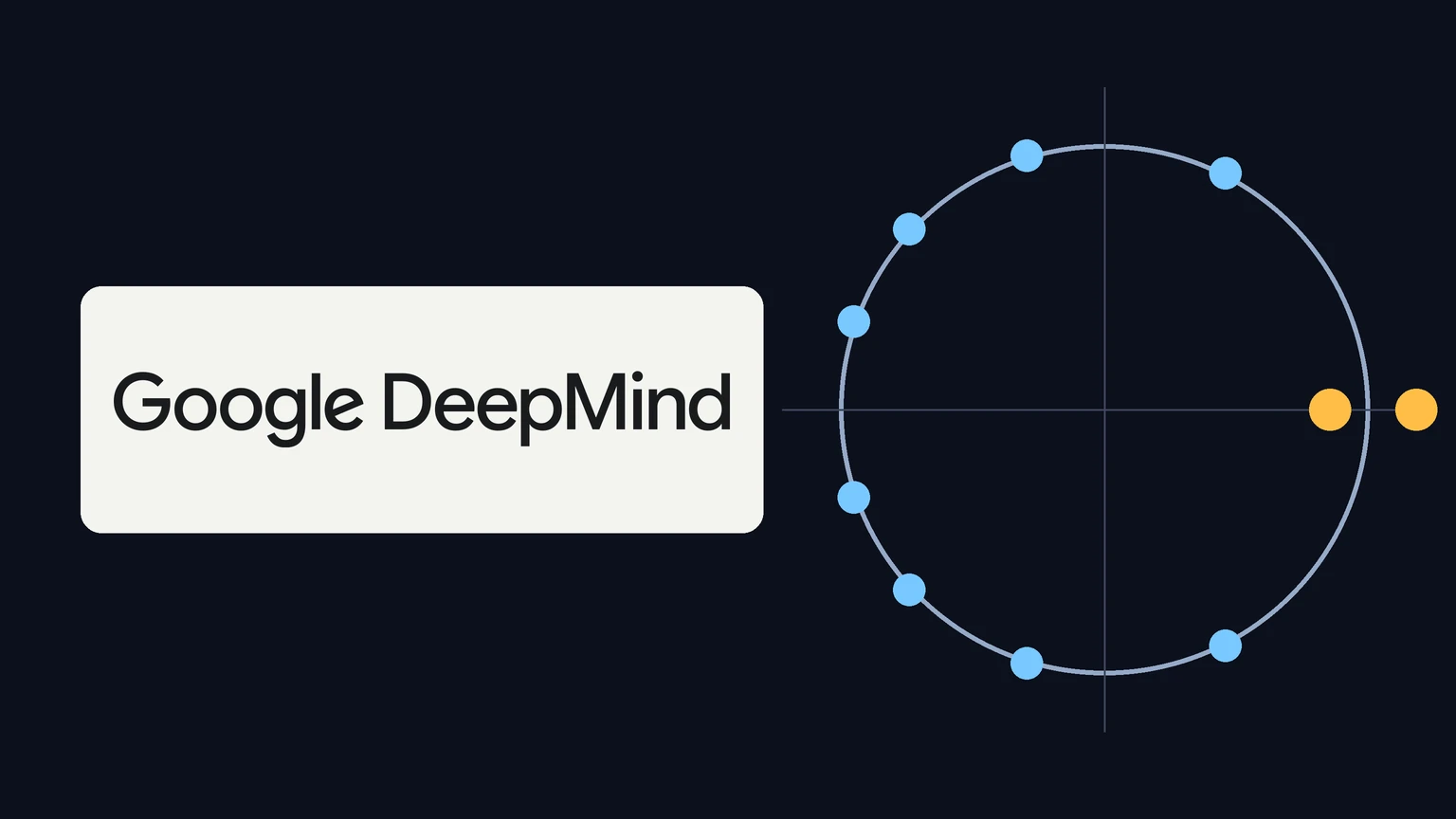
The cover image shows the idea. Lehmer's polynomial has ten roots: eight lie exactly on the unit circle, one real root sits just outside at about 1.176, and its mirror image sits just inside. That single root outside the circle is the whole Mahler measure.
The question matters beyond curiosity. The authors point out that the same quantity measures how fast certain chaotic systems lose information, which is one reason the problem connects number theory, dynamics and physics.
Why high degrees were stuck
Searching for small Mahler measures by brute force gets hopeless quickly, because the number of candidate polynomials grows exponentially with the degree. Before this paper, small-measure polynomials had been built explicitly only up to degree 250, with systematic searches up to 180.
For higher degrees mathematicians relied on David Boyd's analytic one-parameter family. Its weakness, the paper says, is that at high degree the polynomials it produces frequently factor into smaller pieces, which makes them useless for the leaderboard. As a result the family skips nearly half of the target degrees, leaving no general way to build a good candidate for an arbitrary degree.
The team also had to solve two engineering bottlenecks before any clever search could help: computing roots fast across millions of candidates, and checking exactly, not numerically, that a polynomial does not factor over the rational numbers. They separated the two jobs, so search workers stream candidates while separate verification workers simplify them, test irreducibility in Mathematica, compute the Mahler measure and update a per-degree leaderboard.
How the human and AI loop worked
The paper's main methodological claim is about the workflow. The researchers used internal versions of Gemini, including Gemini 4 Argon, inside Google Antigravity, which they describe as an agentic development environment that gives the model a persistent workspace, file editing, a local shell, Mathematica, background task monitors and launchers for Google Cloud CPU and GPU clusters. The agent prototyped solvers locally, launched large distributed sweeps and worked with the human researchers to pull out and check hypotheses.
The authors contrast this with closed-loop systems that mutate code against a fixed scoring function, the style used by evolutionary tools such as AlphaEvolve. Their loop changed the search space itself as it went, moving from unconstrained coefficient vectors to structured families once patterns appeared, and ended in exact algebra rather than only better numbers.
The search side combined five methods: a sparse direct search, a nearest-neighbor priority search starting from polynomials with all roots on the circle, reinforcement learning, evolutionary search and tilings of repeated coefficient blocks around a central defect. Together they set upper bounds for 824 even degrees. Against the 91 degrees with published records, they matched 85 and beat 6, including degree 178, inside the range earlier searchers had covered systematically.
DeepMind researchers have used Antigravity in a similar human-steered way before, as in the antimicrobial peptide work AI Lookout covered, but this is the most detailed account yet of the setup applied to pure mathematics.
The Generalized Boyd construction
The most interesting finding came from looking at the winners. After stripping out factors whose roots all lie on the unit circle, which do not change the Mahler measure, 95.5 percent of the search optima from degree 30 up turned out to be special cases of one two-variable polynomial that Boyd had studied, F(X,Y) = X(X+1)Y^2 + (X^2+X+1)Y + (X+1). Its Mahler measure, about 1.25543387, is the smallest known limit point of Mahler measures.
Combining that observation with phase shifts the reinforcement-learning search had found, the team built what it calls the Generalized Boyd algorithm, a five-parameter construction that solves directly for the exponents needed to hit any even degree. Tested on all 995 even degrees from 12 to 2,000, it produced irreducible polynomials below Boyd's limit point every time. The worst case was degree 1,932, at 1.25535826. It holds 99.6 percent of the best known records, and every one from degree 166 upward.
The appendix explains why. As the degree grows, the construction traces a path that spreads evenly over a torus, so its Mahler measure converges to that of F(X,Y). The authors also found that between 77 and 88 percent of the roots of their polynomials, 82.51 percent on average, lie exactly on the unit circle, with the rest in a thin band around it whose width shrinks as the degree grows. The dataset, mahler_dataset_d10_2000.csv, covers all 996 even degrees from 10 to 2,000.
What it does not prove
Nothing here settles Lehmer's conjecture. Lehmer's degree-10 polynomial remains the smallest known Mahler measure above 1, and the new polynomials all sit near 1.2554, well above it. The paper's discussion says the open question is whether Boyd's limit point is the true lower envelope at large degree, or whether isolated polynomials as small as Lehmer's can still appear at arbitrarily high degree.
The records are also upper bounds, not proofs of optimality. Beyond degree 54, nobody has shown that any of these polynomials is the smallest possible for its degree. The irreducibility checks and root counts were done in exact arithmetic, but the work is not formalized in a proof assistant such as Lean, and it has not yet been peer reviewed.
How it compares with other AI math results
This result sits in a different category from the recent run of AI-assisted proofs. AlphaProof Nexus solved open Erdős problems with Lean-checked proofs, and Microsoft researchers used AI agents to help prove the KLS conjecture. The Lehmer paper is closer to experimental mathematics: large computation finds structure, and humans and the model turn that structure into an exact construction.
It is also a sibling of DeepMind's Busy Beaver Cryptids paper, where Gemini found and verified patterns in hard computational cases. The authors argue the template could carry over to combinatorics, theoretical physics and biology, wherever large-scale computation can reveal hidden structure. Their own suggested next step is to try similar constructions for small Salem numbers, a related class where only one root lies outside the unit circle.
What to watch next
Watch for number theorists to check the released dataset against their own searches, for any attempt to formalize the Generalized Boyd construction, and for whether the method finds anything below Boyd's limit point at large degree, which would be the first real pressure on Lehmer's question in decades. Also watch whether Google makes the Antigravity math setup available beyond its own researchers.
Common questions
Did Google DeepMind solve Lehmer's problem?
No. The paper extends the search for small Mahler measures to degree 2,000 and explains a pattern, but it does not prove or disprove Lehmer's conjecture.
What is a Mahler measure?
For an integer polynomial, it is the product of the sizes of all its roots that lie outside the unit circle. It equals 1 when no root lies outside.
Is the data public?
The authors say they are releasing a verified dataset, mahler_dataset_d10_2000.csv, covering all 996 even degrees from 10 to 2,000.
Sources & further reading
How this story was made
Written by Kristian Kostov with AI assistance and checked against the linked sources. Company performance claims are attributed to the company. Analysis reflects AiLookout’s interpretation; we have not independently tested the products discussed. The cover places the companies’ own logos, taken from public-domain or openly licensed files credited in the caption, on a plain background. It is not a product photograph, a screenshot, or an endorsement.
Our editorial standards