Announced 14 Oct 2026 · Sources checked
What GAO found
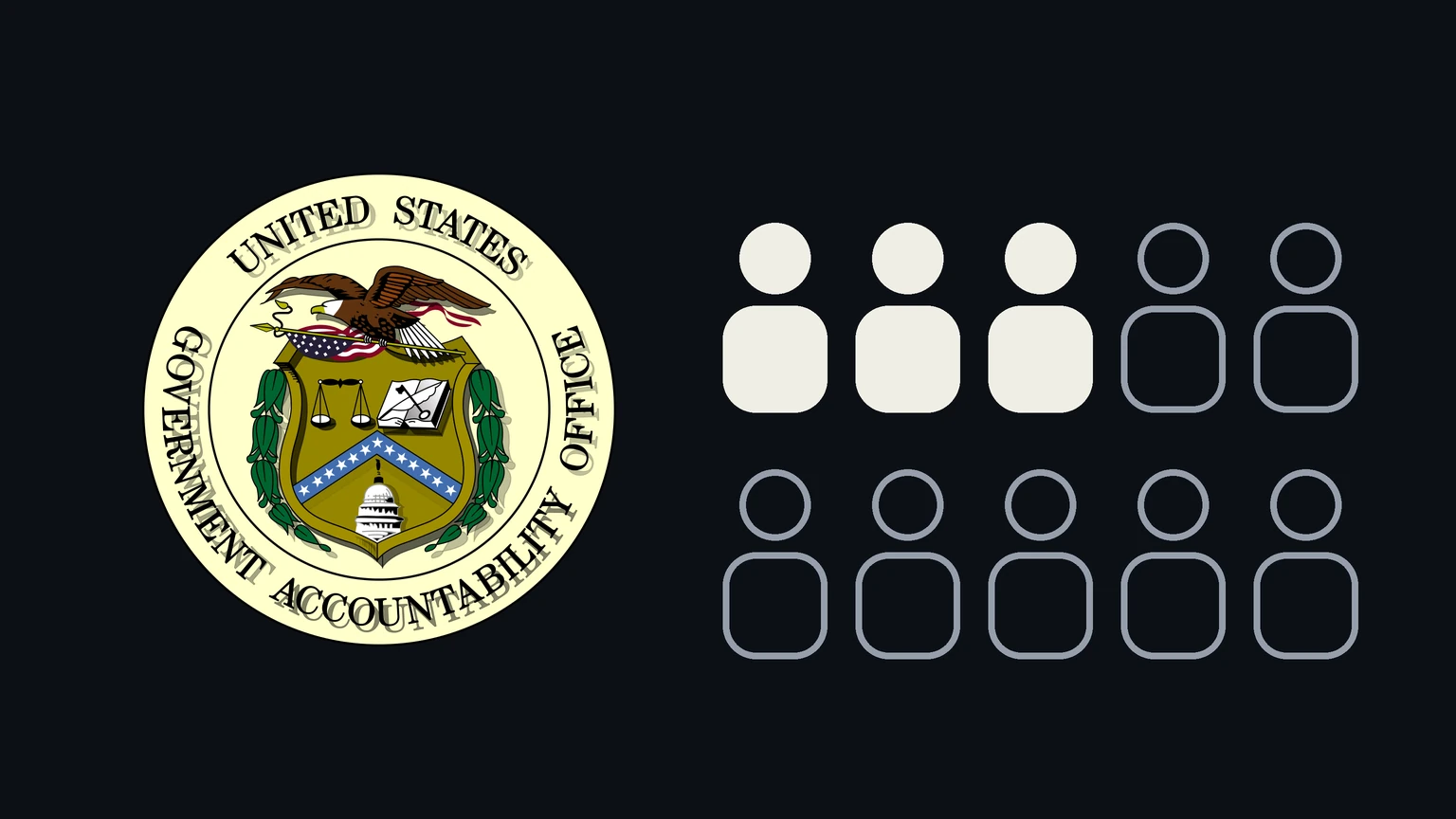
The Pentagon office responsible for making sure the military uses artificial intelligence safely and lawfully is badly short of staff, according to the US Government Accountability Office. In report GAO-27-107837, released on 14 October 2026, the congressional watchdog says that as of February 2026 only three of the ten authorised positions in the Responsible AI Division of the Chief Digital and Artificial Intelligence Office (CDAO) were filled.
Defense officials also told GAO the office is unlikely to fill the vacancies or add staff, because the CDAO is still being restructured. Stars and Stripes highlighted the finding on 21 October. GAO also found that the department's main working group on responsible AI did not meet from late 2024 until August 2025 and still has no charter.
The 24-page report was requested by the Senate Armed Services Committee in its report on the 2025 National Defense Authorization Act. GAO conducted the audit from September 2024 to October 2026, surveyed ten Pentagon components about one AI project each and interviewed officials.
The Pentagon's push to become AI first
The report lands as the department is trying to speed AI up. In January 2026 the Secretary of Defense issued an AI strategy titled "Artificial Intelligence Strategy for the Department of War, Accelerating America's Military AI Dominance." GAO says it put the department on "a wartime footing," calling for it to become an "AI first" warfighting force across all components, with new development timelines and metrics tied to mission impact.
The strategy also redefined responsible AI in a way that matters for vendors. According to GAO, it "clarified that Responsible AI is to utilize models free from usage policy constraints that may limit lawful military applications" and made model objectivity a primary procurement criterion. That is the same clash at the heart of Anthropic's court fight over its Pentagon supply-chain-risk label, which followed the company's refusal to drop limits on fully autonomous weapons and mass surveillance.
The CDAO has also lost rank. In August 2025 it was moved under the Under Secretary of Defense for Research and Engineering; it had previously reported straight to the Deputy Secretary. GAO cites a December 2025 Congressional Research Service report calling the move an effective demotion. The department reported 378 AI use cases as of February 2026, and officials told GAO there are probably more.
A council that stopped meeting
Since May 2021 the department has relied on a Responsible AI Working Council, run by the CDAO's Responsible AI Division, as its permanent working-level forum. Before the gap, monthly meetings drew attendance from across the department. CDAO officials told GAO the council did not meet from late 2024 until August 2025, because the small division was busy writing a generative AI toolkit and helping the federal Chief AI Officers Council produce risk-management resources published in September 2025.
Components felt the gap. The Joint Staff said it had used the council to coordinate work and struggled without it. The Defense Threat Reduction Agency wanted more help interpreting federal guidance for high-impact AI. The Air Force and Navy each started building their own responsible AI governance and could not easily compare notes; Air Force and DTRA officials collaborated informally instead.
The council has met again since August 2025, but it has no charter setting out members' roles or how often it meets, even though the department's 2022 Responsible AI Strategy and Implementation Pathway said it should have one. GAO warns it could lapse again, just as the January strategy requires the division to realign all existing AI policy guidance.
Three people for a department-wide job
A 2023 resourcing memo authorised the CDAO ten posts for responsible AI, including a systems engineer, a programme manager and an AI ethicist. Only three were filled as of February 2026. The first of the Pathway's 64 lines of effort was to fully staff that office.
The shortage has left planned work undone. CDAO officials told GAO they want to monitor AI projects for compliance with responsible AI tenets, test whether their toolkit actually works before requiring it, and finish the Pathway. As of April 2026, 29 of the 64 lines of effort were incomplete, and the CDAO has no metrics to measure how well responsible AI is being implemented, beyond web statistics such as visits to its toolkit page.
Older GAO recommendations are also still open. A 2022 recommendation to define who is responsible for collaborating on AI remains unaddressed, as do two 2023 recommendations to assign responsibility and set a timeline for identifying the department's AI workforce. The department had not even coded AI work roles into its personnel data systems.
How the services are using AI
GAO surveyed the Army, Navy, Air Force, Space Force, Marine Corps, Defense Intelligence Agency, National Geospatial-Intelligence Agency, Defense Threat Reduction Agency, Special Operations Command and Cyber Command, one AI project each. The projects include automatic target recognition for robotic systems, a counter-drone pilot and agentic AI. All ten took steps on at least one responsible AI tenet, and nine had established or begun establishing oversight bodies.
The responses show practical gaps. The Air Force said industry partners' proprietary models lacked transparency about data and algorithms, making an objective assessment hard. The Marine Corps said responsible AI tools were not available in classified environments. Only two of the ten projects used the CDAO's own responsible AI toolkit, seven did not, and one did not know. Seven components said access to more responsible AI staff or expertise would help most.
The CDAO has produced useful tools when it had capacity: its 2023 toolkit was adapted by NATO and built into the Maven Smart System in December 2025, and it ran a crowdsourced red-team exercise on medical chatbots with more than 200 participants. Other parts of the military are building far more autonomous systems, such as the Army's planned ECHOTRIBBLE hacking agent.
What GAO recommends
GAO makes two new recommendations: that the Secretary of Defense ensure the CDAO issues a charter for the Responsible AI Working Council, defining roles, members and meeting frequency, and that the CDAO address the Responsible AI Division's workforce needs. The department concurred with both by email.
GAO also asks Congress to consider directing the department to carry out its older open recommendations on AI collaboration and workforce, which have stayed open for years. Congress usually gives that kind of instruction through the annual defence authorisation act.
Limits of the report
GAO stresses that its survey is not generalisable: it covers one project in each of ten components out of hundreds of use cases, and the survey was fielded from June to August 2025, with details confirmed as of March 2026. Some findings rest on what officials told GAO rather than on documents.
The report does not assess whether any specific AI system has caused harm, and it does not evaluate the January strategy's redefinition of responsible AI, only describes it. Agreeing to recommendations is also different from acting on them; GAO's 2022 and 2023 recommendations were still open in May 2026. Civilian agencies face their own questions about vendor dependence, as HHS's plan for a no-bid award to keep Claude running shows.
Why it matters
The US military wants to move faster on AI than any other part of government, and responsible AI is the department's own mechanism for making that safe and trusted. GAO's numbers show that mechanism running on three people, a forum without a charter and a plan with 29 of its 64 tasks unfinished.
For companies selling AI to the Pentagon, the report is a reminder that the department's oversight capacity is thin even as it insists on models without usage limits. Whether Congress or the department fills the seven empty posts will say a lot about how much weight responsible AI still carries.
Common questions
What is the CDAO?
The Chief Digital and Artificial Intelligence Office leads AI adoption across the US Department of Defense, including its responsible AI policy.
Why are the posts not being filled?
Officials told GAO the office is still restructuring after moving under the Under Secretary for Research and Engineering and adapting to the January 2026 AI strategy.
Did the Pentagon accept GAO's recommendations?
Yes. The department concurred with both new recommendations in emailed comments to GAO.
Sources & further reading
How this story was made
Written by Kristian Kostov with AI assistance and checked against the linked sources. Company performance claims are attributed to the company. Analysis reflects AiLookout’s interpretation; we have not independently tested the products discussed. Cover photography is illustrative and does not depict the specific announcement or product.
Our editorial standards