Announced 15 Oct 2026 · Sources checked
What the FAA is negotiating
The Federal Aviation Administration is negotiating to take an ownership stake in Air Space Intelligence, the Boston startup that built SMART, the artificial intelligence tool the agency began using over Washington, D.C. last month. POLITICO reported the plan on 15 October, citing an internal FAA document. According to that document, the agency holds a term sheet for an equity stake in the company and is negotiating a warrant, which would give the US government the right to buy shares at a set price during a set period. The term sheet lapses at the end of 2026.
Air Space Intelligence is privately held, and it is not clear whether a final deal is close. The FAA told POLITICO it could not immediately comment, and the company did not respond to the outlet's request. AI Lookout found no public statement from either about the talks as of 18 October.
A day later, Semafor reported that the negotiations raise questions about whether the FAA has clear legal authority to own part of a company. A person familiar with the matter told Semafor the talks were too “premature” for specifics and had so far been limited to a handful of internal conversations. Semafor noted that existing law lets the Transportation Department help state or local governments “acquire an interest” in some public transportation companies, a possible but stretched basis for a deal. Tad DeHaven, who tracks federal equity stakes for the Cato Institute, told Semafor it was “further proof that the administration doesn't have a 'plan' or 'strategy.'”
The Trump administration has taken stakes in other companies, including the 9.9% stake in Intel it agreed to in 2025, as AeroTime pointed out. A stake held by the aviation regulator in one of its own air traffic contractors would be a first for the FAA.
What SMART does and who uses it
SMART stands for Strategic Management of Airspace, Routes and Trajectories. Transportation Secretary Sean Duffy and FAA Administrator Bryan Bedford unveiled it on 21 September. The FAA's announcement says it pulls about 200 data streams, including weather, flight paths, traffic flow and controller staffing, into one platform, and uses an AI-supported engine to forecast where congestion or weather will cause problems. The FAA says this moves traffic management from reacting to disruptions to planning “hours, days and even weeks ahead.”
SMART does not steer aircraft. The FAA says its recommendations are reviewed by FAA staff, and local leaders at air traffic control facilities can accept or pass on its scheduling suggestions. It cannot replace controllers or take control of an aircraft. At the launch demo, Duffy said, “It's always going to be a human that manages the airspace in America,” according to FedScoop.
The people using it are traffic management specialists, not the controllers who keep planes apart. Bedford said SMART would not be used by the roughly 15,000 controllers who prevent collisions, according to The Hill, but by analysts who decide on ground stops and similar flow measures. An FAA spokesperson said in September that the tool runs from the agency's command center in Warrenton, Virginia, with recommendations sent to controllers, The Washington Post reported. FedScoop noted that the FAA pitches SMART as a way to cut delays, cancellations and wasted fuel rather than as a safety system.
The contract and the company
The FAA awarded Air Space Intelligence the work in June 2026. The 12-year contract is worth up to $875.9 million and covers two systems. SMART is the predictive layer. The second, Flow Management Data and Services, or FMDS, replaces the FAA's legacy Traffic Flow Management System, which compiles flight plans, schedules and aircraft positions so the command center can match demand to capacity.
NPR described Air Space Intelligence as a relatively small company that had previously built AI-assisted software for dispatchers at Alaska Airlines and other carriers. NPR also noted that SMART is one piece of a $12.5 billion push to modernize US air traffic control, the same push behind new radios, digital flight strips and fiber replacing copper lines. The White House has been courting industry for other federal AI programmes too, such as the compute pledges in the Genesis Mission.
The launch day showed why the FAA wants better tools. On 21 September a cut fiber line in New Jersey caused a telecommunications outage that forced flight pauses across the Northeast, and Bedford used the moment to argue that the agency's data architecture has barely changed in 50 years.
Why lawmakers want SMART paused
On 9 October Representative April McClain Delaney of Maryland led a letter to Duffy and Bedford asking the FAA to pause SMART at Reagan National, Dulles and Baltimore/Washington International. Co-signers included Representatives Don Beyer, Alexandria Ocasio-Cortez, Kweisi Mfume, Suhas Subramanyam and Sarah Elfreth, and The Washington Post reported that Senator Chris Van Hollen also signed. The letter says the lawmakers have not seen any safety evaluation or testing reports, and that frontline aviation safety workers were told about the rollout days in advance or not at all.
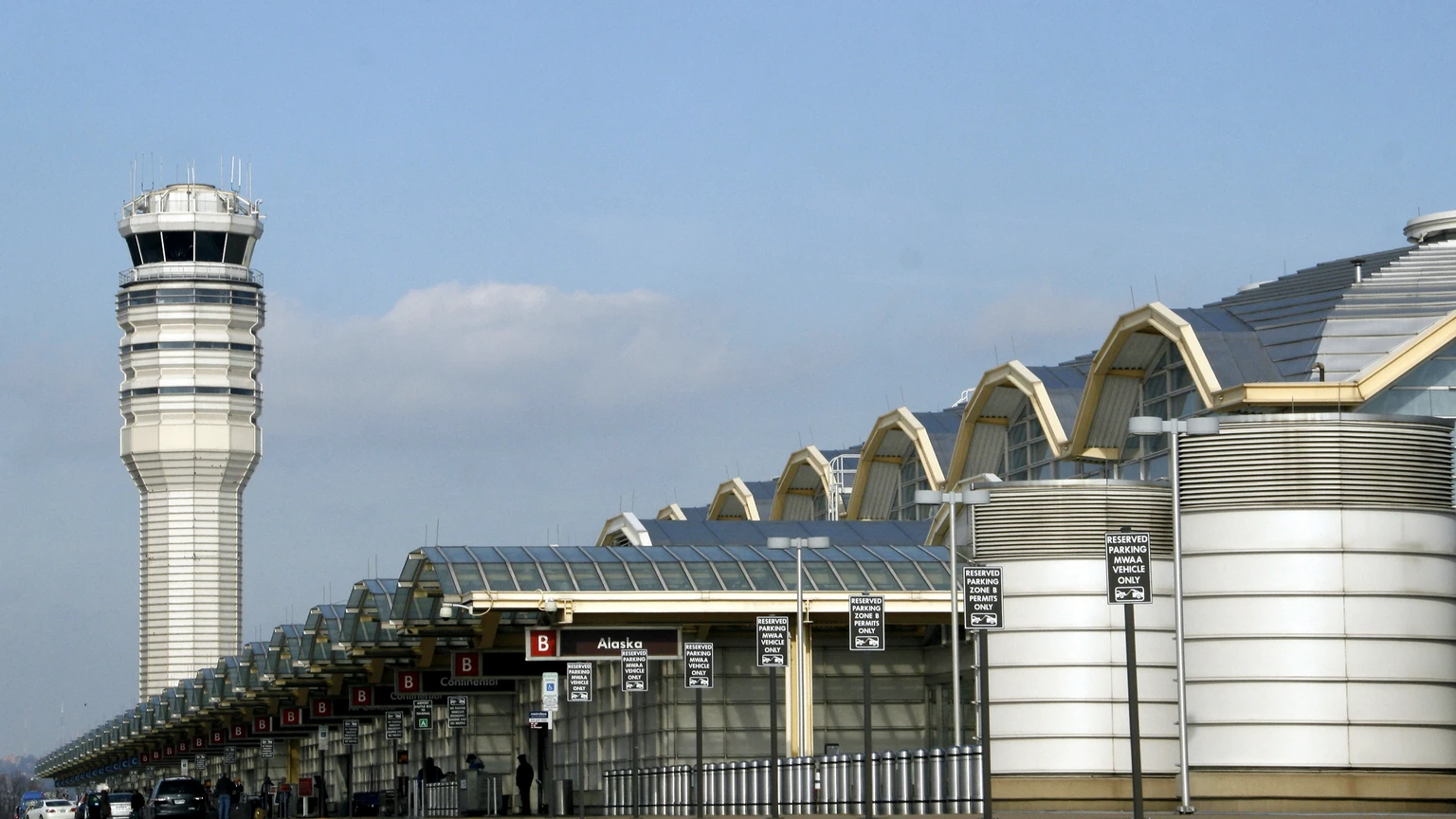
The lawmakers point to the January 2025 midair collision over Reagan National that killed 67 people and ask why the region was chosen as the pilot. “Air traffic control leaves zero margin for error,” Ocasio-Cortez said in a statement released by Beyer's office. She also said the FAA plans to expand SMART nationwide within 90 days.
The letter asks 18 numbered questions and requests answers by 19 October 2026. Among them: whether the FAA made a formal In-Service Decision before launch and who made it; whether a Safety Risk Management Document was completed and signed; whether any acquisition or safety review steps were waived to hit the 21 September date; and what AI models SMART uses and how their accuracy was validated. It also asks whether the Transportation Department classified SMART as high-impact AI under White House budget office memo M-25-21, which treats AI in traffic control systems as high-impact and requires pre-deployment testing, an impact assessment and operator training.
The accountability question is the sharpest. If a SMART recommendation contributes to a loss of separation or another safety incident, the letter asks, who bears responsibility: the controller who accepted it, the FAA, or the developer?
The GAO request and the controllers' view
On 13 October, 23 Democrats on the House Transportation and Infrastructure Committee, led by ranking member Rick Larsen and aviation subcommittee ranking member André Carson, asked the Government Accountability Office to audit SMART and FMDS. Their letter to the GAO says the AI in SMART raises “serious questions about its reliability and safety benefits, particularly on its potential to interfere with decision-making by experienced air traffic controllers or to hallucinate safety-critical information.”
The committee Democrats want the GAO to examine four things: the FAA's safety risk management for both platforms, including SMART's AI; its plans to test, evaluate and certify them; the performance metrics it uses; and its deployment strategy, including how it worked with airlines and frontline staff. The letter sets no deadline, and the GAO has not said whether it will take on the review.
Controllers have kept their distance. The National Air Traffic Controllers Association said at launch that it “has not been involved in the design, testing, or implementation of SMART.” It later told Federal News Network that any new technology should “complement and not replace” controllers' experience and judgment. The FAA has not paused the tool. Spokesperson Hannah Walden told The Washington Post that controllers still have full control over managing planes and that lawmakers have a “standing invitation” to see a demonstration.
Why an ownership stake changes the picture
This section is AI Lookout analysis. Until 15 October the SMART dispute was about testing and transparency. The equity talks add a second issue: the FAA is both the customer judging whether SMART is safe enough to expand and, if a warrant is signed, a would-be shareholder whose investment gains value if SMART succeeds. Nothing published so far says how the FAA would separate those roles, and the internal document as reported does not say what price or share of the company is on the table.
It also lands while Congress argues about how much proof AI systems need before the government relies on them. In a separate fight, Anthropic has pitched lawmakers a draft bill on when Washington can halt a frontier model, and federal buyers have started writing AI-specific terms into contracts, as with the GSA's data-safeguarding clause for large language models. SMART is a narrower system than a chatbot, but the questions in the 9 October letter, about which models it uses, how they were validated and who answers for a bad recommendation, are the same ones being asked of AI everywhere else in government.
In the FAA's favour, SMART is advisory and sits with traffic managers, not controllers. A wrong recommendation should be caught by a person before it changes a flight, which is the point Duffy, Bedford and Walden keep making. The concern in the McClain Delaney letter, which cites research on automation complacency and bias, is that people under staffing pressure may lean on automated suggestions instead of checking them.
What happens next and what is still unknown
Three dates matter. The FAA's answers to the McClain Delaney letter are due on 19 October. SMART's initial 90-day evaluation, which began on 21 September, runs to about 20 December. And the equity term sheet lapses at the end of the year. Duffy has also set expectations for travellers, saying improvements may not arrive “by Christmas” but should show up by next summer as the rollout widens.
Much is still unknown. The FAA has not said which AI models SMART uses, published a safety evaluation, or set out the metrics it will use to judge the 90-day trial. Air Space Intelligence has not commented on the equity talks, and neither side has confirmed the size of any stake. AI Lookout will update this article if the FAA releases its answers to Congress, the GAO accepts the audit request, or a warrant agreement is signed.
Common questions
What is the FAA SMART AI tool?
SMART, short for Strategic Management of Airspace, Routes and Trajectories, is a predictive traffic management platform built by Air Space Intelligence. It combines about 200 data streams to forecast congestion and weather problems and recommends schedule or routing changes, which FAA staff can accept or reject.
Does AI now control air traffic in Washington?
No. The FAA says SMART cannot control aircraft or replace controllers. It is used by traffic management specialists for flow decisions such as ground stops, and controllers still separate aircraft.
Why does the FAA want a stake in Air Space Intelligence?
The FAA has not explained publicly. The internal document reported by POLITICO shows the agency wants to go beyond using Air Space Intelligence as a contractor and hold an ownership interest. Semafor reported the talks are at an early stage.
Sources & further reading
- FAA seeks ownership stake in air traffic AI company ↗
- FAA Seeks Ownership Stake In Air Traffic AI Company ↗
- FAA equity talks raise questions about the agency's legal authority ↗
- FAA seeks stake in AI air traffic company ↗
- Trump's Transportation Secretary Sean P. Duffy Delivers State-of-the Art Air Traffic Control Management Tool ↗
- Aviation regulators use AI to manage the nation's airspace ↗
- SMART system arrives in DC to assist air traffic controllers ↗
- FAA unveils AI aviation data tool in Washington airspace ↗
- Letter to Secretary Duffy and Administrator Bedford on the SMART tool ↗
- Beyer Joins Call with McClain Delaney, Ocasio-Cortez, Mfume, Subramanyam, and Elfreth to Pause FAA's AI Tool ↗
- Ranking Members Larsen, Carson, T&I Democrats Request Audit of FAA's AI-Based Air Traffic Software ↗
- Letter to Acting Comptroller General Orice Brown requesting a GAO review of SMART and FMDS ↗
- Democratic lawmakers oppose AI tool used at D.C.-area airports ↗
- FAA AI use sparks new reviews into AI safety, workforce shortages ↗
How this story was made
Written by Kristian Kostov with AI assistance and checked against the linked sources. Company performance claims are attributed to the company. Analysis reflects AiLookout’s interpretation; we have not independently tested the products discussed. The cover places the companies’ own logos, taken from public-domain or openly licensed files credited in the caption, on a plain background. It is not a product photograph, a screenshot, or an endorsement.
Our editorial standards