Announced 26 Oct 2026 · Sources checked
What the Coast Guard announced
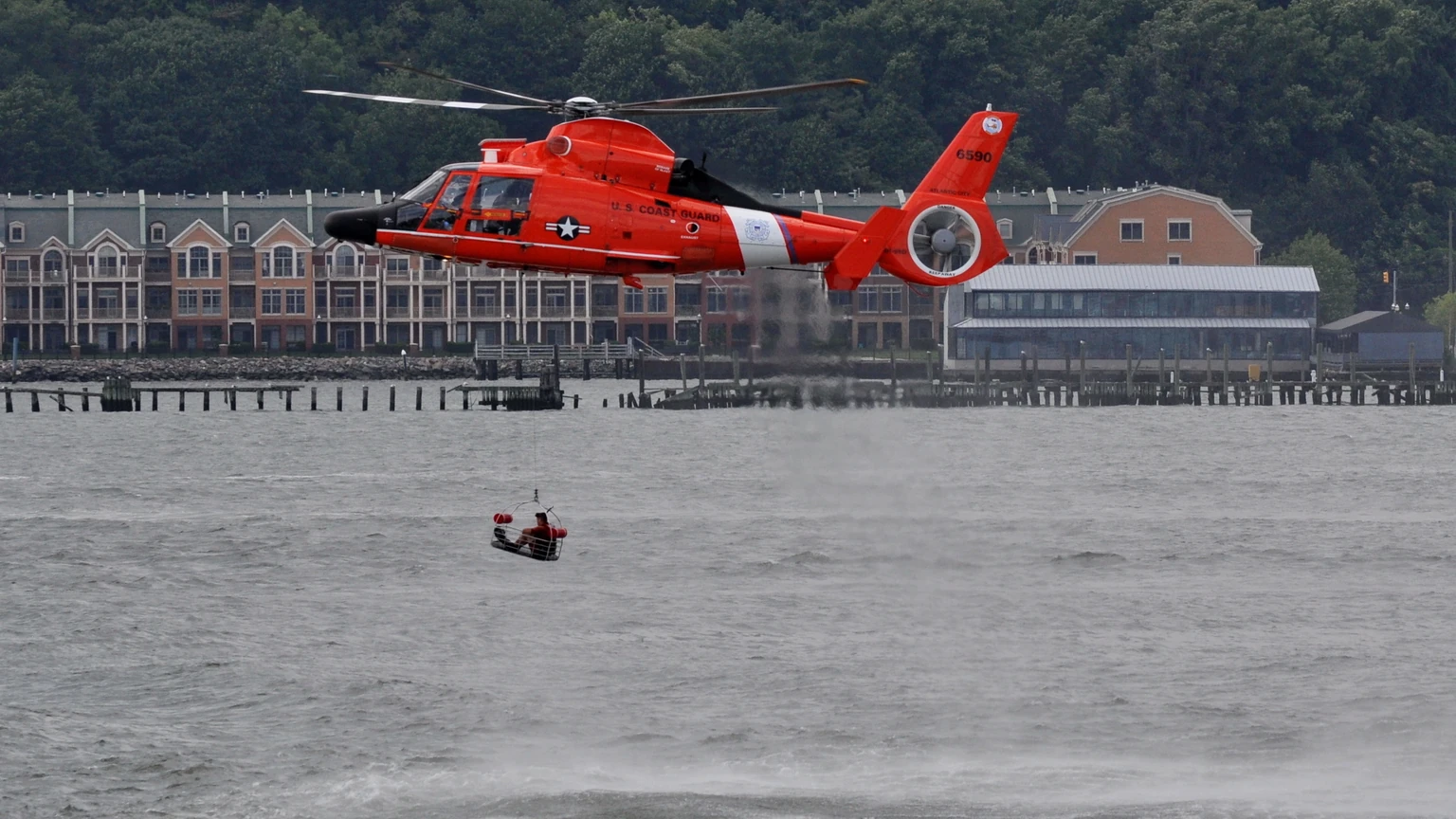
The US Coast Guard wants to test whether computer-vision software can spot people and boats in the water more reliably than the crews who search for them today. A notice in the Federal Register on 26 October 2026 announces the Coast Guard's intent to enter a Cooperative Research and Development Agreement, or CRADA, with a company called LOOKOUT. The agreement would assess what the notice calls Super Intelligence tools for automated target detection in search and rescue operations.
The notice, docket USCG-2026-0374, comes from the Coast Guard Research and Development Center and is signed by its commanding officer, Captain P.J. Granati. It asks for public comments by 25 November 2026 and invites other organisations with similar tools to submit proposals for this or future agreements. LOOKOUT is the only company the Coast Guard is currently considering, but the notice says it does not want to exclude other viable participants.
The title of the agreement spells out the scope: Super Intelligence situational awareness tools for analysing Coast Guard sensor feeds for search and rescue. In plain terms, the Coast Guard wants software that watches the video from its cameras and flags objects that a human lookout might miss.
What the tools are supposed to do
The notice sets out practical requirements. Proposed tools must be at a high technology readiness level, meaning close to finished products rather than research prototypes. They must be commercially available, self-contained and portable, capable of edge computing, so that the analysis runs on the boat or aircraft instead of a distant server, and able to work with any video sensor rather than one specific camera.
The Coast Guard says its search and rescue work already draws on many sensors across many units and aircraft. It hopes the software can automatically detect, classify and track targets while coping with the conditions that make searches hard: low light, fog, rain and rough seas. The notice says that by using these tools and analysing how they perform, the service expects to improve decision-making during rescues, when data has to be gathered and analysed continuously and quickly.
The agreement is also meant to produce measurements. The Coast Guard says it wants to benchmark the tools, check how they fit with its existing systems and propose good practice for handling the data. An additional goal is to describe how confident the system is in what it reports and how it performs in operations, so the service can build a measurable test that lowers the barrier to adopting such tools later.
The search theory behind it
The most technical part of the notice is its stated goal: to establish a reliable coverage factor value that supports data-driven lateral range curve results for search and rescue. Those terms come from search theory, the mathematics the Coast Guard and other rescue services use to plan where to send searchers and how long to look.
A lateral range curve describes how likely a searcher is to detect an object at different distances to the side of the path being flown or sailed. Detection is likely close to the track and falls off further away. The area under that curve gives the effective sweep width, the width of a strip that a searcher can be treated as covering completely. Multiplying sweep width by the distance travelled and dividing by the size of the search area gives the coverage factor, which planners use to estimate the probability that a target in that area has been found.
Those numbers have traditionally come from experiments with human observers looking for objects such as life rafts or people in the water under different conditions. A camera with detection software has its own curve, which could be wider, narrower or shaped differently from a person's, and may change with light, weather and sea state. If the Coast Guard is going to rely on such a system when it decides an area has been searched, it needs those values measured, not assumed. That is what this agreement is set up to produce.
Who LOOKOUT is
The notice gives no details about LOOKOUT beyond its name and says the Coast Guard chose it because the company has shown the technical ability and has tools ready to be deployed, evaluated and operated in a Coast Guard test environment with Coast Guard sensor feeds.
A US company called LOOKOUT sells what it calls AI marine vision for boats. Its website says the system detects and tracks vessels, debris, buoys, swimmers, kayaks, paddle boards, marine wildlife and shipping containers, works with existing thermal, infrared, day and 360-degree marine cameras, and merges its detections with AIS ship-tracking data and charts on the helm display. The notice does not confirm that this is the same company, although the description matches the requirements closely. LOOKOUT's site lists an IBEX 2025 Innovation Award and an EPIC 2026 award. (The company has no connection to AI Lookout, the publisher of this article.)
How a CRADA works
A CRADA is not a contract, and no money changes hands. The notice explains that CRADAs are authorised under 15 U.S.C. 3710a, a technology-transfer law, and that the federal party shares research resources but does not contribute funding. The Coast Guard stresses that CRADAs are not procurement contracts and should not be used to get around the normal purchasing process.
Under this agreement the Coast Guard would provide staff, cover its own costs and supply the data feeds needed for the tests. The company would provide its own staff and costs, help install equipment and software, offer technical support and write a summary report with the Coast Guard. Other companies can submit unclassified proposals of no more than five pages, judged on how well they understand the goal and whether they have the technical ability and resources to meet it. Small businesses get special consideration, and businesses located in the United States get preference.
The arrangement is a common way for the government to learn whether a commercial product works before deciding whether to buy anything. A good result would not automatically lead to deployment, but it would give the Coast Guard measured numbers it can use if it later wants to buy similar systems.
The super intelligence label
The notice is also an example of how quickly the federal government's new vocabulary has spread. It uses Super Intelligence, abbreviated SI, throughout the title, summary and background, in line with Executive Order 14434, which renames AI without changing its legal definition. A State Department cable ordered staff to write super intelligence instead of AI on 19 October, and the SEC's examination priorities dropped the term AI the same week.
The conversion is not complete. In the discussion section, the Coast Guard notice still describes the work as testing artificial intelligence enabled situational awareness tools, the older wording, a paragraph after calling the same tools SI. The software itself is the kind of object-detection system that has been sold for years, not a system that is more capable than people at general tasks. The label now appears in documents ranging from Treasury's proposed investment rules to a boat-camera test, which makes it harder to tell from a title what kind of technology an agency actually means.
What happens next
Public comments are open on regulations.gov under docket USCG-2026-0374 until 25 November 2026. The Coast Guard says it will not answer comments in the Federal Register but will respond to commenters directly and may change its proposal. It accepts anonymous comments. Questions go to Sean Lester of the Connectivity Branch at the Research and Development Center.
The notice does not say when testing would start, how long it would last, which Coast Guard units, boats or aircraft would take part, or whether results will be published. It also does not say what detection rate the service would consider good enough. Those details are likely to be set in the statement of work if the agreement goes ahead, and the final summary report should show whether a camera and detection software can be trusted to widen the strip of sea a rescue crew can search.
Common questions
What is the Coast Guard super intelligence search and rescue agreement?
It is a planned Cooperative Research and Development Agreement between the Coast Guard R&D Center and LOOKOUT to test software that detects, classifies and tracks targets in Coast Guard video feeds during search and rescue.
Is the Coast Guard paying LOOKOUT?
No. The notice says the federal party contributes no funding under a CRADA and that CRADAs are not procurement contracts. Each side covers its own staff and costs.
How can I comment on the Coast Guard notice?
Comments go to regulations.gov under docket USCG-2026-0374 by 25 November 2026. Other companies can also submit proposals of up to five pages.
Sources & further reading
How this story was made
Written by Kristian Kostov with AI assistance and checked against the linked sources. Company performance claims are attributed to the company. Analysis reflects AiLookout’s interpretation; we have not independently tested the products discussed. Cover photography is illustrative and does not depict the specific announcement or product.
Our editorial standards