Announced 23 Oct 2026 · Sources checked
What Anthropic launched
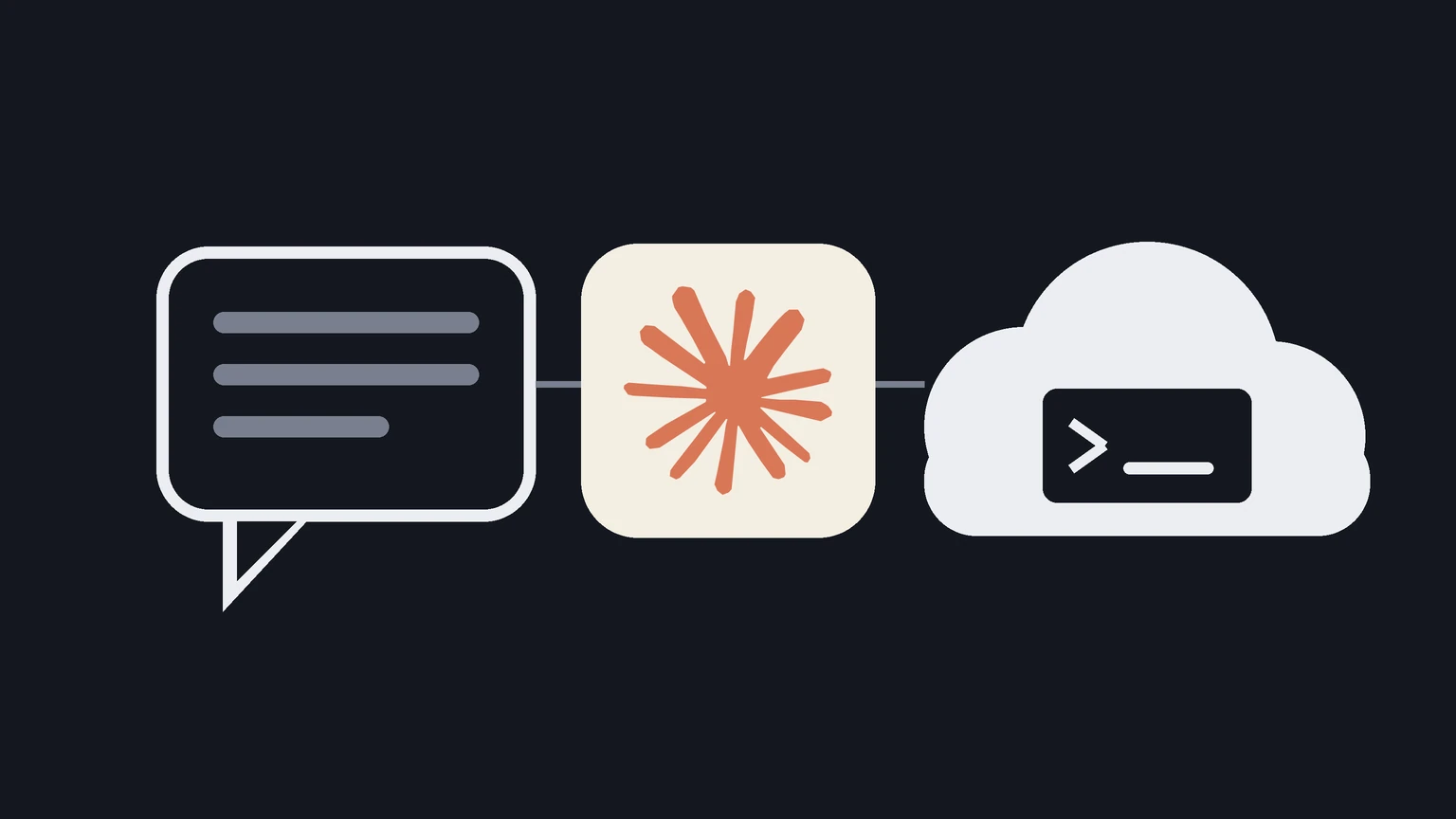
Anthropic has made its combined chat and Cowork experience generally available for Claude Enterprise, ending the split between asking Claude questions and handing it real work. In an announcement dated 23 October, the company says a conversation now starts as an ordinary chat and, when a task needs to run code or work with files, continues in the cloud and comes back with the finished document, analysis or deck. Because that work runs remotely, it keeps going after someone closes their laptop and can be picked up on the web, desktop or mobile apps.
This is the Enterprise version of a change Anthropic first made for its Pro and Max consumer plans in September. Existing chats, projects, connectors, skills and plugins carry over, so members do not have to rebuild their setup. Until now, chat and Cowork were separate products that admins switched on and governed independently, and users had to decide which one to open for a given job.
The bigger news for IT departments is the date attached to it. According to Anthropic's admin setup guide, eligible organisations that have not touched the new setting will have it switched on automatically on 16 November 2026. That gives administrators a little over three weeks to finish a security review, test with a pilot group, or decide to keep it off.
How one conversation now does both jobs
The idea is that people stop choosing modes. A simple question still gets a quick answer in the chat. When the request turns into something like building a spreadsheet, analysing a stack of files or drafting a deck, Claude spins up what the admin guide calls an isolated cloud sandbox, a virtual machine managed by Anthropic, and does the work there. Each conversation that needs one gets its own machine.
Those machines are not kept running forever. The guide says that after a few minutes of inactivity the virtual machine is stopped and its disk is saved as an encrypted snapshot, and the sandbox expires 30 days after it was created. The conversation itself remains the record, so chat history, sharing, export, the Compliance API and the organisation's data retention setting all keep working from it.
Local access is still possible but optional. Through the Claude desktop app, members can link their own computers so Claude can use local folders, local MCP servers and applications, under the organisation's remote control and device policies. That fits a broader push by Anthropic to let Claude act with less hand-holding, including making auto mode the default in its apps, which AI Lookout covered last week.
Anthropic's announcement quotes customers including the analytics firm Quantium and the car retailer Carvana. Carvana says employees can start a task on a computer and pick it up on their phone, with notifications when Claude has results or needs input. PYMNTS and MIXED both reported the launch on 25 October.
What happens on 16 November
The setting lives under Organization settings, then Capabilities, and is called Chat and Cowork unified. The admin guide says Owners and Primary Owners who have not changed it see a notice that it will be automatically enabled on November 16, 2026, with two buttons: Enable now to turn it on early, or Keep disabled to leave it off. An organisation that already switched the setting on or off keeps that choice.
Two other capabilities have to be on for anything to happen: Chat, because every conversation starts there, and Cloud code execution and file creation, because the agentic work runs remotely. If either is off, there is no notice and nothing changes on 16 November; the unified experience turns on later as soon as both are enabled. The unified mode does not need Cowork or Cowork in the cloud to be switched on, and Anthropic says it is meant to replace both over time.
Once on, every member with the User, Admin, Owner or Primary Owner role gets it. Members on custom roles get it only if their role includes the new capability, and the guide warns that new roles start with all capabilities, including this one. Access is checked on every request, so removing a role or switching the setting off cuts access straight away. Role membership can be synced through SCIM to roll out in waves, and scheduled tasks and session history continue working after the change without being recreated.
The security model admins are being asked to approve
Anthropic is pitching this as an extension of controls companies already approved rather than a new product to vet from scratch. The announcement says single sign-on, the Compliance API and encryption in transit and at rest still apply, and that Anthropic does not use the data for model training by default. The guide suggests most security teams will be reviewing two components they already know, Claude chat and Cowork in the cloud, and that a Cowork in the cloud review already under way carries over.
The key design choices are about the sandbox. Network egress from it is off by default for Enterprise, and admins can open it up to package managers only, a custom list of domains, or all domains. Connector credentials stay outside the sandbox, and Anthropic enforces connector policies such as Blocked or Needs approval on every connector call from outside it. Separate switches decide whether members can give a connector tool standing approval, use Skip all approvals mode for scheduled tasks and the built-in browser, or let Claude approve actions automatically.
Sharing has its own wrinkle: a conversation that has used its sandbox can be shared only when both the Share chats and Share cloud sessions settings are on. Organisations that export OpenTelemetry data get the same metadata-only events from these cloud sessions as from others, although Anthropic recommends the Compliance API instead. Teams building their own agents on the developer platform got a similar option when Claude Platform added OpenTelemetry tracing.
Spend controls and the new usage line
Pricing stays usage-based, and Anthropic acknowledges that agentic work can burn more tokens than a quick chat. To soften that, it points to its newest models: billed through usage, it says Claude Opus 5.5 costs 40% less to run than Claude Opus 5 on typical workloads, and Claude Sonnet 5.5 costs up to 30% less than Sonnet 5 for most work. Those are Anthropic's own figures, not independent measurements.
Admins get four levers. The new one is Efficient mode, which limits members to Sonnet and Haiku models in the unified experience and starts new sessions on Claude Sonnet 5.5 at low effort; Owners can switch it on for the whole organisation or for specific custom roles. The others are model entitlements by role, spend limits at organisation, group and member level, and pooled group budgets that give a group one shared monthly amount. The model allowlist applies to both chat and agentic work.
Reporting changes too. Once a member has access, their chat and Cowork usage is filed under a new Chat and Cowork unified line instead of under Chat or Cowork, with the product value chat_cowork_unified in the Cost and Usage API and new metrics in the Analytics API. Anthropic stresses this changes only where usage is filed, not how it is counted or billed, but warns that anyone adding up chat and Cowork spend must include the new line or their numbers will appear to fall. New activity can take up to two days to appear, and a dedicated page in the analytics dashboard shows daily active users.
What gets deleted and what does not
The guide spells out retention in more detail than most launches. Conversations are kept until a member deletes them or the organisation's custom retention period ends, with a minimum of 30 days. When a conversation is deleted, the cloud sessions Claude started in it, including their transcripts, are deleted too. Almost all files Claude produced in a conversation on or after 8 October 2026 are deleted with it unless another conversation or project uses them; older files may remain.
Memory is being migrated. After an organisation moves to the unified experience, memory moves to a new system, and the old memory may be deleted 14 days later, or sooner if it is already past the retention period. Artifacts follow their own retention periods rather than the conversation's.
Some things are not covered by custom retention at all. The guide lists Cowork cloud sessions a member starts directly, which are kept until the member deletes them; scheduled tasks and their runs, which keep running even after the conversation that created them is deleted; Cowork history stored on a member's computer; memory of people who have left; and transcripts kept by Claude Code and other products outside chat and Cowork. Compliance teams will want to check those gaps before 16 November.
Who is left out for now
Not every Enterprise customer can use the new experience yet. Organisations with zero data retention, Anthropic's HIPAA-ready configuration or customer-managed encryption keys cannot switch it on, and admins there will not be able to enable it. They keep using chat and Cowork as they do today. Anthropic says HIPAA support is expected after general availability and CMEK support is planned for a later release, without dates. An organisation that turns on CMEK after enabling the unified experience loses access to it.
That leaves some of the most regulated customers, such as healthcare providers, on the old split for now. Elsewhere, Anthropic has been widening where Claude runs, including an Anthropic-managed Claude option on Google Cloud, while Google is positioning a Gemini agent as its universal workplace agent. The fight is over which assistant becomes the default place where office work gets done.
What IT teams should do before the switch
Anthropic's recommended rollout is straightforward: share the admin guide with IT, security and procurement; finish the security review; start in a sandbox organisation or with a pilot group through a role; review network egress, connector, sharing and remote control settings; then monitor usage and feedback for two to four weeks before expanding in waves. Existing customers are told they will receive an email about the rollout for their organisation.
In practice, the decision to make before 16 November is simple. Organisations that are not ready should choose Keep disabled, or move members who should not have the feature to a custom role without it. Those that are ready can enable it early and get a few weeks of usage data before the default switch lands for everyone else.
AI Lookout will update this story if Anthropic publishes dates for HIPAA or CMEK support or changes the 16 November default.
Common questions
When does Claude Enterprise switch on unified chat and Cowork?
On 16 November 2026 for eligible organisations that have not changed the setting and have Chat and Cloud code execution and file creation turned on. Admins can enable it early or keep it off.
Where is the setting for Chat and Cowork unified?
Owners and Primary Owners find it under Organization settings, then Capabilities. Custom roles can grant or withhold it per role.
Which Claude Enterprise customers cannot use it yet?
Organisations using zero data retention, the HIPAA-ready configuration or customer-managed encryption keys. Anthropic expects HIPAA support after general availability and CMEK later.
Sources & further reading
How this story was made
Written by Kristian Kostov with AI assistance and checked against the linked sources. Company performance claims are attributed to the company. Analysis reflects AiLookout’s interpretation; we have not independently tested the products discussed. The cover places the companies’ own logos, taken from public-domain or openly licensed files credited in the caption, on a plain background. It is not a product photograph, a screenshot, or an endorsement.
Our editorial standards