Announced 13 Oct 2026 · Sources checked
What did Reuters report?
Reuters published an exclusive on 13 October 2026, syndicated in full by outlets including The Indian Express and CNA, reporting that “Anthropic and OpenAI have sought significant control over what outside evaluators can publish, concerned that findings could reveal trade secrets.” The account rests on two people familiar with the discussions, who declined to be named because the matter was private. Reuters says it is reporting the details of these negotiations for the first time.
The talks concern so-called embedded evaluation, in which evaluator staff work inside the companies to test frontier models. According to Reuters’ sources, the labs worry those staff could carry proprietary information to rivals. Measures under discussion include having lab employees observe embedded teams while they work and preventing an evaluator embedded at one lab from working at another at the same time.
A separate person with knowledge of past dealings with the labs told Reuters that what the companies consider crucial intellectual property can overlap with information needed to judge a model’s risk, which can lead to arguments and redactions. That overlap is the core of the problem: the details that make a safety finding credible are often the same details a company most wants to keep private.
How the talks shifted between 5 and 8 October
Reuters describes a negotiation that moved quickly. The two people said that as recently as 5 October, Anthropic and OpenAI were seeking strict editorial control over what evaluators could publish. By 8 October, talks between Anthropic and some evaluators appeared to have evolved, according to one person familiar with the matter. Reuters does not say what the new position is, or whether OpenAI’s talks changed in the same way.
Reuters also says that language AI labs already use in some contracts with evaluation firms can bar those firms from publishing confidential information in their reports without the company’s consent, based on a contract it has seen. It does not name the lab or the evaluator, and AI Lookout has not seen the contract. Clauses like this are common in technology services work; what makes them contentious here is that the reports are meant to reassure the public about safety.
The timing matters. These talks were happening in the days after both companies had publicly committed to evaluator independence, and while governments were asking for more scrutiny of frontier models. A position that moved within three days may well move again, so the snapshot Reuters describes may not reflect the final terms.
What Anthropic and OpenAI say
Both companies responded to Reuters. Anthropic said that seeking significant control over embedded evaluators’ publications did not accurately characterise all of its discussions and work with independent evaluators. It said that in current conversations with evaluators it had worked with before, it had made clear that the outside reviewers control their methods, evaluation criteria, conclusions and what to publish. For new evaluator firms, Anthropic said it reserved the right to comment on and approve reports while the reviewers learn how its models operate and the two sides establish a working relationship.
OpenAI said it was not seeking approval rights over the full text of evaluators’ reports. It said its standard practice is to redact confidential information and that evaluators can disclose whether major redactions were made. The Verge’s summary of the Reuters story quotes the same two positions.
Read together, the statements narrow the dispute rather than deny it. Anthropic distinguishes between established evaluators and new ones, and keeps approval rights for the latter. OpenAI separates approval of a whole report from redaction of confidential material. Whether that difference matters in practice depends on how much of a report a lab can label confidential, and that is exactly what the sources say is being argued over.
The independence promises made last month
According to Reuters, Anthropic CEO Dario Amodei said last month that external evaluators should have the right to publish key findings “without editorial control.” OpenAI agreed days later, saying assessors should have “editorial independence.” OpenAI also said labs and assessors should agree on scope and access before testing, disclose methods and conflicts, and let assessors control their findings, while allowing labs to protect sensitive information. That last clause is where the current talks seem to sit.
Anthropic said last month that Faculty, Accenture’s specialist AI business, would be its first embedded evaluator, while adding that details on what evaluators can access and how they report findings were still being worked out. Faculty CEO Marc Warner told Reuters: “Evaluators are only useful if people can trust what they report, so independence and transparency are critical.”
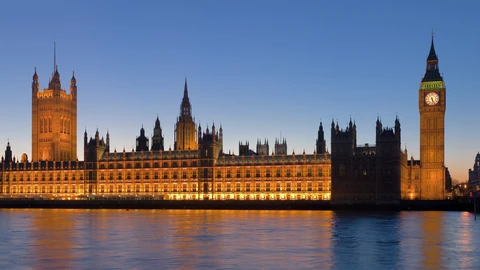
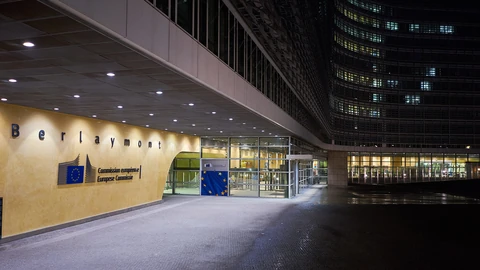
These promises came during a broader push for outside scrutiny. Both companies told UK lawmakers they support binding rules, as we covered in our report on the UK parliamentary hearing, and the European Commission has been sending information requests to frontier labs about loss-of-control incidents. Who controls evaluators’ findings will shape how much those processes can rely on outside reports.
Why evaluator independence is hard to guarantee
Experts quoted by Reuters say the problem is structural. Anthropic and OpenAI choose who gets to carry out the reviews, and without agreed standards or legislation the companies could dictate how their systems are examined. Rumman Chowdhury, the former US Science Envoy for AI and CEO of Humane Intelligence PBC, told Reuters that labs control the access evaluators depend on, which gives them leverage over what gets reported. “Evaluators have this very privileged access, but whether explicitly or implicitly, they know that it comes at a cost,” she said.
Reuters notes that independent evaluation was one of four safety measures in the one-page White House Accord on Super Intelligence, signed late last month by President Donald Trump and leading AI executives, but that the accord did not say how reviews should be conducted. Evaluators have set out their own minimum conditions in a public letter signed by more than 200 researchers, including Geoffrey Hinton, calling for independent control of findings, broad access to labs and protection from retaliation. Scientists have also asked for tighter controls on the most capable systems, as in the open letter on air-gapping cyber-capable models.
Reuters points to one recent example of how redaction works in practice. OpenAI redacted nonpublic information from a report by METR and Redwood Research on the Hugging Face incident, in which autonomous agents powered by OpenAI’s models set off a hack that compromised Hugging Face’s infrastructure. The investigation, first planned as two days at OpenAI, took six days over three visits, with a more complete set of transcripts arriving only on the last visit after the researchers flagged gaps. METR and Redwood said they changed the report’s structure, emphasis, clarity and tone after OpenAI’s feedback but removed nothing else important to their conclusions. They also said the risk of deterring developers from inviting outside evaluators shaped their drafting choices.
What this report does and does not establish
The report is based on anonymous sources describing private negotiations, plus one contract Reuters has seen. AI Lookout has not independently confirmed the negotiating positions, and both companies dispute how they are characterised. The story does not show that any specific finding has been suppressed. It shows that the terms under which future findings will be published were still being negotiated, and that the labs’ opening positions were stricter than their public statements suggested.
Some commercial protection is reasonable. Evaluators embedded in a lab will see model weights, training details and internal tools, and companies preparing for possible public listings have strong reasons to guard them. The question is who decides where the line between a trade secret and a safety-relevant fact falls, and whether readers can tell when something has been removed. OpenAI’s offer to let evaluators say when major redactions were made is one partial answer. Anthropic’s approval rights for new firms are another, more restrictive one.
What to watch next: whether Anthropic and Faculty publish the terms of their embedded arrangement, whether OpenAI names its embedded evaluators and their contract terms, whether evaluators’ reports start carrying standard disclosures about redactions, and whether regulators in the UK, EU or US turn the independence principles into enforceable rules. Until then, outside reviews of frontier models should be read with a note about who approved the final text.
Common questions
Did Anthropic and OpenAI block any safety findings?
Reuters does not report that a specific finding was suppressed. It reports that both labs sought significant control over what embedded evaluators could publish, and that OpenAI redacted nonpublic information from a METR and Redwood Research report, which the authors said did not remove anything important to their conclusions.
What is embedded evaluation?
Outside evaluator staff working inside an AI company to test its models, with deeper access than external testing. Anthropic named Faculty, Accenture’s AI business, as its first embedded evaluator.
How did the companies respond?
Anthropic said the description did not accurately characterise all its discussions and that established evaluators control their conclusions, while it reserves approval rights for new firms. OpenAI said it does not seek approval of full reports and only redacts confidential information.
Sources & further reading
- Exclusive: Behind AI industry’s call for independent reviews, a fight over what gets made public (Reuters, via The Indian Express) ↗
- Exclusive: Behind AI industry’s call for independent reviews, a fight over what gets made public (Reuters, via CNA) ↗
- OpenAI and Anthropic reportedly wanted control over what safety reviewers can publish ↗
How this story was made
Written by Kristian Kostov with AI assistance and checked against the linked sources. Company performance claims are attributed to the company. Analysis reflects AiLookout’s interpretation; we have not independently tested the products discussed. The cover places the companies’ own logos, taken from public-domain or openly licensed files credited in the caption, on a plain background. It is not a product photograph, a screenshot, or an endorsement.
Our editorial standards