Announced 18 Oct 2026 · Sources checked
What the Aachen court ordered
The Aachen Regional Court has ordered Google to stop its AI Mode search feature from repeating false claims that tied a local physician to a sexual-coercion case involving a different man. The 14-page order, dated 24 September 2026 and issued by the court’s 8th civil chamber, became widely known on 18 October when The Decoder reported it alongside news that an earlier Munich ruling against Google had ended in a settlement.
The order is a preliminary injunction, the German einstweilige Verfügung, and the court granted it without first hearing Google because it judged the case urgent. It names Google Ireland Limited, the Dublin company that runs Google Search in the EU, as respondent. Google is barred from stating three specific AI-generated text variants about the physician in the AI Mode section of Google Search, and each future breach can draw a court-imposed fine of up to €250,000 or, failing that, detention for up to six months. Google also has to pay the costs; the court set the value of the dispute at €20,000.
The order is not final. German procedure lets Google file an objection, a Widerspruch, with the same court, which would lead to a hearing. As of 18 October there was no public sign that it had done so, and we found no public Google statement on the case.
How Google's AI Mode got the doctor wrong
According to the order, the physician worked as chief physician and professor of neuroradiology at an Aachen institution from 2010 until the end of June 2026. On 28 August 2026 a medical colleague told him that a Google search for his name together with the word for suspension produced an AI Mode answer saying he had left because he sexually coerced his secretary.
The answers quoted in the order go much further than one sentence. Across the three variants, AI Mode said he had been suspended with immediate effect in February 2024, convicted of sexual coercion by the Aachen Regional Court with a suspended prison sentence, and received a six-figure severance after a settlement at the Cologne regional labour court. It wrapped this in headings such as background of the dismissal and current state of proceedings, the format of a tidy legal summary.
None of it was about him. The court says he showed by sworn statement that the information concerned another former university professor, and adds that it knew this independently, because the criminal case the AI attributed to him had in fact been brought against someone else. It is a classic misattribution: real events, real institutions and a real court, joined to the wrong name.
That failure mode is not new, and it is one reason AI hallucinations are hard to spot: the fabricated parts sit inside a structure of correct-looking detail. What makes this case different is what happened when the doctor complained.
Why the court treats AI answers as Google's own words
The physician wrote to Google on 28 August, the same day he found the answers, including by email to the company’s removals address, and described the mix-up in detail. On 15 September Google replied that it had decided to take no action despite the complaint. His lawyers, the Cologne media-law firm Höcker, sent a formal cease-and-desist letter the same day; Google confirmed receipt on 16 September. According to the court, the AI-generated texts were still retrievable when it ruled.
German courts normally treat search engines as indirect disturbers, in the legal phrase: they only have to act once they learn about a clearly unlawful third-party page they make findable. The Aachen chamber, relying on case law of the Federal Court of Justice, said the key question is whether Google merely makes results findable through links or makes the content its own.
Its answer was blunt. Google provides AI-generated search, it wrote, and is therefore also responsible for the answers generated in it. The chamber quoted the Munich Regional Court I at length: AI summaries are not just results from websites Google has no contact with, but independent, new and substantive statements based on evaluating and combining content from various third-party sites, and Google can check them, at least by comparing them with the pages they draw on.
Then it added a practical point. Checking was easily possible here, the court said: had Google confronted its own AI with the physician’s objections, it would have found the statements were false. Because Google had been told the facts and still refused to act, the court saw no reason the doctor should have to tolerate the claims until a full trial.
The Munich ruling and the settlement nobody explained
The Munich case the Aachen court leaned on was decided on 28 May 2026 by the Munich Regional Court I’s 26th civil chamber, which specialises in press and speech law. Two publishers, a publishing group with 12 imprints and a company in that group publishing under the GeraMond name, objected to an AI Overview that linked them to scams and subscription traps. In its judgment the court barred Google from claiming that they ran fraud schemes, lured customers into unwanted subscriptions or ignored written enquiries, rejected part of the application, and ordered Google to pay 80 percent of the court costs.
Google argued that companies are not natural persons with personality rights, that it does not adopt third-party information it summarises, and that the challenged text was no longer shown after a machine-learning revision, so there was no risk of repetition. The court rejected the core of that. It also held that the liability shields in Articles 4 to 6 of the EU Digital Services Act did not help Google, since those protect intermediaries for third-party content and Article 6(4) expressly leaves room for court orders to stop an infringement.
The court publicised the ruling in a press release of 12 June and noted it was not final. Google appealed to the Munich Higher Regional Court. But a note in the Bavarian court-decisions database now says the parties ended the dispute by settlement after the appeal was filed, which makes the first-instance judgment moot. The Decoder reports that neither Google nor the publisher would comment, so it is unknown why they settled or whether money changed hands.
What this means for AI search in Germany
Two first-instance courts in different German states have now applied the same reasoning to two different Google products, AI Overviews and AI Mode, and to two kinds of claimant, companies and a private individual. Neither decision binds other courts, but together they give claimants a ready-made argument: a generated answer is the operator’s own statement, so the operator answers for it once it knows the answer is false.
The Decoder argues the settlement pattern creates a perverse incentive. If Google settles before an appeal court can rule, no binding precedent forms, while law firms and affected people can keep seeking injunctions over individual false answers. It also points to a larger question the courts have not reached: if AI answers count as Google’s own content, publishers whose articles feed those answers may try to build claims of their own.
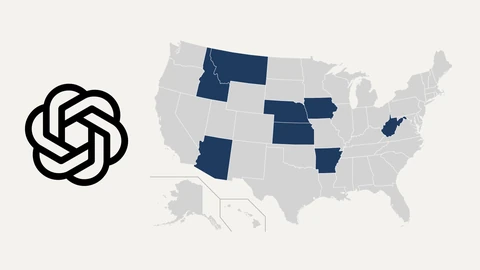
For people outside Germany the case is a preview of where AI liability fights are heading. In the United States, eight states are suing OpenAI over ChatGPT on consumer-protection grounds, and judges are already debating how courts should handle AI-generated evidence. Aachen adds a narrower, more immediate rule: when a person tells an AI search operator exactly what is wrong and why, refusing to act can be enough for an emergency order.
What the order does not settle
The order is a one-sided emergency decision. Google has not been heard, and an objection could lead the same chamber to change or lift it. It covers three specific text variants about one person, not AI Mode in general, and it does not say how Google must comply, whether by filtering the name, blocking certain queries or changing the model’s behaviour.
It also does not explain why AI Mode produced the answers. The order records what the AI said and that it was wrong; it does not identify which web pages the system drew on or why it joined another professor’s case to this physician. And with the Munich case settled, no German appeal court has yet tested the argument that AI summaries are the search operator’s own speech.
Finally, the public copy of the Aachen order is a redacted scan. The physician’s name, his institution and identifying details are blacked out, and this article does not try to identify him or the other professor.
What to watch next
Three developments would change the picture. The first is whether Google files an objection in Aachen or settles again, and whether an appeal ever reaches the Cologne or Munich higher regional courts. The second is whether other German courts, especially the busy press chambers in Hamburg and Cologne, follow Munich and Aachen. The third is whether publishers try the claims The Decoder anticipates, or whether EU regulators weigh in under the Digital Services Act.
For anyone who finds a false AI answer about themselves, the Aachen file is a practical guide: record the exact queries and answers, explain in writing what is wrong and why, and keep proof that the operator received the complaint. In this case those steps turned a refusal into a court order within four weeks.
Common questions
Is the Aachen order against Google final?
No. It is a preliminary injunction issued without hearing Google. Google can file an objection with the Aachen Regional Court, which would lead to a hearing and could change or lift the order.
What happened to the Munich AI Overviews ruling?
Google appealed the 28 May 2026 judgment, then settled with the two publishers. The Bavarian court database says the judgment is therefore moot, and no appeal court ruled.
Does this apply to AI search outside Germany?
Not directly. Both decisions apply German speech law to searches in Germany and bind only the parties, though other claimants and courts can borrow the reasoning.
Sources & further reading
- Landgericht Aachen, Beschluss vom 24.09.2026 (einstweilige Verfügung gegen Google Ireland Limited, KI-Modus), redacted scan ↗
- Two German courts now hold Google liable for what its AI overviews say ↗
- Pressemitteilung 13/26: Verantwortung für KI-generierte Übersichtsaussagen ↗
- LG München I, Endurteil v. 28.05.2026 – 26 O 869/26 (with settlement note) ↗
- Landgericht München I, Endurteil 26 O 869/26, redacted copy ↗
How this story was made
Written by Kristian Kostov with AI assistance and checked against the linked sources. Company performance claims are attributed to the company. Analysis reflects AiLookout’s interpretation; we have not independently tested the products discussed. Cover photography is illustrative and does not depict the specific announcement or product.
Our editorial standards